

- Joined
- Jul 16, 2024
- Messages
- 797
- Reaction score
- 3,032
- Location
- LONDON
- Website
- www.johnrigbyandco.com
- Deals & offers
- 15
- Media
- 37
- Articles
- 36
In the tenth instalment of Rigby’s Community in the Field series, Paul Bryan tells the story of The Encircler, a rare .450 Nitro Express Rising Bite once owned by the Maharajah of Udaipur, Fateh Singh. More than a century after it was made, Paul took this historic Rigby to Botswana’s Moremi for a seven-day hunt for an exceptional bull elephant. Read on to hear Paul’s story and be transported to the sand and mopane of Botswana’s bush country.

Rigby Along the Moremi
There are places in Africa that never truly leave you. Long after the dust has been washed from your boots and the rifles have been returned to their cases, something remains. A smell, a sound, a feeling.
For me, one of those places will always be the country along the Thamalakane River in Botswana.
It was elephant country in every sense of the word. The deep sand carried their tracks like pages in a book. Mopane branches were broken high above our heads, and enormous footprints crossed the roads during the night. Sometimes we found dung still warm in the cool morning air. Other times we would hear a branch snap somewhere ahead and know that several tons of elephant stood hidden behind what looked like an impossibly small screen of bush.
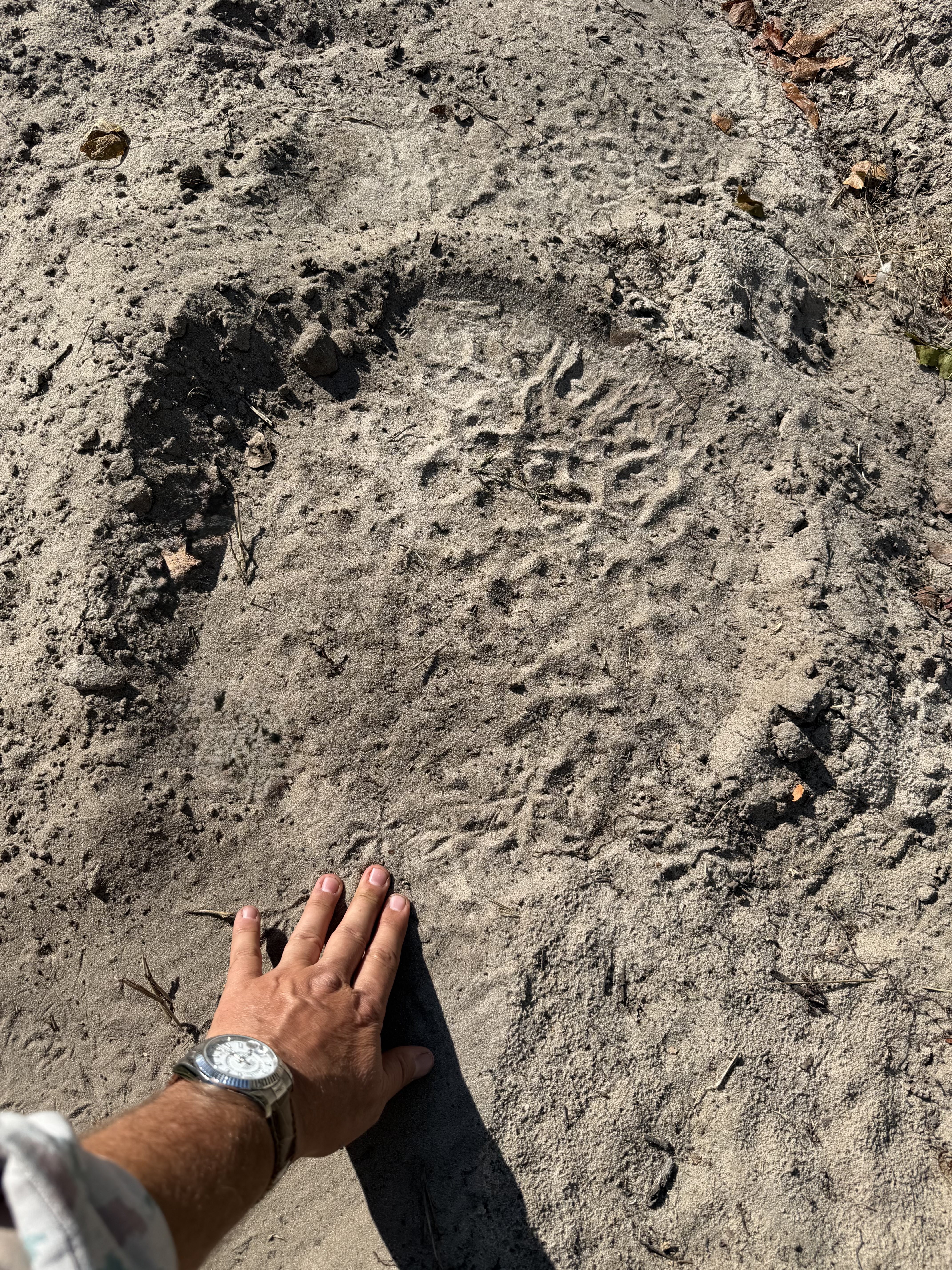
And then there were the children of Sankuyo village. Each day as we passed the village, they would scurry out toward the road to see us. They knew why we were there, and before long they seemed almost as invested in the hunt as we were. Their question was always the same: had we found the big bull?
For six days, the answer was no.
We certainly found elephants. We walked up on bull after bull, sometimes close enough to hear them breathing and the slow tearing of branches as they fed. Some were impressive animals, and more than once we stopped and studied a bull for a long time before deciding to move on.
But we had come to Botswana looking for an exceptional old elephant, and there was no reason to hurry.
The country gave us plenty to look at while we searched. Magnificent sable appeared against the pale grass, kudu slipped silently through the mopane, and zebra watched us from the openings before disappearing into the bush. Yet somehow everything eventually came back to elephants, their tracks, their trails, the trees they had pushed over, and the question of what might be waiting just beyond the next patch of cover.
And every morning I carried a rifle that made this particular hunt mean even more to me.
It was my John Rigby & Co. .450 Nitro Express Rising Bite double rifle, a magnificent game-scene engraved rifle once belonging to H.H. the Maharajah of Udaipur, Fateh Singh.


The Maharajah had given the rifle a name:
The Encircler.
It was one of the great treasures of his renowned Rigby collection, a rifle from the golden age of British gunmaking and dangerous-game hunting. Its steel was adorned with extraordinary game scenes—lions, leopards and tigers—the work of the great engraver Harry Kell. According to the Rigby records, game-scene engraved .450 Rising Bites were exceedingly rare, and this rifle may be one of only a few of its kind, perhaps even unique.
More than a century after it was made, the old .450 was back where a rifle like it belonged.
The field.
And on the seventh day, The Encircler and I finally found the bull we had been looking for.
We came across his tracks in the sand and immediately knew they belonged to a serious elephant. They were fresh, and we began following them on foot.
The farther we went, the quieter we became.
Conversation stopped. Hand signals replaced words. Every few yards we studied the ground and then looked ahead into the mopane. The wind was right, but in elephant hunting that advantage can disappear with the slightest change in direction.
Then we heard him.
A branch broke somewhere ahead.
We stopped.
Another crack followed.
Then silence.
We eased forward until, through the brush, I caught the first patch of gray.
At first it was difficult to comprehend how something so enormous could remain so well concealed. We could see only pieces of him—part of an ear, then a shoulder, then the unmistakable sweep of ivory through the branches.
We studied him.
There wasn’t much discussion necessary.
This was the bull.
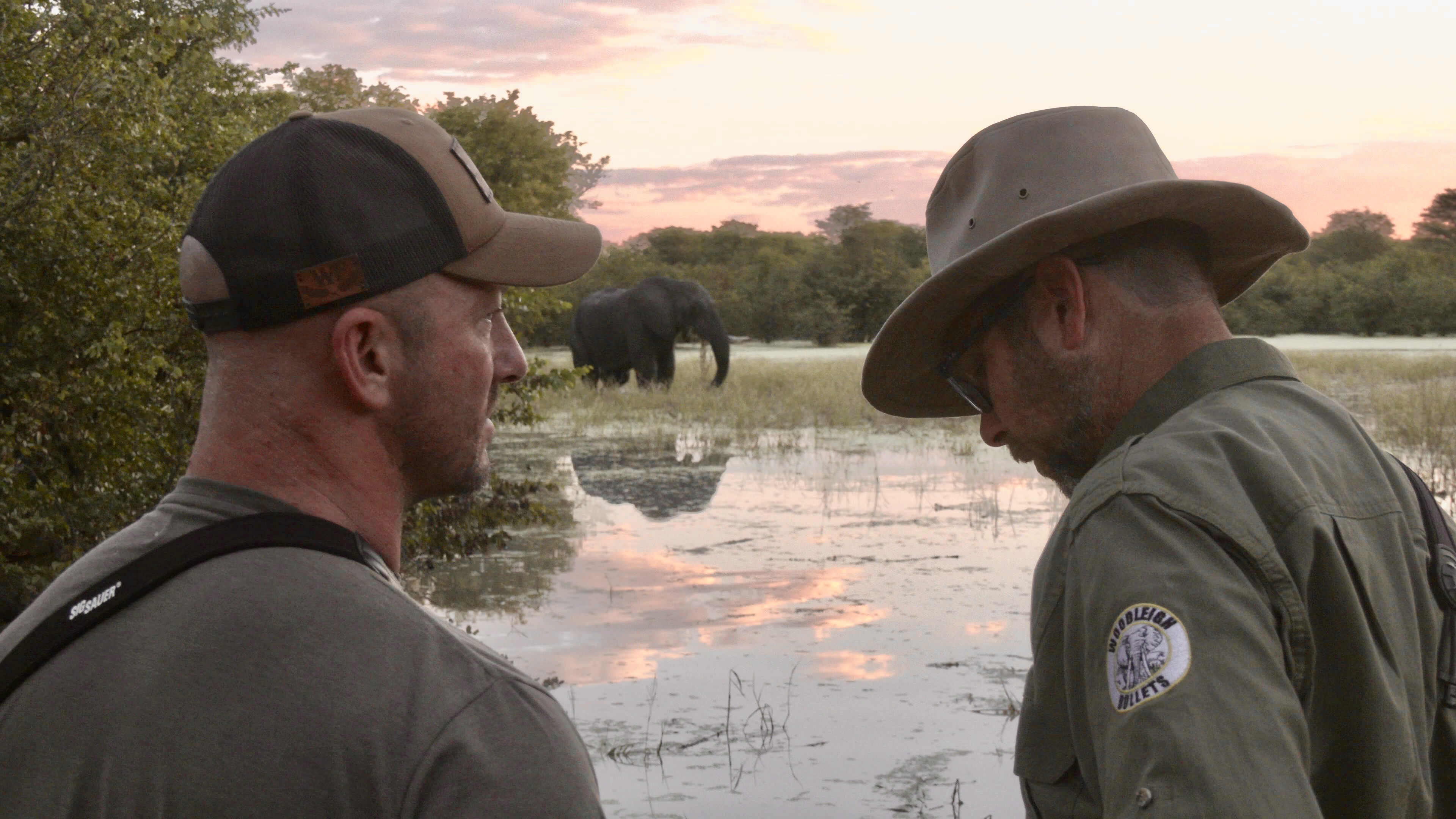
After seven days and countless miles, after looking over one elephant after another, there was an immediate understanding among us that we had finally found what we had come to Botswana for.
He was a magnificent old bull.
Now we had to get close.
We moved when he moved and froze when he stopped.
The distance slowly disappeared.
With every step I became increasingly aware of the Rigby in my hands. The rifle felt reassuringly solid—the same Rising Bite action and twin .450 barrels that had been built for exactly this sort of encounter more than a century earlier.
The bull fed quietly, unaware of us.
We slipped closer.
A few more yards.
Then we stopped again.
At that distance I could hear him.
There is something difficult to describe about being that close to a wild elephant. You are aware not simply of his size, but of his presence. The slow movement of the ears. The rumble of his stomach. The sound of vegetation being torn free.
Twenty yards or so separated us now.
I remember thinking how suddenly everything had changed.
For seven days Botswana had seemed enormous.
Now the entire world had become a few yards of sand and mopane.
There was one problem. From where I stood, I didn’t have the shot I wanted. To get it, I would have to step out from the cover and into the open in front of him.
Every bit of better sense in me wanted to hold me back.
Behind the mopane there was at least the illusion of protection. One step forward and that illusion disappeared. There would be no tree between us, no bush to hide behind and, at that distance, nowhere meaningful to run.
I remember looking at that enormous bull and knowing that eventually every elephant hunter has to make a decision.
You can remain where you are.
Or you can step forward.
There comes a moment when you have to stand and deliver.
I tightened my hands around the old Rigby and stepped out.
The feeling was immediate. There was no longer anything between me and the elephant. I was exposed, standing in front of 13,000 lbs of wild Africa with an old double rifle in my hands.
Every instinct that had told me not to take that step was still there.
But I had taken it.
Then the bull turned.
He faced me, shaking more dust from his ears than I can describe.
For a moment he simply stood there.
So did I.
Seven days of searching had come down to this.
There was no thought of the history of the rifle now. No thought of the Maharajah, or Harry Kell, or London gunmakers from another century.
There was only the elephant.
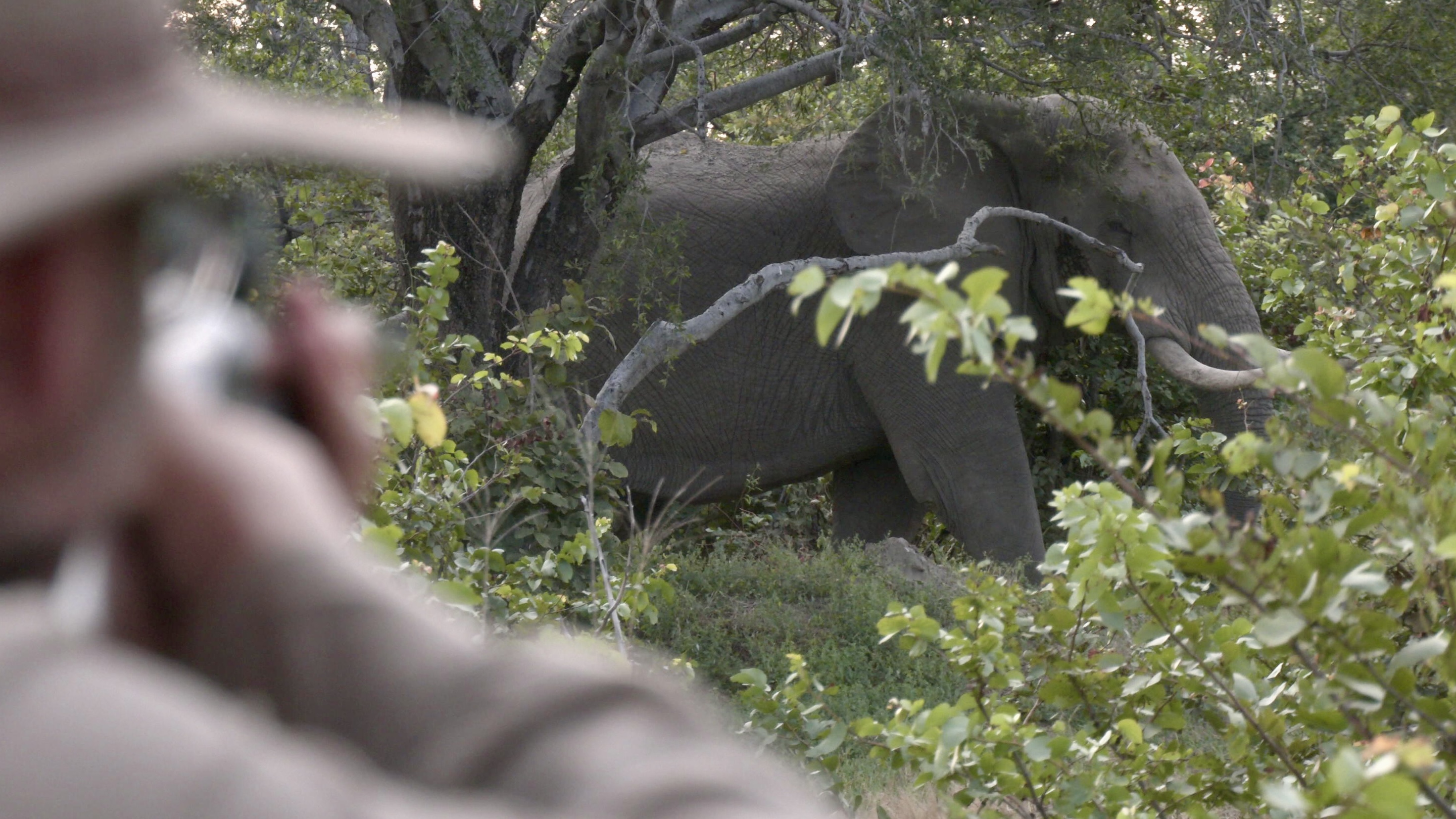
I raised The Encircler to my shoulder.
The old Rigby seemed to come up by itself.
At this distance, there is little room for error.
I squeezed the trigger.
The .450 Nitro Express broke the silence with a tremendous roar.
The great bull collapsed.
I had been fortunate enough to make the first shot exactly where it needed to go.
A perfect frontal shot.
For a few moments afterward, everything seemed strangely still.
The smell of burnt powder hung in the air. I opened the Rigby and reloaded instinctively, then stood looking at the enormous animal before us.
Seven days.
One hundred and twenty-five years of gunmaking history.
Twenty yards.
One shot.
Walking up to that elephant is something I will never forget. Only when standing beside a truly big bull can you begin to appreciate his scale. His feet, his head, his ivory—the sheer mass of him was humbling.
I placed my hand against his hide and felt an enormous sense of gratitude.
Then I looked down at the rifle.
I thought about the hands that had held it before mine. About Fateh Singh and the great Rigby collection of the Maharajah of Udaipur. About Harry Kell sitting at his bench, cutting lions, leopards and tigers into the steel. About craftsmen in London fitting the barrels and regulating them more than a century ago.
They could never have known where that rifle would be in 2026.
But somehow, carrying it through the Botswana bush felt exactly right.
The Encircler had another story.
On our way back that evening, we approached Sankuyo village.
Before we reached the village, the children began appearing.
Then they started running.
Just as they had done every day before, they scurried toward the road, smiling and calling out, wanting to know what had happened.
Only this time, they didn’t really need to ask.
They could see it on our faces.
After seven days, we had found the big bull.
Their excitement became part of the memory—the children of Sankuyo gathered beside the road, the dust hanging in the evening air, and the African sun falling low over the Moremi.
That night I thought about the hunt from beginning to end.
The sable standing in the grass.
The kudu disappearing through the mopane.
The zebra.
The countless elephant tracks.
The bulls we had approached and passed.
The children waiting for us each day.
The elephant turning to face me at twenty yards.

Lastly, I considered the rifle I had brought. Some rifles are valuable because they are rare. Others because of the names engraved upon them or the history recorded in their ledgers.
A very few become something more.
A few years ago, when I acquired The Encircler, I believed it might be the most important rifle I would ever have the opportunity to own.
After Botswana, it means even more to me.
Its history did not end with a Maharajah.
Nor did it end when the golden age of the British sporting rifle passed into history.
More than a century after Harry Kell engraved its steel, The Encircler returned to elephant country.
And now, whenever I hold that old Rigby, I see more than lions, leopards and tigers engraved upon its action.
I see the Moremi.
I see the children of Sankuyo running through the dust.
And I see a great Botswana bull turning toward me at twenty yards.
He stared at me.
A moment in Africa that will never truly leave me.

Rigby Along the Moremi
There are places in Africa that never truly leave you. Long after the dust has been washed from your boots and the rifles have been returned to their cases, something remains. A smell, a sound, a feeling.
For me, one of those places will always be the country along the Thamalakane River in Botswana.
It was elephant country in every sense of the word. The deep sand carried their tracks like pages in a book. Mopane branches were broken high above our heads, and enormous footprints crossed the roads during the night. Sometimes we found dung still warm in the cool morning air. Other times we would hear a branch snap somewhere ahead and know that several tons of elephant stood hidden behind what looked like an impossibly small screen of bush.
And then there were the children of Sankuyo village. Each day as we passed the village, they would scurry out toward the road to see us. They knew why we were there, and before long they seemed almost as invested in the hunt as we were. Their question was always the same: had we found the big bull?
For six days, the answer was no.
We certainly found elephants. We walked up on bull after bull, sometimes close enough to hear them breathing and the slow tearing of branches as they fed. Some were impressive animals, and more than once we stopped and studied a bull for a long time before deciding to move on.
But we had come to Botswana looking for an exceptional old elephant, and there was no reason to hurry.
The country gave us plenty to look at while we searched. Magnificent sable appeared against the pale grass, kudu slipped silently through the mopane, and zebra watched us from the openings before disappearing into the bush. Yet somehow everything eventually came back to elephants, their tracks, their trails, the trees they had pushed over, and the question of what might be waiting just beyond the next patch of cover.
And every morning I carried a rifle that made this particular hunt mean even more to me.
It was my John Rigby & Co. .450 Nitro Express Rising Bite double rifle, a magnificent game-scene engraved rifle once belonging to H.H. the Maharajah of Udaipur, Fateh Singh.
The Maharajah had given the rifle a name:
The Encircler.
It was one of the great treasures of his renowned Rigby collection, a rifle from the golden age of British gunmaking and dangerous-game hunting. Its steel was adorned with extraordinary game scenes—lions, leopards and tigers—the work of the great engraver Harry Kell. According to the Rigby records, game-scene engraved .450 Rising Bites were exceedingly rare, and this rifle may be one of only a few of its kind, perhaps even unique.
More than a century after it was made, the old .450 was back where a rifle like it belonged.
The field.
And on the seventh day, The Encircler and I finally found the bull we had been looking for.
We came across his tracks in the sand and immediately knew they belonged to a serious elephant. They were fresh, and we began following them on foot.
The farther we went, the quieter we became.
Conversation stopped. Hand signals replaced words. Every few yards we studied the ground and then looked ahead into the mopane. The wind was right, but in elephant hunting that advantage can disappear with the slightest change in direction.
Then we heard him.
A branch broke somewhere ahead.
We stopped.
Another crack followed.
Then silence.
We eased forward until, through the brush, I caught the first patch of gray.
At first it was difficult to comprehend how something so enormous could remain so well concealed. We could see only pieces of him—part of an ear, then a shoulder, then the unmistakable sweep of ivory through the branches.
We studied him.
There wasn’t much discussion necessary.
This was the bull.
After seven days and countless miles, after looking over one elephant after another, there was an immediate understanding among us that we had finally found what we had come to Botswana for.
He was a magnificent old bull.
Now we had to get close.
We moved when he moved and froze when he stopped.
The distance slowly disappeared.
With every step I became increasingly aware of the Rigby in my hands. The rifle felt reassuringly solid—the same Rising Bite action and twin .450 barrels that had been built for exactly this sort of encounter more than a century earlier.
The bull fed quietly, unaware of us.
We slipped closer.
A few more yards.
Then we stopped again.
At that distance I could hear him.
There is something difficult to describe about being that close to a wild elephant. You are aware not simply of his size, but of his presence. The slow movement of the ears. The rumble of his stomach. The sound of vegetation being torn free.
Twenty yards or so separated us now.
I remember thinking how suddenly everything had changed.
For seven days Botswana had seemed enormous.
Now the entire world had become a few yards of sand and mopane.
There was one problem. From where I stood, I didn’t have the shot I wanted. To get it, I would have to step out from the cover and into the open in front of him.
Every bit of better sense in me wanted to hold me back.
Behind the mopane there was at least the illusion of protection. One step forward and that illusion disappeared. There would be no tree between us, no bush to hide behind and, at that distance, nowhere meaningful to run.
I remember looking at that enormous bull and knowing that eventually every elephant hunter has to make a decision.
You can remain where you are.
Or you can step forward.
There comes a moment when you have to stand and deliver.
I tightened my hands around the old Rigby and stepped out.
The feeling was immediate. There was no longer anything between me and the elephant. I was exposed, standing in front of 13,000 lbs of wild Africa with an old double rifle in my hands.
Every instinct that had told me not to take that step was still there.
But I had taken it.
Then the bull turned.
He faced me, shaking more dust from his ears than I can describe.
For a moment he simply stood there.
So did I.
Seven days of searching had come down to this.
There was no thought of the history of the rifle now. No thought of the Maharajah, or Harry Kell, or London gunmakers from another century.
There was only the elephant.
I raised The Encircler to my shoulder.
The old Rigby seemed to come up by itself.
At this distance, there is little room for error.
I squeezed the trigger.
The .450 Nitro Express broke the silence with a tremendous roar.
The great bull collapsed.
I had been fortunate enough to make the first shot exactly where it needed to go.
A perfect frontal shot.
For a few moments afterward, everything seemed strangely still.
The smell of burnt powder hung in the air. I opened the Rigby and reloaded instinctively, then stood looking at the enormous animal before us.
Seven days.
One hundred and twenty-five years of gunmaking history.
Twenty yards.
One shot.
Walking up to that elephant is something I will never forget. Only when standing beside a truly big bull can you begin to appreciate his scale. His feet, his head, his ivory—the sheer mass of him was humbling.
I placed my hand against his hide and felt an enormous sense of gratitude.
Then I looked down at the rifle.
I thought about the hands that had held it before mine. About Fateh Singh and the great Rigby collection of the Maharajah of Udaipur. About Harry Kell sitting at his bench, cutting lions, leopards and tigers into the steel. About craftsmen in London fitting the barrels and regulating them more than a century ago.
They could never have known where that rifle would be in 2026.
But somehow, carrying it through the Botswana bush felt exactly right.
The Encircler had another story.
On our way back that evening, we approached Sankuyo village.
Before we reached the village, the children began appearing.
Then they started running.
Just as they had done every day before, they scurried toward the road, smiling and calling out, wanting to know what had happened.
Only this time, they didn’t really need to ask.
They could see it on our faces.
After seven days, we had found the big bull.
Their excitement became part of the memory—the children of Sankuyo gathered beside the road, the dust hanging in the evening air, and the African sun falling low over the Moremi.
That night I thought about the hunt from beginning to end.
The sable standing in the grass.
The kudu disappearing through the mopane.
The zebra.
The countless elephant tracks.
The bulls we had approached and passed.
The children waiting for us each day.
The elephant turning to face me at twenty yards.
Lastly, I considered the rifle I had brought. Some rifles are valuable because they are rare. Others because of the names engraved upon them or the history recorded in their ledgers.
A very few become something more.
A few years ago, when I acquired The Encircler, I believed it might be the most important rifle I would ever have the opportunity to own.
After Botswana, it means even more to me.
Its history did not end with a Maharajah.
Nor did it end when the golden age of the British sporting rifle passed into history.
More than a century after Harry Kell engraved its steel, The Encircler returned to elephant country.
And now, whenever I hold that old Rigby, I see more than lions, leopards and tigers engraved upon its action.
I see the Moremi.
I see the children of Sankuyo running through the dust.
And I see a great Botswana bull turning toward me at twenty yards.
He stared at me.
A moment in Africa that will never truly leave me.


