
Hunt anything
AH ambassador
You beet me to it, a friend was curious as well....But it IS ok to treat white people as second class citizens? Rhodesia/Zimbabwe under "black people" rule is justified?
Asking for a friend.

You beet me to it, a friend was curious as well....But it IS ok to treat white people as second class citizens? Rhodesia/Zimbabwe under "black people" rule is justified?
Asking for a friend.

God no. And I don't know anyone who has suggested that....But it IS ok to treat white people as second class citizens? Rhodesia/Zimbabwe under "black people" rule is justified?
Asking for a friend.
You should re-read the OP's post--Rhodesia was sparsely inhabited at the time whites came. Same for many other portions of Africa. Bantu tribes came down from the north to Southern Africa--THEY were newcomers/invaders. I guess they get a pass because they are black. As long as it's any kind or stripe of black it's OK, eh? How would you like to be treated unfairly if you came to "OUR land" to visit, do business, or try to own anything?! Should Europeans take all assets of anyone not historically/ethnically European? According to YOU, that would be justified. The idea of ownership, property, commerce, and peaceful relations would be set back millennia if you had your way, apparently. It's called CIVILIZATION, friend.I'm sure the people who fought against the white minority rule would totally agree lol. We've been here for thousands of years doing just fine and these Europeans come flooding in without asking permission, undermine our culture and traditions, kick us off of our land and make us grow cotton and ground nuts lol. This statement ignores the barbarism that undergirded the power of ethnic minority governments in colonial Africa and indeed the world 'round. And now that I've made myself the least popular guy on AH, let the opprobrium rain down.

The pre-colonial history of this part of the world is complicated but I don't think it is fair to say that the area was sparsely populated when whites came, this kind of implies that the whites were a majority at some point. They were never close to being a majority there. There were always a minority. I bet they were never more than 20% of the population.You should re-read the OP's post--Rhodesia was sparsely inhabited at the time whites came. Same for many other portions of Africa. Bantu tribes came down from the north to Southern Africa--THEY were newcomers/invaders. I guess they get a pass because they are black. As long as it's any kind or stripe of black it's OK, eh? How would you like to be treated unfairly if you came to "OUR land" to visit, do business, or try to own anything?! Should Europeans take all assets of anyone not historically/ethnically European? According to YOU, that would be justified. The idea of ownership, property, commerce, and peaceful relations would be set back millennia if you had your way, apparently. It's called CIVILIZATION, friend.
NOT saying American Indians got a fair shake, but nature abhors any vacuum.
As we speak, millions are migrating to take advantage of the prosperity earned by others. Countries are being absolutely swamped. (why do you think all the millions came to Zimbabwe under white rule? They wanted in on the good times, then changed the rules that ushered in the good times) Do the new folks get to redefine what brought the prosperity in the first place? Are "whites" always bad and should be shamed? I call BS.
I was traveling to hunting camp in Zimbabwe when we stopped by a scant few huts and piddly crop fields--surrounded by hundreds of acres of fallow ground as far as the eye could see. Asked them why they didn't plant more. Replied, this is all we need. Asked, what about the people in the cities that used to get their wheat from these now empty fields? Reply, "THEY'RE NOT OUR TRIBE." THAT is Zimbabwe back under indigenous rule. An absolute failure. AND, a begging bowl.
And nothing personal--I already liked some of your other posts, fellow hunter.

I appreciate the "nothing personal." Truly. I'd just say two wrongs don't make a right, leave it at that and let @RLD speak for me.You should re-read the OP's post--Rhodesia was sparsely inhabited at the time whites came. Same for many other portions of Africa. Bantu tribes came down from the north to Southern Africa--THEY were newcomers/invaders. I guess they get a pass because they are black. As long as it's any kind or stripe of black it's OK, eh? How would you like to be treated unfairly if you came to "OUR land" to visit, do business, or try to own anything?! Should Europeans take all assets of anyone not historically/ethnically European? According to YOU, that would be justified. The idea of ownership, property, commerce, and peaceful relations would be set back millennia if you had your way, apparently. It's called CIVILIZATION, friend.
NOT saying American Indians got a fair shake, but nature abhors any vacuum.
As we speak, millions are migrating to take advantage of the prosperity earned by others. Countries are being absolutely swamped. (why do you think all the millions came to Zimbabwe under white rule? They wanted in on the good times, then changed the rules that ushered in the good times) Do the new folks get to redefine what brought the prosperity in the first place? Are "whites" always bad and should be shamed? I call BS.
I was traveling to hunting camp in Zimbabwe when we stopped by a scant few huts and piddly crop fields--surrounded by hundreds of acres of fallow ground as far as the eye could see. Asked them why they didn't plant more. Replied, this is all we need. Asked, what about the people in the cities that used to get their wheat from these now empty fields? Reply, "THEY'RE NOT OUR TRIBE." THAT is Zimbabwe back under indigenous rule. An absolute failure. AND, a begging bowl.
And nothing personal--I already liked some of your other posts, fellow hunter.


I appreciate the "nothing personal." Truly. I'd just say two wrongs don't make a right, leave it at that and let @RLD speak for me.


You are right, two wrongs DON'T make a right. I have a Yaqui Indian wife, and some Native American relatives, so I hear you! But how to put all the toys back in the box? It is as impossible as separating Spanish and Indian blood in a latino.I appreciate the "nothing personal." Truly. I'd just say two wrongs don't make a right, leave it at that and let @RLD speak for me.
This is undoubtedly true, and there are a number of cultural factors that can interfere with the integration of a new country's economy with the wider world.But something clearly is not working in post colonial and post apartheid Africa. These are issues which several political scientists and sociologists have struggled for a century. Samuel Huntington's 1968 landmark work "Political Order in Changing Societies" is still a remarkable study that is generally studiously ignored by everyone when it is so much easier to shout "racist." Talcott Parsons went to what I believe is the heart of the matter in his "The Social System" by addressing the deeply rooted cultural barriers to modernization in many non-western societies. He argued that cultural barriers like collectivism and fatalism hinder modernization, which generally require shifts toward individualism, meritocracy, and universalism. The result all too often failure of the nation state itself.
Sadly, it would take a fine combing of both the historical record and fairly radical assessment of current political/economic conditions to identify a nation or cultural group that is better off now than it was under colonial or minority rule. That does not make racially-based minority rule a valid construct, but blaming it or the generally accepted inherent evils of the "colonizers" for the failing states across sub-Saharan Africa is intellectual laziness at best. It parallels our own lack of seriousness in addressing current cultural catastrophes in our own country by simply shouting racism or embracing slavery as the root cause of all modern ills.
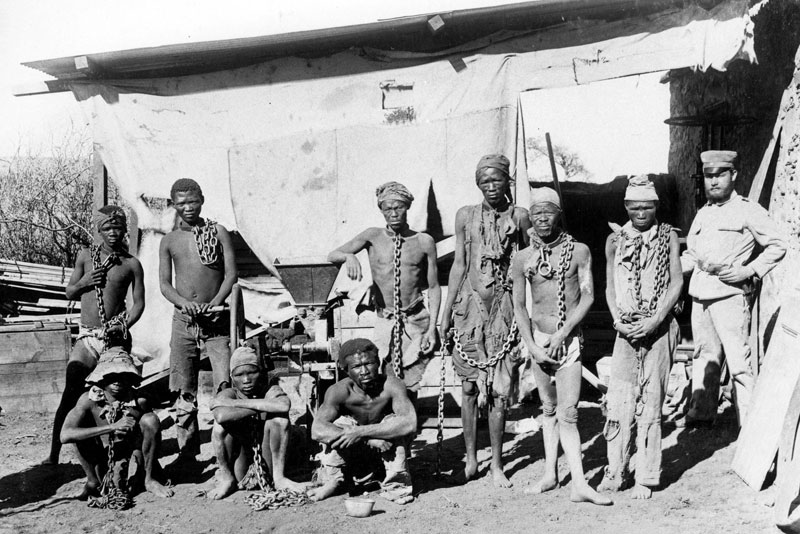
There are exceptions. The actual genocide practiced by the German Army in northern Southwest Africa (Namibia) was brutal by any standard subsequent to the middle ages. The Herero and Nama were cattle cultures and German colonial rule was determined to hand that role to German colonists. To be fair, Rhodesia, unlike South Africa, was also founded out of conquest of existing majority populations, though their behavior was far less barbarous than that of the Imperial German Army.
But something clearly is not working in post colonial and post apartheid Africa. These are issues which several political scientists and sociologists have struggled for a century. Samuel Huntington's 1968 landmark work "Political Order in Changing Societies" is still a remarkable study that is generally studiously ignored by everyone when it is so much easier to shout "racist." Talcott Parsons went to what I believe is the heart of the matter in his "The Social System" by addressing the deeply rooted cultural barriers to modernization in many non-western societies. He argued that cultural barriers like collectivism and fatalism hinder modernization, which generally require shifts toward individualism, meritocracy, and universalism. The result all too often failure of the nation state itself.
Since RedLeg brought up pre and post-colonialism, I would also recommend two more recent books by Prof. Bruce Gilley of Portland State University. Both of these books examine colonialism and its positive aspects. Of course, this has made him a persona non grata in academic circles as they consider any work making the case for colonialism anathema.
First, The Case for Colonialism is an expansion of his 2017 article by the same name that was published and then withdrawn by the publishers of Third World Quarterly.
Second, In Defense of German Colonialism which looks at German colonialism in SW Africa and East Africa.
In terms of condemning conquest, I find it a bit hypocritical as much of the world as we know it was formed by conquest. It is what it is and there is no going back.
It is what I find so ridiculous about the "reparations" grift. Take the UK for instance. Where lies the original sin to be sued by the unfortunate oppressed? After all, following the Younger Dryas the original inhabitants were hunter gatherers from what is today continental Europe. We'll characterize them as the first victims. Next came the farming cultures from Southwestern Europe between 4000 and 2000 BC which thoroughly mixed the gene pool. Therefore some victimized Britain should sue Spain. But wait, these agriculturists were then subsumed by the Beaker Culture arriving from modern day Germany and the Netherlands around 2000 BC. OK, then let's sue the Dutch and the Germans. Except, they were in turn largely overrun by the Celtic people. I guess that legal document should be addressed to France. Except both the Celts and much of the remnant populations (excluding parts of Whales and Scotland) were conquered and colonized by Rome beginning in 55BC and lasting over 450 years until 410AD. Well, that is pretty clear, sue Italy! Except, the Roman withdrawal was in the face of Saxon and soon thereafter, Norse invasions. This is getting complicated. The final conquest was by the Norman French beginning in 1066. Perhaps the surviving aggrieved Pict should send their complaint to Paris after all?Since RedLeg brought up pre and post-colonialism, I would also recommend two more recent books by Prof. Bruce Gilley of Portland State University. Both of these books examine colonialism and its positive aspects. Of course, this has made him a persona non grata in academic circles as they consider any work making the case for colonialism anathema.
First, The Case for Colonialism is an expansion of his 2017 article by the same name that was published and then withdrawn by the publishers of Third World Quarterly.
Second, In Defense of German Colonialism which looks at German colonialism in SW Africa and East Africa.
In terms of condemning conquest, I find it a bit hypocritical as much of the world as we know it was formed by conquest. It is what it is and there is no going back.
It is pictured today on Namibian currency notes.Remembering the Forgotten Genocide of the Herero and Nama - JFCS Holocaust Center
The genocide of the Herero and Nama people has been called “The 1st genocide of the 20th century.”holocaustcenter.jfcs.org
Yes, but. India had its own traditions of successful, literate governance and culture, however fragmented, long before the arrival of Europeans. Alexander found sophisticated, by any period standard, Kingdoms to challenge on the battlefield. The Mogul Empire was one of Islam's most developed. Post Britannic Indian culture started from a much higher floor than did the vast majority of tribal Africa. It is difficult to point a finger at the Imperialists for that developmental gap.This is undoubtedly true, and there are a number of cultural factors that can interfere with the integration of a new country's economy with the wider world.
One of those issues, that doesn't get talked about enough is the lack of a professional middle class, and competency shortages. And this is part of the legacy of colonialism.
Many colonial administrations literally prohibited "natives" from joining certain professions and taking on certain kinds of positions (South Africa was a notable exception to this). So when de-colonialization happened there was no native middle class and often no native professional or civil service class.
I recall reading in one case that after the colonial power withdrew, one african nation with a population of around 30 million people had two lawyers and one accountant left in the whole country because the rest had left. Can you imagine trying to draft a constitution or run your first nation budget with two lawyers and an accountant? How about a functioning judiciary? Impossible.
The same thing happens outside the new government. Most of the engineers leave. Many mechanics and other skilled tradespeople leave. Farmers often stay because they are tied to the land, but when they leave their skills and knowledge (and capital) don't magically transfer to whatever people end up on their land.
So what is a new country to do without enough skilled people to run it? It turns to deals with China or the USSR/Russia or multinational corporations to provide those skill sets and end up getting suckered in those deals. It's a hard problem to escape from.
The other issue is that when you start appointing people to all of these posts, they don't have the benefit of having worked in a professional/ethical environment and learned those standards then you build a kleptocracy. Organizational ethics don't spring into existence they need to be evolved and grown over generations.
A friend of mine got a contract a number of years back to teach basic judicial ethics to judges in Russia. He (and I) were stunned with their complete lack of understanding of what we consider basic ethics, but never having been exposed to it, how were they to know about it. Similar problem in many African civil services.
Compare that with the way the British governed India, allowing the build up of significant political classes and you have part of the reason that India has integrated so much better into the world economy than most African nations have.


