

buck wild
AH legend
- Joined
- Oct 14, 2015
- Messages
- 2,846
- Reaction score
- 6,736
- Location
- Texas
- Media
- 367
- Articles
- 5
- Member of
- SCI Life member, SCI Brush Country Chapter, DSC, Puro Pinche Low Fence
- Hunted
- Kalahari; Limpopo, South Africa; Omay, Zimbabwe; Bulawayo, Zim; Czech Republic; Tirol, Austria; Mexico; Texas; New Mexico; Colorado
Here is how I get a little life back into those boiled, dry out horns that come back to us. These are my personal sable and roan horns rec'd recently. I took careful measurements before leaving and needed to rebuild approx 1/2 " of horn to each.
First I make a silicone mold of the bottom 3/4" of each horn. I can provide more info on this later if someone is interested.
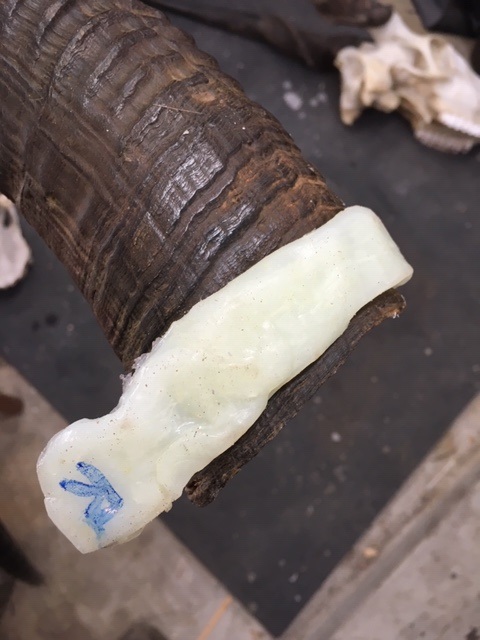
I next taken softened beeswax and apply a liberal coating over the entire horn. This will fill the cracks and provide a natural sheen.

I use a low heat source (hair dryer, paint stripper on LOW) to soften the now hardened wax into the horn and buff out the wax. Here is half the horn completed for this part of the process.

One finished out compared to one that hasn't been started.
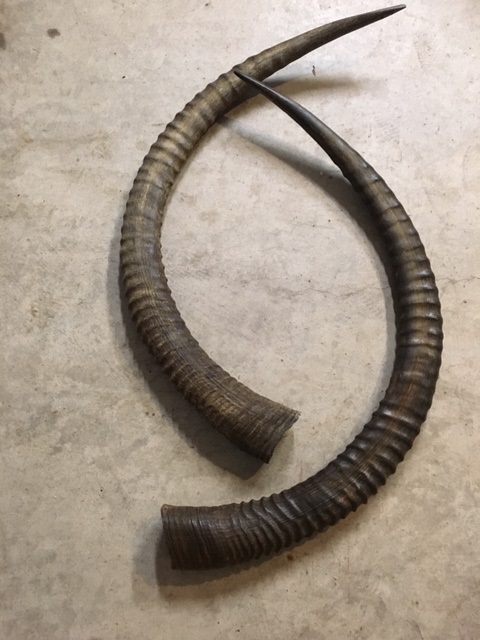
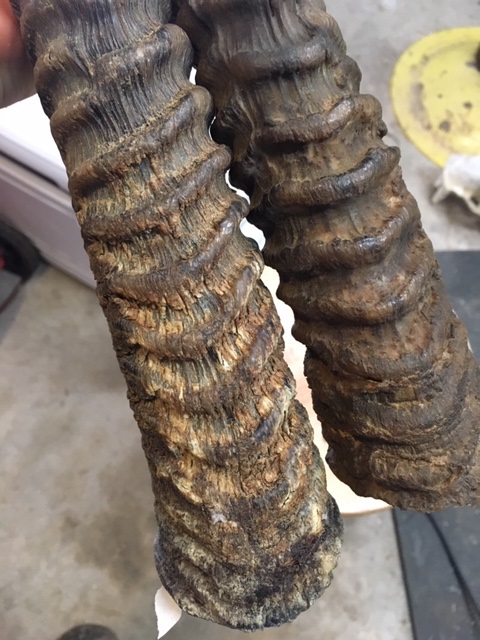
Often waterbuck and in this case roan have "peeling" parts of the horn. I use more wax to build it back up.
The raw horn next to the repaired one.
After rubbing and buffing the wax into both horns, I use a small paddle bit to drill out the horn cores and fill with Borax. I'm always concerned about future bug damage and although I can't say this will do anything, I figure it cant hurt.

Next I apply a liberal amount of bondo over the cores and slide the horn over slowly to pushing down any extra bondo equally out the bottom. After the horn seats on the core, I dip my finger in dentured alcohol and pat down the extra bondo flat against the horn so that I can apply the silicone mold made earlier before the bondo hardens. Using the DA will keep the bondo from sticking to my finger and making a mess.
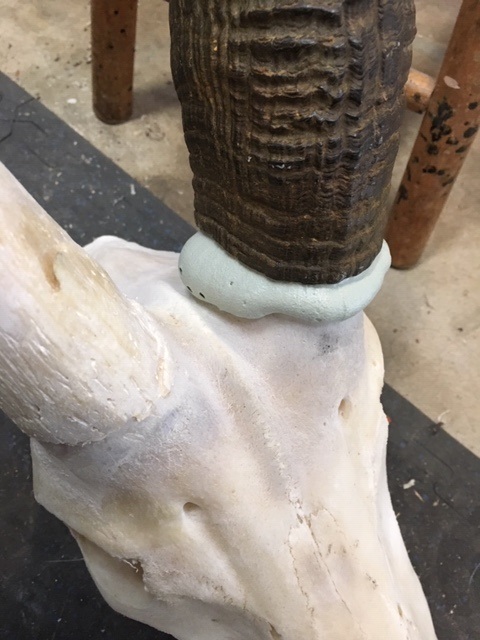
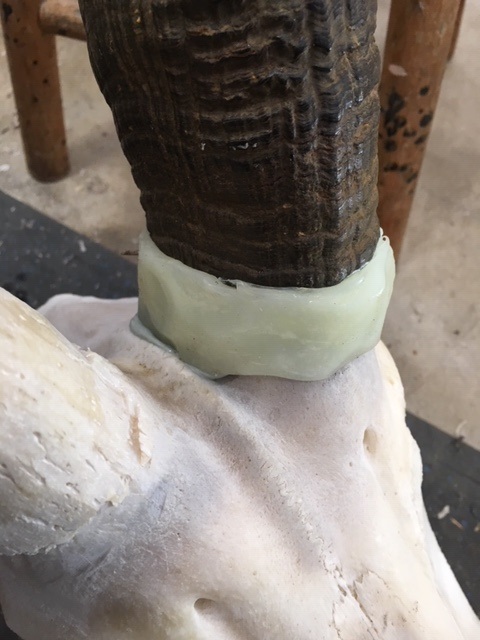
After the bondo sets, remove the silicone mold, trim off the excess and rasps any areas of the bondo if needed. It doesn't always make the perfect impression of the horn and I usually follow up with some touch up areas with Apoxie Clay.
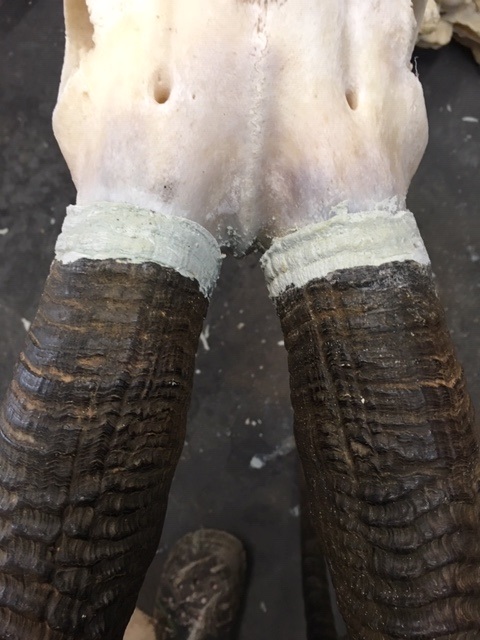
I now have my 1/2" built back in and begin using different paints, stains, and powders to build the color make into the horn.
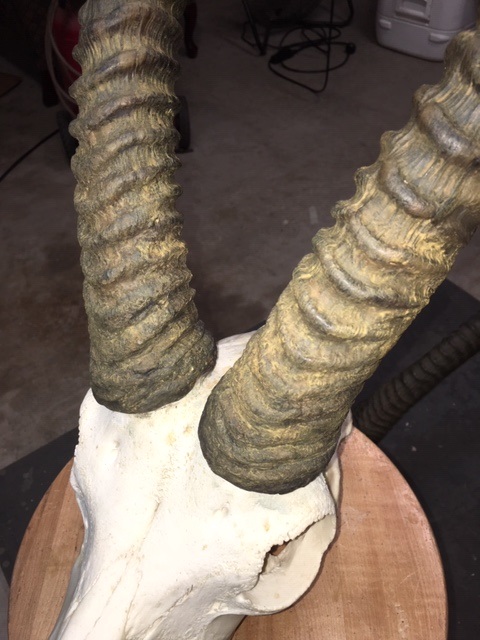


First I make a silicone mold of the bottom 3/4" of each horn. I can provide more info on this later if someone is interested.
I next taken softened beeswax and apply a liberal coating over the entire horn. This will fill the cracks and provide a natural sheen.
I use a low heat source (hair dryer, paint stripper on LOW) to soften the now hardened wax into the horn and buff out the wax. Here is half the horn completed for this part of the process.
One finished out compared to one that hasn't been started.
Often waterbuck and in this case roan have "peeling" parts of the horn. I use more wax to build it back up.
The raw horn next to the repaired one.
After rubbing and buffing the wax into both horns, I use a small paddle bit to drill out the horn cores and fill with Borax. I'm always concerned about future bug damage and although I can't say this will do anything, I figure it cant hurt.
Next I apply a liberal amount of bondo over the cores and slide the horn over slowly to pushing down any extra bondo equally out the bottom. After the horn seats on the core, I dip my finger in dentured alcohol and pat down the extra bondo flat against the horn so that I can apply the silicone mold made earlier before the bondo hardens. Using the DA will keep the bondo from sticking to my finger and making a mess.
After the bondo sets, remove the silicone mold, trim off the excess and rasps any areas of the bondo if needed. It doesn't always make the perfect impression of the horn and I usually follow up with some touch up areas with Apoxie Clay.
I now have my 1/2" built back in and begin using different paints, stains, and powders to build the color make into the horn.


