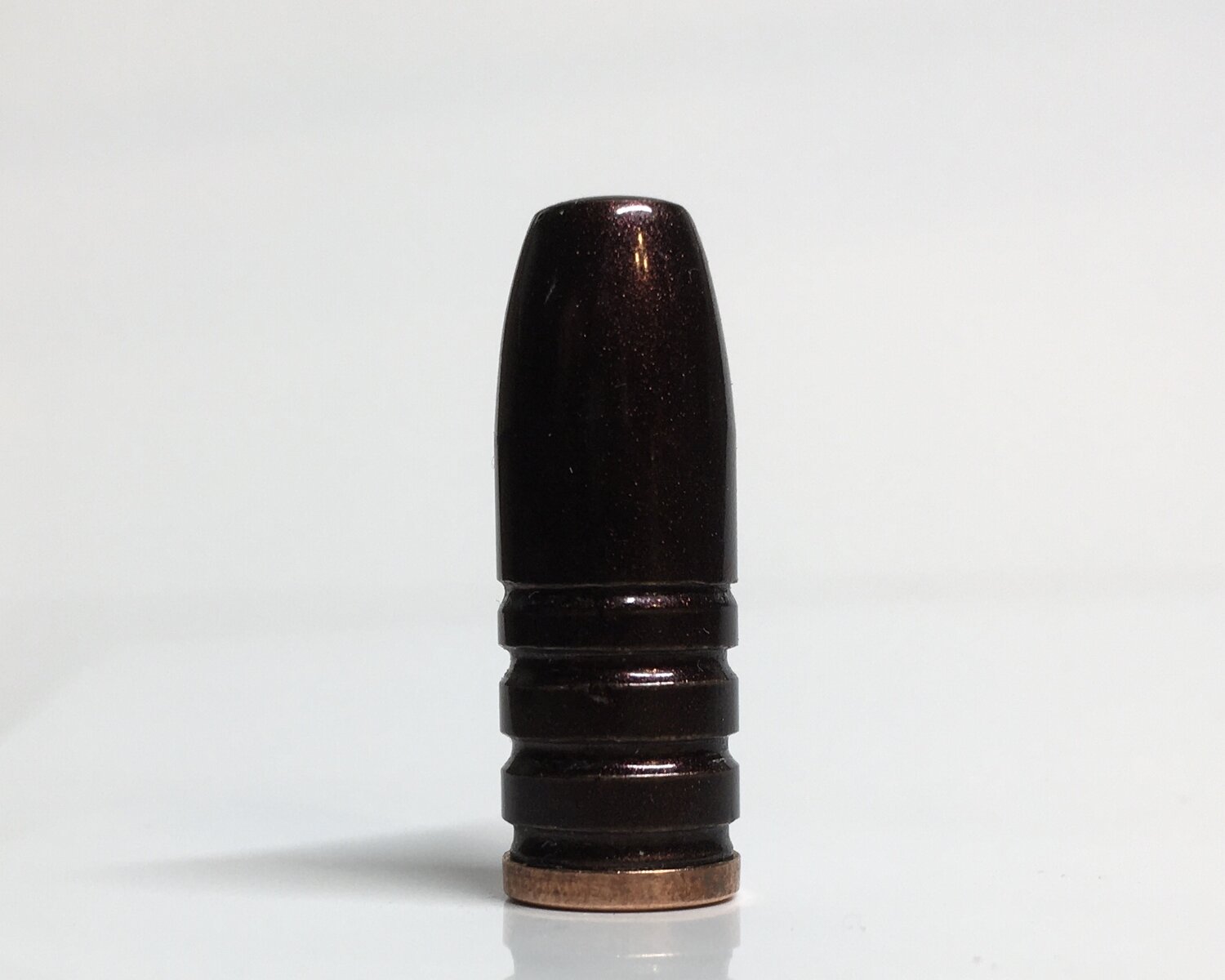
Could we make jackets bullets for 404?
I recently acquired a 404 Brno 602 and have been looking for practice rounds. I tried some 416 bullets but they keyhole and cannot for the life of me find any moulds to cast bullets.
So here is an idea I came up with to make jacketed 404 bullets with about the same amount of work as casting bullets. This is untested at the moment.
A .40 cal SW handgun case is .423 in diameter. My initial idea was to just press in two 180gr bullets into the spend 40SW case (no powder of course) and load it as a bullet. I ran the idea through Gemini AI as I am not an engineer and after many iterations we can up with this.
TITLE: MANUFACTURING 400-GRAIN .423 PRACTICE PROJECTILES (CASE-SWAGED COMPOSITE)
DOMAIN: INTERNAL BALLISTICS & MATERIALS SCIENCE
CALIBER: .404 JEFFERY (.423" GROOVE / .412" LAND)
1. MATERIAL PROPERTIES & PHASE TRANSFORMATION
To convert 70/30 Cartridge Brass (C26000) into a functional jacket, the material must be moved from its "work-hardened" state to a "recrystallized" state via thermal annealing.
- PRE-ANNEAL YIELD STRENGTH: ~65,000 PSI (Hazardous for rifling engraving)
- POST-ANNEAL YIELD STRENGTH: ~15,000 - 18,000 PSI (Safe/Ductile)
- VICKERS HARDNESS (HV): Drops from ~160 to ~65.
- ELONGATION %: Increases from <10% to ~55% (Allows for "cold flow" during sizing).
2. CORE PHYSICS & HYDROSTATIC "SQUISH"
Using Soft Lead (BHN 5) creates a hydraulic-style bond during acceleration.
- ACCELERATION (2,150 FPS / 24" BORE): ~35,889 Gs (Peak 60,000+ Gs).
- INTERNAL INERTIAL PRESSURE (Pi): ~13,380 PSI.
- OBTURATION MECHANICS: Pi (13.3k PSI) pushes outward against the Annealed Jacket Yield (15k-18k PSI), forcing the .011" brass walls to seal the .423" grooves perfectly.
3. MANUFACTURING WORKFLOW (THE "RIVET-BOND" METHOD)
Step A: DECAP & DRILL. Remove primer. Enlarge flash hole to 1/8" (0.125").
Step B: ANNEAL. Heat to dull red (~700°F). Air cool to "Dead Soft."
Step C: CAST. Pour molten soft lead into the case on a flat steel plate.
- LEAD VOLUME REQ: 0.115 cubic inches for 332 grains of lead.
- PROTRUSION: ~0.26" of lead will extend beyond the .75" brass case.
Step D: SWAGE/BUMP. Use a press to collapse the 2% thermal shrinkage gap and shape the nose (ogive).
Step E: FINAL SIZE. Push through a .422"-.423" die.
- TENSION LOCK: Brass elastic recovery (spring-back) clamps onto the lead core.
- WORK HARDENING: Sizing introduces ~2-3% Cold Work; minimal effect on safety.
4. NUMERICAL COMPARISON: DIY VS. COMMERCIAL JACKET
| Feature | DIY .40 S&W Jacket | Standard Rifle Jacket |
|------------------------|------------------------|-----------------------|
| Alloy | 70/30 Cartridge Brass | 95/5 Gilding Metal |
| Jacket Thickness | 0.011" - 0.012" | 0.025" - 0.035" |
| Yield Strength (Annealed)| ~18,000 PSI | ~12,000 PSI |
| Core Retention | Mechanical "Rivet" | Chemical/Flux Bond |
| Sectional Density (SD) | 0.319 (400gr / .423) | 0.319 |
5. STABILITY & FLIGHT BALLISTICS
- TWIST REQ: 1:14 (Standard for .404 Jeffery).
- GYROSCOPIC STABILITY (Sg): ~2.0 (Statically Stable).
- CENTER OF GRAVITY (CG): Rear-biased due to brass web and lead-filled primer pocket.
- CENTER OF PRESSURE (CP): Forward-biased on blunt practice profiles.
- SPIN RATE: ~110,571 RPM at 2,150 FPS.
6. SAFETY LIMITS
- VELOCITY CAP: 2,200 FPS (To prevent aerodynamic slumping of the exposed soft lead nose).
- DIE MATCH: Use a .423" push-through die to ensure groove-to-groove engagement and prevent gas cutting (leakage).
I know AI can hallucinate so I want to make sure this idea is not an hallucination too... and safe. It would be only for reduce loads for practicing.
If there are any engineers that can weigh in on this idea I am happy to have your comments.
Thanks