

I’m excited about my new treasure!
Harry S. Barton
“From Bourbon to Big Game”
In the autumn of 1937, H. S. “Harry” Barton walked into Abercrombie & Fitch’s celebrated sporting establishment in New York with Africa on his mind.
Barton was a Kentucky whiskey man, part of the generation that had built the state’s distilling industry into one of America’s great businesses. Earlier in his career he had served as master distiller and manager of the Glenmore Distillery at Owensboro, producer of Kentucky Tavern whiskey. By the late 1930s, Barton was a man of comfortable means, accustomed to fine things and now contemplating an adventure far removed from the warehouses and barrel houses of Kentucky: a hunting safari into Tanganyika.
At Abercrombie & Fitch, he found the rifle for it.
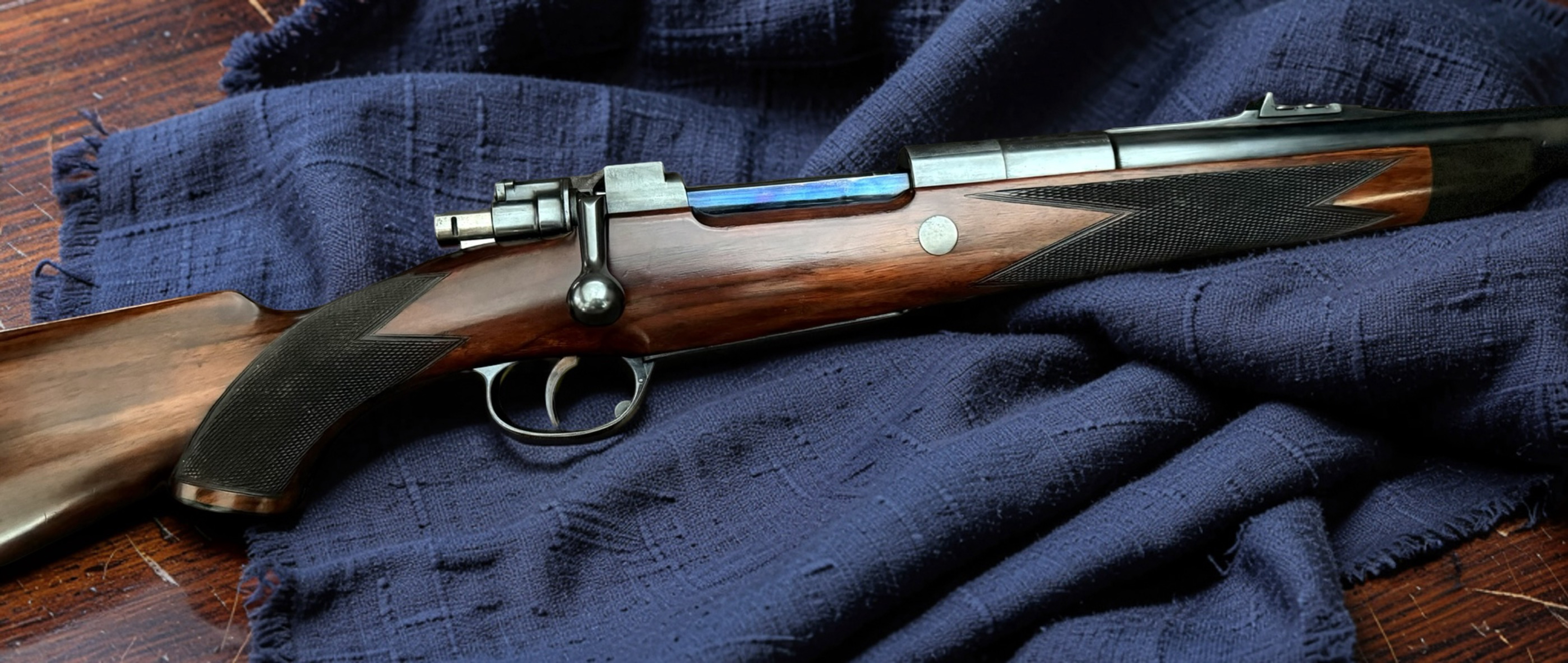
It was W. J. Jeffery No. 28936, a formidable Mauser-action sporting rifle chambered for the .500 Jeffery. The rifle was already something of an old resident of the A&F gun room.
According to the surviving Abercrombie & Fitch inventory records, No. 28936 first appeared in stock on February 1, 1929. It had a 24-inch barrel, weighed 9 pounds 11 ounces and carried a standing rear sight with two folding leaves. Its original retail price was $209.50—a considerable sum at the beginning of the Great Depression.
And there it remained.
The great .500 was still unsold when inventories were taken in 1930 and again in 1931. On September 3, 1931, it was transferred to Griffin & Howe, the renowned New York gunmakers who had recently become part of Abercrombie & Fitch. Twelve days later it returned to A&F. Its recorded weight had changed slightly to 9 pounds 8 ounces, and its price had risen to $275, suggesting that some alteration or shop work may have been performed.
Still no buyer came.
The rifle remained in inventory year after year. Through the Depression years it waited in the racks while countless ordinary sporting rifles came and went.
Perhaps that was understandable. A .500 Jeffery was hardly an ordinary rifle. It had been created for one purpose: dealing with the largest and most dangerous game on earth.
Then, after more than eight years, Harry Barton appeared.
On September 3, 1937, exactly six years after the rifle had first been sent to Griffin & Howe, Abercrombie & Fitch finally recorded the disposition of No. 28936:
Sold to H. S. Barton — $200.00.
For Barton, the purchase was not merely another fine sporting rifle. It was preparation for Tanganyika.
That winter he sailed east, carrying the Jeffery in its case among the trunks and equipment of an African safari. His route followed one familiar to wealthy American sportsmen of the period: across the Atlantic and Mediterranean, through the Suez Canal and down the eastern coast of Africa toward Mombasa. From there lay the railway inland and, beyond it, the great hunting country of East Africa.
Whatever adventures followed have been lost to time.
But the rifle survived.


Harry S. Barton
“From Bourbon to Big Game”
In the autumn of 1937, H. S. “Harry” Barton walked into Abercrombie & Fitch’s celebrated sporting establishment in New York with Africa on his mind.
Barton was a Kentucky whiskey man, part of the generation that had built the state’s distilling industry into one of America’s great businesses. Earlier in his career he had served as master distiller and manager of the Glenmore Distillery at Owensboro, producer of Kentucky Tavern whiskey. By the late 1930s, Barton was a man of comfortable means, accustomed to fine things and now contemplating an adventure far removed from the warehouses and barrel houses of Kentucky: a hunting safari into Tanganyika.
At Abercrombie & Fitch, he found the rifle for it.
It was W. J. Jeffery No. 28936, a formidable Mauser-action sporting rifle chambered for the .500 Jeffery. The rifle was already something of an old resident of the A&F gun room.
According to the surviving Abercrombie & Fitch inventory records, No. 28936 first appeared in stock on February 1, 1929. It had a 24-inch barrel, weighed 9 pounds 11 ounces and carried a standing rear sight with two folding leaves. Its original retail price was $209.50—a considerable sum at the beginning of the Great Depression.
And there it remained.
The great .500 was still unsold when inventories were taken in 1930 and again in 1931. On September 3, 1931, it was transferred to Griffin & Howe, the renowned New York gunmakers who had recently become part of Abercrombie & Fitch. Twelve days later it returned to A&F. Its recorded weight had changed slightly to 9 pounds 8 ounces, and its price had risen to $275, suggesting that some alteration or shop work may have been performed.
Still no buyer came.
The rifle remained in inventory year after year. Through the Depression years it waited in the racks while countless ordinary sporting rifles came and went.
Perhaps that was understandable. A .500 Jeffery was hardly an ordinary rifle. It had been created for one purpose: dealing with the largest and most dangerous game on earth.
Then, after more than eight years, Harry Barton appeared.
On September 3, 1937, exactly six years after the rifle had first been sent to Griffin & Howe, Abercrombie & Fitch finally recorded the disposition of No. 28936:
Sold to H. S. Barton — $200.00.
For Barton, the purchase was not merely another fine sporting rifle. It was preparation for Tanganyika.
That winter he sailed east, carrying the Jeffery in its case among the trunks and equipment of an African safari. His route followed one familiar to wealthy American sportsmen of the period: across the Atlantic and Mediterranean, through the Suez Canal and down the eastern coast of Africa toward Mombasa. From there lay the railway inland and, beyond it, the great hunting country of East Africa.
Whatever adventures followed have been lost to time.
But the rifle survived.
Last edited:


