
MOZAMBIQUE: Buffalo & Crocodile With CMSafaris

Longwalker

AH elite
Joined
Apr 2, 2015
Messages
1,751
Reaction score
6,168
Location
Canada
Media
142
Articles
1
Hunting reports
Africa
5
USA/Canada
4
Member of
Saskatchewan Wildlife Federation, Saskatoon Gun Dog Club
Hunted
Canada, USA, Germany, South Africa, Namibia, Zimbabwe, Mozambique
What follows is a fairly long report of my hunt 7-16 Aug 2026 in the Magoe / Panyame region, along the shores of lake Cahorra Basa. Concession operator is Safaris de Mozambique, booked through outfitter CMS, guided by PH Alan Shearing.

We made it to Johannesburg with no trouble, and enjoyed a much needed layover for a day. We’ll catch up on sleep and reduce jet lag before continuing on tomorrow with another flight to Tete Mozambique, then a bush plane charter, and finally arrive at our hunting camp on the shores of lake Cahorra Basa. Afton Safari lodge is a great option for a layover. Good airport shuttle, nice facility and service, beautiful grounds. And an outdoor themed guest library, museum quality taxidermy, native artwork, and flocks of Cape turtle doves at the bird feeders for ambience. It’s cool here, almost need a jacket, not much smoke. We met a couple of PH’s at breakfast. They operate independently in South Africa, Zambia, Namibia and Botswana. Had fun and educational conversations with them. Dean’s soaking it all in. We’re off to a promising start on our safari.
IMG_2803.jpeg

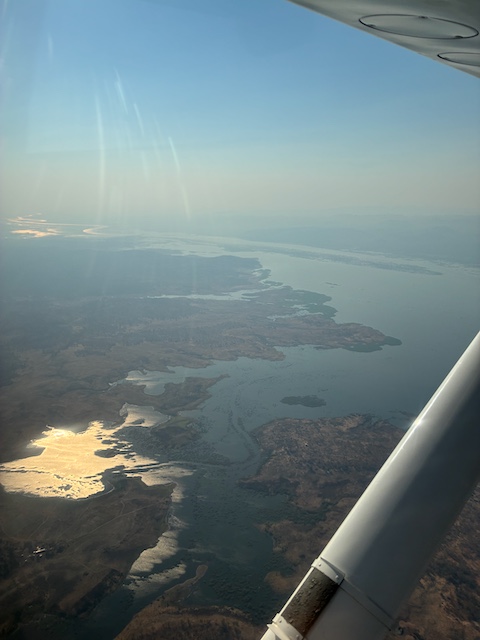
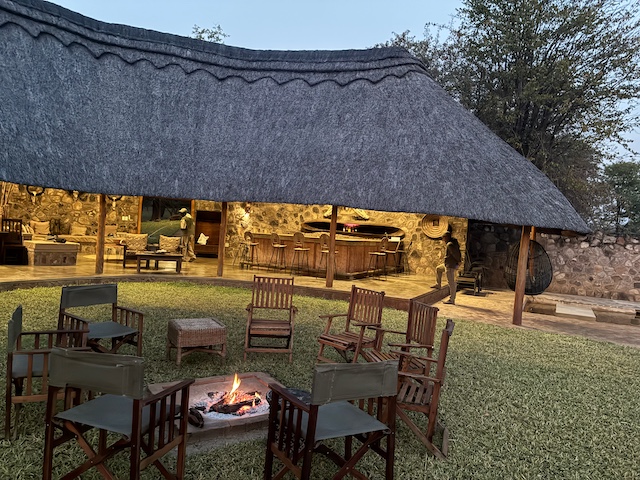
The last leg of the trip was a true African experience. Hazy skies from bush fires, chilly 10c morning in Joberg to a hot 30c in Tete, some problems with my immigration control paperwork and Portuguese speaking officers that was eventually resolved with a lot of patience and a sense of humour. Flying in to camp in the Cessna 206 with the camp owner Simon Roger was interesting. Met up with CMS PH and friend Alan Shearing, and then had another long hour and a half bumping over bush trails to finally reach camp at dusk. Learned some biologists are in camp radio tagging some cheetah that have recently been re-introduced by the efforts of the Origins foundation. Nice beginnings.
IMG_2813.jpeg
IMG_2861.jpeg
 
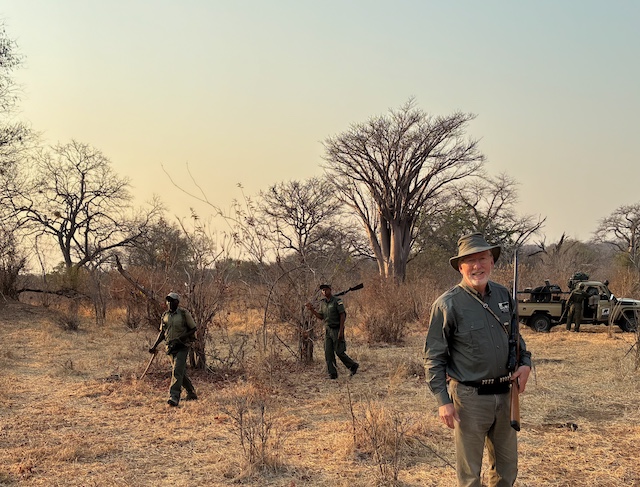
Day one hunting in Mozambique was amazing! Excellent! Woke up at midnight to hear a leopard calling. And again well before dawn with a lion roaring. Breakfast before dawn was traditional mealie meal porridge. Headed out with Six of us squeezed in the truck. Met up with the staff member sent from main camp with the rental rifle that they forgot to supply, no harm done. A CZ550 .375 topped with a 3-9 Vortex. A couple test shots showed the rifle shooting a little low, but still seemed OK. And off we go. After an hour of searching we found tracks of three buffalo bulls, old bachelor “dagga boys". Tracked them a couple kms through the semi open mopane forest, but their senses all work very well and these old boys smelled us and ran away without us getting close enough for a look. Saw three herds of elephant, out on the floodplain. Each numbering a dozen or so. Numerous flocks of impala, 2 kudu, lots of warthogs, a few waterbuck. And wonderful birds! Emerald spotted doves, lilac breasted rollers, hornbills, fork tailed drongos, many others. After a time out to let them settle down, we picked up the tracks of the same three buffalo bulls in the afternoon, tracked them about 3km south, away from the lake shore. Encountered a bull elephant that we had to manoeuvre around in the thick bush. Eventually caught up to the buffalo, but they saw us and ran. We actually saw two of them this time, nice mature bulls - so our success is improving. I stalked and shot an impala for staff rations on the way back to camp in the evening. Tired now.

IMG_2875.jpeg

IMG_2882.jpeg
IMG_2862.jpeg
 
Day two we tried a part of the concession further away, perhaps 25 km from the camp/lake. Some pans up there hold water and there’s good grazing nearby. We picked up the tracks of four Dagga boys and the hunt was on. Unfortunately today is unusually windy. Wind makes prey animals nervous, they can’t hear predators approaching. They are on full alert. We encountered numerous herds of impala and busted the bunch of bull buffalo three times over 3-4 km, the last time our tracker Martin actually got a glimpse of one. We admitted defeat and went on to look for others. What fun! On the way Alan showed us how to get drinking water from a cane, and showed us the edible/poisonous monkey orange. The flesh takes a year to ripen into an edible fruit, and the seeds are the source of strychnine. Don’t eat the seeds!


Afternoon report later …
IMG_2869.jpeg
 
Last edited by a moderator:
This afternoon we left the Dagga boys alone and hunted a mixed herd of 15-30 buffalo. After tracking for 6-8 kms we did catch up with them this time. It’s very tense when you’re within 40-80M of a herd, all those eyes, noses, and ears on high alert. They feed, look around, pop in and out of view in the brush. We must place each foot carefully, and stay down wind and mostly out of sight. One old cow noticed some movement and gave us the stink eye, peering over a palm fan, sunlight glinting off her nose and her scary sharp horn tips until she decided we weren’t a threat. But they eventually smelled us and bolted. We did have a look at one nice herd bull, too young to consider shooting. So it was success without venison. On the way we observed a large herd of sable antelope, what beauties. And several herds of impala, some more sable, and a duiker. And the birds. Pairs of colourful Love birds. Sparrow weavers with their distinctive nests predictably built on the West side of the tree. And near the buffalo, as always crested Louries, their “go away” calls acting as early warnings for the buff. [Alan showed us several new fruits and trees. The plum like fruit of the ebony bush was an unexpected treat to sample as we were glassing the buffalo herd. The beautiful African star chestnut trees with their distinctive smooth bark that baboons can’t climb were interspersed with a variety of combretum, knob thorn, mopane, leadwoods, palms, and many others. I got a blister on the long walk back to the truck, and it was a very long dark drive home so it was especially nice to rest and relax back at camp with appetizers of deep fried kudu bits and buffalo tongue with chutney, and a full South African Braii. Beef and buffalo steaks, Boerewors, sadza, salad, and great conversations with the camp manager and the cheetah documentary crew.


IMG_2878.jpeg
IMG_2896.jpeg
 
Last edited by a moderator:
Today we got into the herds. Big herds. It was exciting! We were checking along the woodland edge of the floodplain for buffalo when Alan noticed a few cattle egrets. The big white birds follow buffalo, eating grasshoppers that they turn up. We stalked nearer, along the lake and into the open mopane forest to intercept them. We had to do a few manoeuvres, but eventually cut in near the front of the herd. What a herd! Perhaps 500 buffalo, visible in bits and pieces, belching, bellowing now and again, grunting and kicking up a thin pall of dust. It was fascinating to be downwind, perhaps 150 M away partially hidden as they strolled by. Eventually the wind shifted and after a bit of pandemonium all was quiet again.


We encountered several kudu, and a lot of impala as we worked our way along the shoreline towards the open flood plain and the big expanse of thick, very tall phragmites grass along the river. Here and there we found old bones of impala, likely killed by leopard or cheetah. And an elephant skull and bones. More impala and a few warthogs moved along in front of us. We decided to stalk along the buffalo paths and tunnels in the tall grass upwind, watching for dagga boys and wary of elephants that could easily be hidden a stones throw away, unseen. The kind of place where you have chamber loaded, rifle held in the hands, thumb on safety. Big galumphing crashing noises announced an unseen buffalo had noticed us before we noticed him. Going away thankfully. Then some impala, and just behind, several cow buff in a little clearing. They moved slowly towards the open edge and we shadowed them from within the jungle of grass. Then we noticed another big herd, a hundred or so hanging out completely in the open. With [URL='https://www.facebook.com/alan.shearing. Alan's expert guidance we stalked to within 100m or so, and glassed the herd looking for an old bull. A couple youngsters and one mature but unimpressive bull was all we spotted. We did a longer walk around to the shores of the Panyami river. So many game trails everywhere! Lots of buffalo and elephant tracks making tunnels in the 3M high reed grass. Back at the truck we watched the big herd from the edge of the trees as they dozed in the midday sun as we had lunch. The afternoon was even better, that report follows later.
IMG_2906.jpeg
IMG_2899.jpeg
 
Last edited by a moderator:
The Buffalo Hunt. This part took a while to think about and write, I wanted to be truthful and accurate.


In the afternoon we decided to try hunting for buffalo further out on the Panyame / Zambezi floodplain. More hide and go seek in the tall, thick somewhat scary grass.


We drove the Toyota North over a couple kms of rough dry flats full of deep elephant footprints, then proceeded on foot “downstream” on the nearly dried up river. Guinea fowl, spur fowl and one lone quail flushed as we pussy footed along, listening and searching for buffalo. Impala scooted out and away as we entered successive small clearings.


Alan suddenly stopped, hand up, finger on lips. A Buffalo called just ahead. Heavy hooves thud on the dry earth. We did a very, very careful stalk, circling around crosswind and peering between the tall grass stems. A herd of impala appeared, blocking our way to the sound and we had to wait for them to walk by. Then, carefully placing each footstep in the same spot just trod by the person ahead, barely daring to breathe, watching intently, listening very intently, and rifle ready we eased forward.


Alan switched his big double rifle for the shooting sticks. Lead tracker Maplan fell back behind me. One or two more careful steps and Alan says “lets back out, elephant” We’ve just stalked to within a few meters of an unsuspecting elephant. All we see are a bit of legs and a moving trunk as it feeds.


A bit further along, we hear that distinctive communication grunt made by feeding buffalo. They’re very close, but impossible to see through the jungle of grass. Grass stems, dry, hollow and as thick as human fingers litter the small open paths between the tiny clearings. A misplaced step will send a loud crunch to warn them. So we move like cats. Alan sees a cow graze by, perhaps 40 meters out in a small vlei. Then we make out more in front and behind her. With another step we discern a huge old bull, bedded and chewing his cud. Alan puts up the sticks and motions me to his side. Moment of truth.


“A shot while he’s bedded is risky, vitals are compressed low in his chest - let’s wait, he’ll get up”


After a short eternity, while peering through the scope with finger on trigger and thumb on safety, nothing. Alan says “ be ready, I’ll make a sound”


The bull turns his massive head towards us and rocks back to lift his chest off the ground. He’s just straightening his back legs out when I let off the shot. Crosshairs a little high, a little far back, but still on the shoulder and “surely” a fatal hit. Then, a series of unfortunate events.


I cycle the bolt to put another quick shot in him as he starts to run, since I understand quite well that it’s the “dead” buffalo that kill hunters. The rifle jams. The cartridge case will not eject. I hit the bolt with my hand, hard. Success! But the next round does not feed in properly, it hits the top of the chamber. I frantically clear the rifle and reload as we watch the bull disappear in a cloud of dust and herd members.


Serious now, Alan switches sticks for rifle and we cautiously ease along the same path we were on, paralleling the little vlei. The herd has only gone perhaps 80M and is milling around confused. They don’t know where the danger came from.


We ease forward, scanning with binoculars to pick out the wounded bull. He’s just ahead, still close. Alan sees a small drop of blood on one nostril. I hold low and forward, and hit him again. Again the rifle jams, and this time the empty cartridge does not eject properly. I curse a bit, hurling a bad word or two while clearing the jam. Two more shots, low in the chest. The last one had feeding problems too.


I reload, and we find the bull a little further along, standing with head hanging but clearly not giving up. The bull hobbles off across the vlei, left front leg clearly not working properly. A couple more shots, from side and rear as he disappears into the tall grass. One is complete miss over top of the running bull. The last shot hurled in desperation from 200 M away, yields an audible thump. One more rifle jam.


The herd mills about and faces us as we emerge from the cover. One big old bull snorts and challenges us, head high, glaring at us like a Spanish fighting bull. Another on the other end of the herd does the same, and several cows. We start to follow the wounded bull, and they stare, stomp, snort, shake their deadly horns and don’t move. We walk past, keeping a keen eye on them, perhaps 100M distant. Alan yells and shakes his rifle. They eventually turn and leave.


We find no blood where the bull entered the thick tall grass.


A lingering cow and calf give us a start as they burst from cover and away. We circle around with the setting sun in our eyes, and the bull grunts and tries to rise to meet us. Alan says “shoot through the grass in the middle of his back” I do and the rifle fails to eject again. Alan shoots, then me once more and we hear the death bellow.


What a mix of emotions! I’m relieved, a little angry at myself, annoyed with the rental rifle, and in awe of the vital tenacity and determination of the buffalo that is lying before us. Alan says to cover him as he checks to ensure the bull is dead. It’s done.


The bull deserved better, I should have done better, the rifle should have worked better, but in the end we were in a mostly celebratory mood.


He’s a big old bull, body as big as any buffalo Alan has ever hunted. His horn tips and boss show the scars and chips of many battles. He’s old enough to have passed his genes on to the herd, and he will be cherished by the local villagers during many family meals.


I’m thankful for his life and the for the experience of the hunt.

IMG_2895.jpeg
IMG_2909.jpeg
IMG_2915.jpeg
IMG_2976.jpeg
 
Last edited by a moderator:
The next day we spend retrieving the buffalo and distributing meat. Justin, the camp manager kindly replaced the problematic .375 rifle with a Remington 7mm, actually flown in from main camp by helicopter for me. It’s OK. It’s accurate and after thoroughly checking it out i’m satisfied that it functions perfectly.

IMG_2985.jpeg

IMG_3036.jpeg
IMG_3039.jpeg
 
This morning we hunted bushpig. It had actually rained a little over night, just enough to help with the bush fires and cool things off. And it made any game tracks easy to age. We checked out some water holes, or “pans” as they are called locally but saw only a couple small warthogs and impala and many Guinea fowl and numerous other birds, especially raptors. We stoped to pick some fruit along the road, kinda like wild plums and delicious. At the end a long 2 hour bumpy twisty drive we picked up some fresh tracks of a family group of bushpig at the “Palms”. Following expert trackers is so much fun. And it was great to see Martin and Maplan in action. A hand gesture, pointed chin, shrug or slap of a thigh all silently convey meaning. Bushpigs like thick bush, very thick. The young palms made ideal habitat, their wide fans mixed with some thorn bushes and tall grass. We got a break now and then with some scattered patches of open sandy soil that made it easy to track compared to the deep shade and leaf litter.


On the drive and while on the tracks we saw spoor of lion, leopard, cheetah, and hyena. Plenty of hunters more skilled than us were after the same pigs.


Alan pointed out a python partially visible as it rested in an antbear burrow. Elephant and buffalo tracks kept us fully alert. It’s amazing how the presence of dangerous game adds to the experience by sharpening one’s concentration.


Any shot opportunity that may have happened would have been very fleeting, so I was instructed to follow closely and shadow the trackers, PH and observers at the rear. Either sex bushpigs are on licence, so it would have been kinda like flushing really large rabbits- identify game, check for a safe shot, and shoot a rapidly dodging / running target. But we never connected. After a couple hours, the tracks showed the pigs spooked and running. And then we lost the tracks entirely. It was fun.

IMG_3053.jpeg

spot the elephant!
IMG_3083.jpeg
IMG_3080.jpeg
IMG_2883.jpeg
 
The bonus warthog… after admitting the bushpig had eluded us, and after a nice lunch and siesta under the palms, we continued the quest, but now for a warthog. Along the edge of the floodplain, a troop of baboons were feeding and in their midst an old boar warthog. Head down feeding unconcerned because baboons are highly effective at warning all creatures of the approach of man. We did a careful stalk to about 120m. One shot and the old boar went straight down without a twitch. The crew were ecstatic! Alan said it’s quite possibly the oldest boar he’s ever guided a client to. We returned to camp early to enjoy a well earned shower and gin & tonic before supper. A great day!
IMG_3105.jpeg
IMG_3107.jpeg
IMG_3091.jpeg
 
Today, we moved locale to the Main Lodge. We're listening to some quite vocal Hippos and watching a Croc float by as I type and sip a local beer. Spectacular - and the views of Lake Cahora Bassa....stunning!


This afternoon we ventured out on the Zambezi river and Lake Cahora Bassa.


After chasing several crocodiles out of their afternoon shore rest spots and watching the Hippos, we settled in with the fishing gear.


I led off the proceedings with a quick catch of a Tiger fish. Sadly, it let go before we could land it.


Shortly after we had a flurry of activity! Dean landed a Vundu Catfish (referred to by the locals as Mermaids!). They can grow to around 50 kg, but this one was a baby. I then landed a Barbel Catfish and Alan, not to be undone, finished the hat trick with another Barbel. A fantastic introduction to this stretch of the Zambezi waterway!


Next morning we had another great session fishing on the Zambezi. We drove the big Fibreglass banana boat with its 100 HP Yamaha outboard to just below the confluence with the Luangwa and where the borders of Mozambique, Zimbabwe and Zambia meet. We observed many, many crocodiles and hippos, and a big herd of elephant. We were fortunate to land a couple of (common but nice ) sharp-toothed catfish and also two humongous vundu catfish. ( our 20 kg scale bottomed out on the smaller one that I caught, and Deans was bigger!) Weather was cool this morning, a nice change but the locals are uncomfortable.

IMG_3272.jpeg
IMG_3145.jpeg
IMG_3149.jpeg
IMG_3150.jpeg
IMG_3168.jpeg
IMG_3199.jpeg
IMG_3208.jpeg
IMG_3231.jpeg
IMG_3249.jpeg
IMG_3289.jpeg
 
Crocodile hunt


We’d noticed the numerous Zambezi river crocodiles were much more visible when they crawled out to sun themselves on the warm afternoons. So we made a plan to fish in the morning and hunt crocs after siesta. We’d had so much fun catching huge vundu catfish the first morning it was hard to imagine we could top that. But we did.


After lunch and a nap, the camp’s local boat driver joined our crew. He said he knew where a big one was sunning himself most afternoons. As we loaded the boat, a trio of bull elephants on the island a couple hundred meters across the channel in front of us came to the shore to have a drink. A pair of crocodiles gave way to them as they reached shore. All seven of us, Dean and I, PH Alan, trackers Martin and Maplan, driver Dubé, game scout Mushambe and the boat driver piled into the big banana boat with its powerful outboard. After a cruise of a couple km’s upstream among the many river islands, past pods of hippo, and past many medium sized crocs on the sand bars we arrived at “the” island.


Sure enough he was there, on the far side of a point, on a thin beach along with several companions and a bunch of shorebirds. We beached the boat on the near side of the little island, and five of us got out to do the stalk. Crocodiles are very wary. They can detect human footsteps by the vibrations in the earth, they hear very well, and of course they have excellent eyesight. Anything suspicious, and they will dive, scoot or slither, or just plain sink into the depths of the river, and disappear for a long time underwater.


We tried to be as sneaky as possible, using the skills we’d developed by stalking buffalo under similar conditions in the tunnels through the tall river bank grass. It didn’t work. A pair of skimmers, quite rare and fascinating birds related to terns, called an alarm. Splash, splash, splash, and the beach was empty. Very empty. There’s nothing quite so empty as a beach that moments ago was full of crocodiles, with no crocodiles on it.


So we waited. Alan said if we’re really lucky, he might come back. We moped in the shade of the grass tunnel for only about 15 minutes when Alan eased up for a peek. There he was, coming in to land, just another hundred meters or so away. We got the two gun cases, the shooting sticks, and started the stalk.


This time, just Alan and me with Dean as Alan’s gun bearer. Super carefully, barely daring to breathe, the three of us crouched and stalked closer using a low sandy rise as cover. When the cover ran out we started to crawl. When that was too exposed we inched forward using elbows and toes to creep forward, The little 7mm rifle cradled crosswise on my arms. We made it to 50 Meters. The shore birds made a few noisy passes, cussing us. A smallish croc surfaced just beside us, eyeing us from the shallows perhaps 10 M away. I wondered if it was hungry. Meanwhile the big croc was slowly nosing toward the beach and was crawling out quartering towards us in a shallow spot in finger deep water.


Alan said, “come slowly, quietly around to my far side” and as I did, Alan pushed the folded up gun cases towards me and said “rest on these, take your time, make sure there is no grass in front, no sand in the barrel, make sure the shot is perfect, you must hit the brain, or we’ll lose him. don’t rush” - OK!


I eased the rifle into position, scope turned up to 9x. Then he said “ look for his eye, and the curve of his jaw. The brain is behind the eye and above the curve of the jaw” - Not OK!


The low sun was glaring directly into the objective lens of the scope. The croc was a dark silhouette with no defining features that I could see. But then I saw an eye blink, and memorized that spot. And I could see the “horns”. And I’d memorized the anatomy of a skull on display in the lodge foyer. The brain is the size of a golf ball and surrounded by bone. Alan said “the brain is directly between and below the horns”


I aimed very, very carefully, and squeezed the trigger. The jaws snapped open, and shut, and that’s all. “Shoot again” and I did. And once more from straight on as his head turned in a reflex towards us.


Getting up out of the wet silt and running forward, reloading, Alan said “ once more in the shoulder” and it was done. The big old dinosaur was ours.


He was huge and scaly and toothy and appropriately scary. He was not pretty but he was impressive. Suddenly I found my hands a little shaky, heart beating fast. The crew showed up and the congratulations and handshakes began.


Crocs have an uncanny ability to snap their jaws or thrash their tails for a very long time after they’re dead, a benefit of their metabolism that allows them to hold their breath underwater. So we examined him while taking great care to avoid that big toothy mouth. The first shot was placed exactly in the brain and was instantly fatal. The others were just “insurance” and were well placed too. What a relief and a celebration.


He was missing some teeth in front, and had some wounds on his nose from another croc. I’d like to know what monster did that to him. After lots of photos, we loaded the whole croc into the boat. Back at the skinning shed they save his skin for local use. I’m amazed when the tail thrashes, two hours after the shot, when the skinner sticks his knife in. The carcass is disposed of. Nothing wants to eat these crocodiles, not even hyena. Certainly not the local fishermen that the crocs often prey on. Perhaps this one was a people eater, who knows? We didn’t open the stomach. I’d rather not know what was in there.

IMG_3422.jpeg
IMG_3277.jpeg
IMG_3258.jpeg
IMG_3265.jpeg
IMG_3312.jpeg
IMG_3302.jpeg
IMG_3349.jpeg
IMG_3356.jpeg
IMG_3400.jpeg
 

Attachments

  • IMG_3150.jpeg
    IMG_3150.jpeg
    286 KB · Views: 30
IMG_3047.jpeg


A cheetah relocation / conservation project was one of the unexpected bonuses we experienced during our hunt. The conservation project in the Panyame region of Mozambique is funded by regulated and licensed hunters, even though these cheetah will not be hunted. The cheetah were recognized as important parts of the ecosystem that were extirpated by poachers and grazers and needed to be restored for the health of the land and its animals.

It was a great honour to meet and hear the stories of this restoration as told by Rob, the Origins foundation founder, and Justin and Katie, the managers of Safaries de Mozambique who encourage and support the project with their land and staff. We were privileged to sustainably hunt some of the same abundant game animals as these cheetah, and saw their tracks a couple times during our hunt in their new territory.

The tales of the helicopter pilots, the veterinarian Hugo, and the cameramen Jack and Louis provided great entertainment around the campfire and at our supper table each evening.

It had been two years since the original relocation project, and the radio collars needed new batteries. So it was time to dart, take health samples and readings, and fit new collars. Nearly all the surviving original transplanted cheetahs were fitted with new radio collars during our stay, and a couple of new cubs.

Fun and rewarding, a lot of hard work and expense, and a success. Modern hunter conservation at work. It will be on air as a National Geographic special soon.
 
Thanks for sharing.Bummer about the rented 375 it might just be a dirty chamber that needed cleaning as most know a cz550 works but ie needs TLC
 
Great story. Many views of the Cape buffalo on the ground but I couldn't see a wound on either side. Where did you hit it?

I shot my first two buffalo with a rental CZ 550 in 375. Fortunately that one cycled fine. I only shot it once at the range and didn't test cycle it. Definitely should have. Lesson for all of us.
 
Great hunt, and a very good buff, congrats !
 
Congrats and thanks for sharing!
 
I hope this isn’t the end of the report? Great report so far. Alan is by far the top PH I’ve had opportunity to hunt with, also just a great guy. I am surprised though you rented a rifle? One of their advantages for Mozambique is Canadians and Europeans can take their rifles unlike Zimbabwe.
 

Forum statistics

Threads
69,800
Messages
1,556,916
Members
165,245
Latest member
MartinT12


Latest posts

Latest profile posts

Member of the South African Hunters and Game Conservation Association
supergrizzly wrote on AZDAVE's profile.
Dave, I could use both of them if still available. I just picked up a new .22 mag and a .22 pump that they would be perfect on.
MHYOUNG 375 wrote on DLSJR's profile.
Dan who is C. W. Richter? He seems to not be a fan of myself!
MHYOUNG 375 wrote on DLSJR's profile.
Who's this C. W. Richter? Seems to have a chip on his shoulder.
 
Top