
World's most popular community & resource for hunting in Africa since 2007
You are using an out of date browser. It may not display this or other websites correctly.
You should upgrade or use an alternative browser.
You should upgrade or use an alternative browser.
UGANDA: KOS Safaris 2026
- Thread starter Hank2211
- Start date

 Keep it coming. Hank, as always, enjoying the read.
Hank2211
AH legend
- Joined
- Jan 12, 2010
- Messages
- 3,449
- Reaction score
- 10,083
- Media
- 244
- Articles
- 4
- Member of
- SCI, DU, Pheasants Forever
- Hunted
- Canada, United States, Zimbabwe, South Africa (Eastern Cape; Northern Cape; North West Province, Natal, Mpumalanga, Limpopo), Namibia, Cameroon, Benin, Ethiopia, Liberia, Mozambique, Uganda, Argentina
Stobbs, who was filming this, is often very useful to have around . . . I discovered for the first time that he carries a couple of bullets in his pocket in case of emergencies like this waterbuck! I’d taken my ammo belt off assuming we’d be done for the day and once the three in the gun were used up . . . Stobbs to the rescue!Fun read, and what a Hartebeest and Waterbuck! I had a similar, though even longer, experience with a Defassa on @spike.t 's place. I was using my .275 and there was some question whether the thing would expire before I completely ran out of ammunition.
They can be tough animals.
Hank2211
AH legend
- Joined
- Jan 12, 2010
- Messages
- 3,449
- Reaction score
- 10,083
- Media
- 244
- Articles
- 4
- Member of
- SCI, DU, Pheasants Forever
- Hunted
- Canada, United States, Zimbabwe, South Africa (Eastern Cape; Northern Cape; North West Province, Natal, Mpumalanga, Limpopo), Namibia, Cameroon, Benin, Ethiopia, Liberia, Mozambique, Uganda, Argentina
Day 4 - March 4
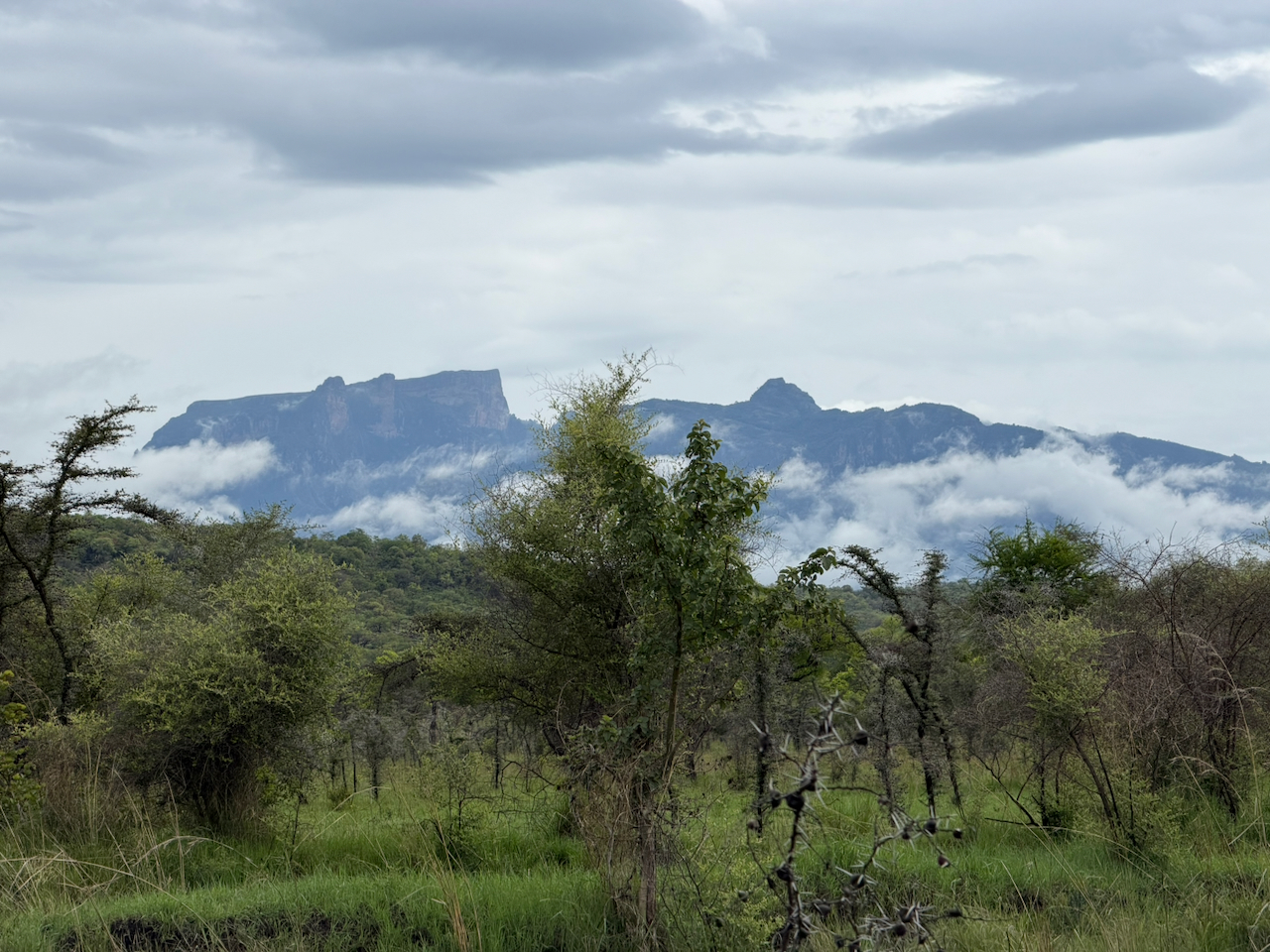
There was more rain overnight and everything was getting muddy. We waited again for the rain to stop to get started and headed out about 9 am. I’d pretty much run out of things to shoot at, so Ade and I talked about perhaps advancing our move to the next camp, which was, after all, the main reason to come to Uganda. Ade said he would see if we could get there early and if so, whether we could change the charter flight.
We headed back to camp with Ade having some work to do on planning, and apparently even more cricket to sleep through. For some reason the prospect of watching a second day of cricket didn’t seem to upset my team. Hard to understand, but there you are.
Ade made a bunch of phone calls during the afternoon and by supper time, we had a new plan. We would leave on the Friday - Day 6 - rather than wait for Day 9, as we had originally planned. I was happy with this result - I would have hated to spend more days at PianUpe (as much as I liked it) and missed one or both of the bushbuck, so this maximized the odds of getting what I needed.
Day 5 - March 5 Thursday

The maneless zebra at PianUpe
We had rain again overnight (not even the jungle rains as much as this!), but it was light and intermittent. We decided to head out anyway, although we had to let Dean sit in the truck with us rather than on the back. Some people seem to be afraid of getting a little wet.
Before leaving, we sent some luggage ahead with Tom and Gareth, who would be driving to the new camp (more than a full day’s drive) and meeting us there. We would have the smaller plane (a Cessna 206) for this flight back to Entebbe, so space and weight were at a premium. My hard gun case (a Pelican) was mentioned as something which could go ahead, so ahead it went.
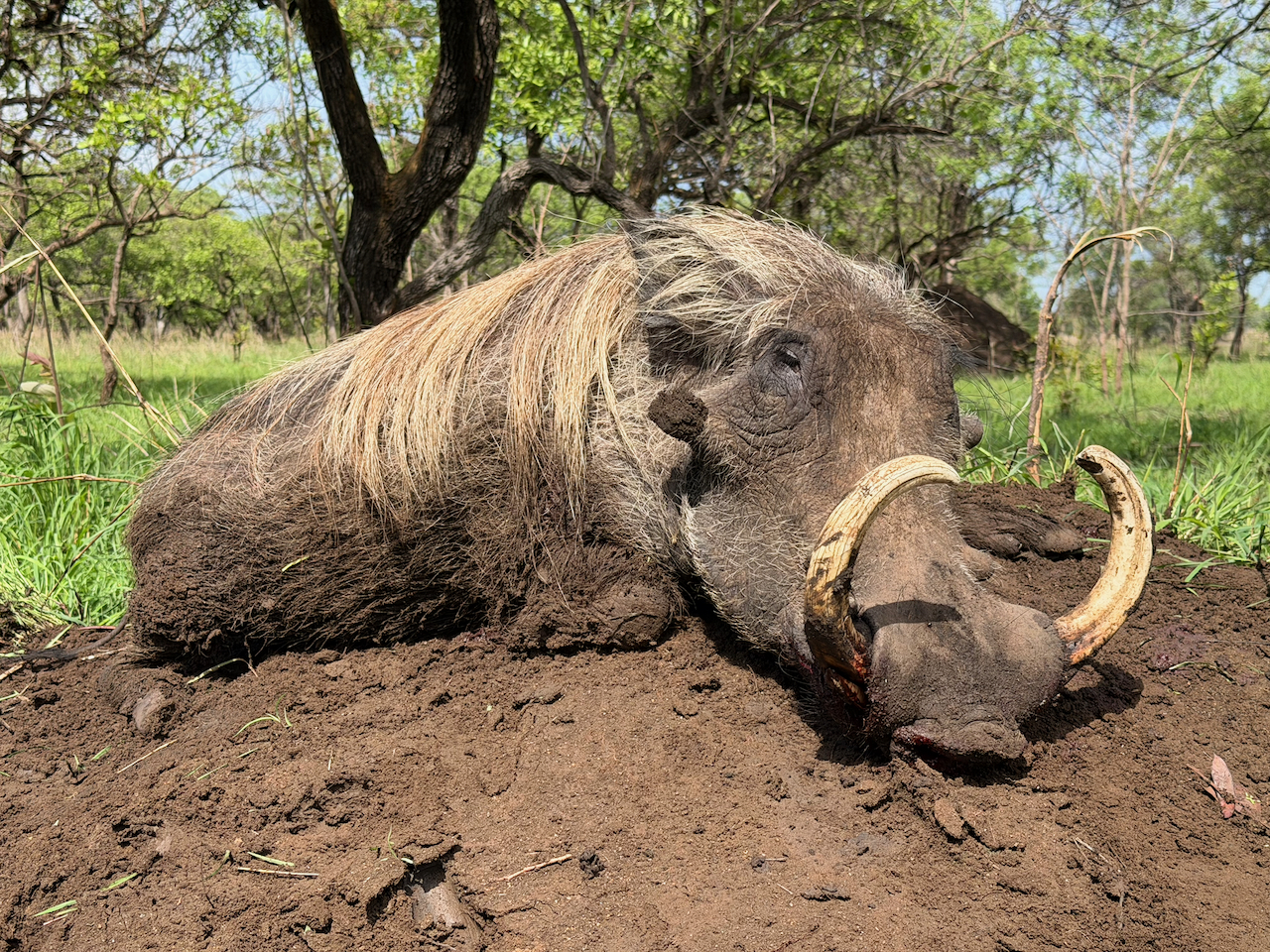
We headed out around 9 am again, and though it had stopped raining, the roads/tracks were wet and black mud stuck to everything like glue. After an hour or so we spotted what appeared to be a great warthog. Both Ade and Dean looked at me and I said, ‘sure’. So we stopped and jumped out.
The warthog had been slowly trotting away, so we had to cover some ground to try for a shot. At one point we lost him, but Ade had an idea of which direction he might go, so we continued, our feet getting larger and heavier by the step. Before long the mud started to move up past our ankles . . .
Ade was clearly thinking like a warthog, and we eventually saw it again. I got up on the sticks, which, with the mud, kept sinking on one side or another. I was getting a bit frustrated and the warthog wasn’t standing still, so of course, I took a quick shot. It was a hit, but it didn’t appear to be a great hit. Instead of running around in a circle as they do when well hit, this one just ran away in a straight line. As we began to run after it, I was going over the shot in my head, and it seemed that not only were the sticks unsteady, but I had had a hard time really seeing the warthog as well as I thought I should have. I looked at my scope and got my answer. I had dropped it to its lowest power (1.7x) when I approached the waterbuck, andwaterbuck two days ago and hadn’t put it back to the 8x or 10x I usually keep it at for shots past about 150 yards.
As many hunts as I’ve taken, and I still make rookie mistakes! That’s what keeps me young, I guess.
We tried to follow the warthog, but eventually had to return to where it had been standing when I took the shot. There was blood (and bone), and that provided us with a trail to follow, and follow we did. It would walk/run, lie down, we would bump it, and repeat. Eventually, it got far enough away that we spotted it before we bumped it, and I managed to end its misery. The first shot had been a bit too far forward, and would have only been a brisket shot, but the angle had saved me - it broke a leg and took out enough of the pig’s front that it was likely going to (eventually) bleed to death.
Having finally gotten a look at my warthog “up close” I was impressed not only with his teeth, which were both intact, but his sheer size. Warthog do well here.
March 6 - Day 6 - Friday
Today was a travel day. We we got up lateish (7 am), had a big breakfast, I paid some tips, and we headed to the air strip. For once, the sun was shining and visibility was good. Unlike the Caravan, the 206 is limited to flying in good weather (here at least - I’m no expert on airplanes). The we ran into an unforeseen problem.
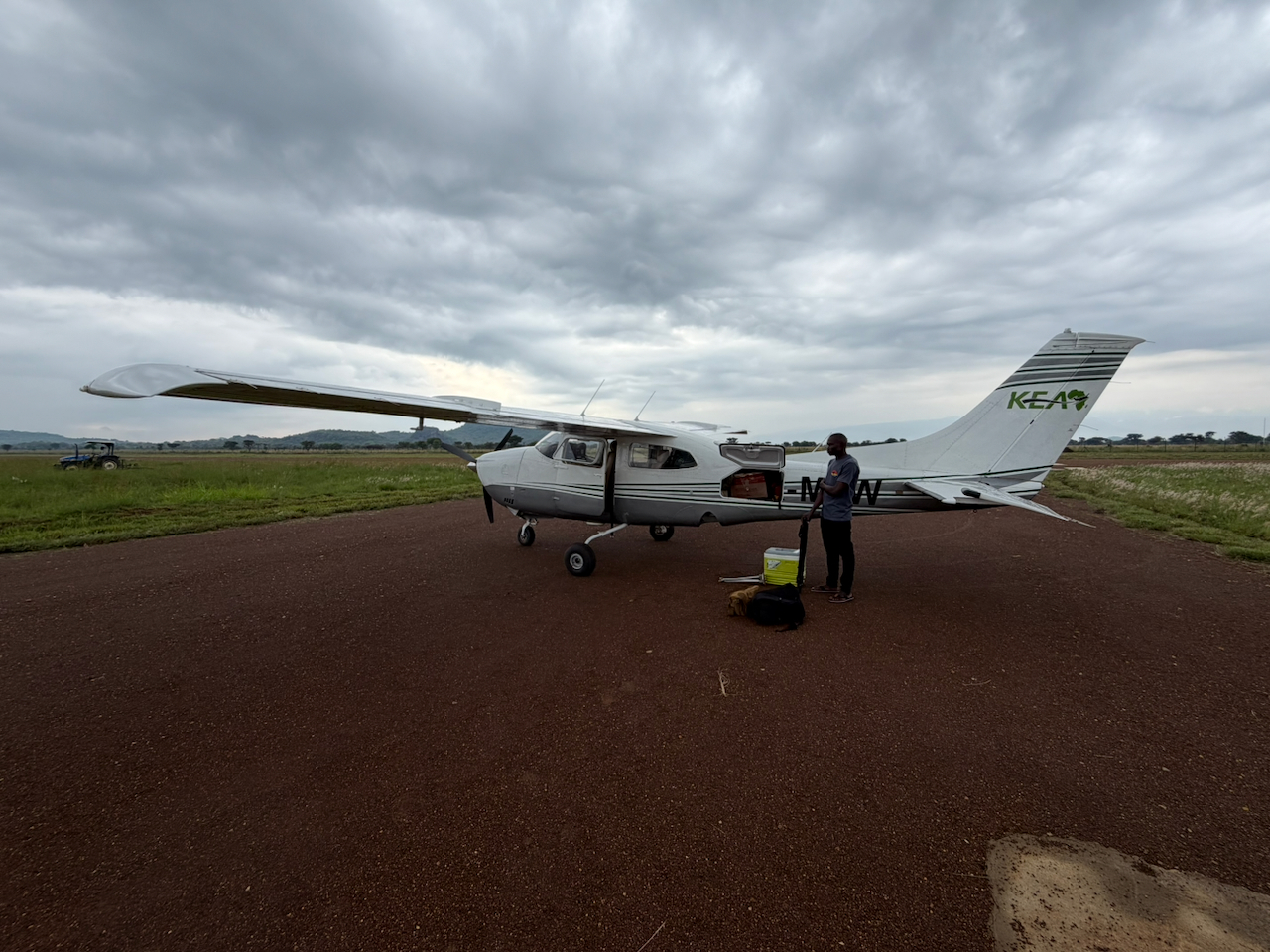
The 'regular' plane
Apparently, aviation rules - in Uganda if not elsewhere - prohibit commercial flights with firearms ‘unsecured’ in the passenger compartment. On the 206, the entire plane is the passenger compartment, including the luggage area (which isn't separate from the seating area). And we had no hard case in which to secure my firearm. Our pilot was apparently concerned that if he showed up at Entebbe and we unloaded an unsecured firearm and handed it over to the police, who would be waiting, that there might be trouble. For him, if not for both of us. I suggested that I remove the bolt from the rifle and give it to the pilot to hang on to. He thought about that, and wasn’t sure it would pass muster.
Fortunately, Ade had mentioned this very fact in an email to the charter company the day before, and he had a confirmatory email saying it shouldn’t be a problem. The pilot wasn’t convinced, but he called his head office and explained the situation. We only heard half the conversation, but it went something like this: Pilot: “: “You’re saying it’s my discretion if I fly like this?” “Well, my discretion is I follow the rules.” (Which is the kind of response I like to hear from a pilot). “You have to tell me what you want me to do.” “They say I can have the bolt.” “The bolt is what makes the rifle work.”
That seemed to do the trick, and the pilot got his OK. We loaded everything up and there wasn’t a square inch to spare. I was put in the front seat, moved pretty far forward. There was a steering wheel in front of me and pedals at my feet. Me to Pilot: “I assume these pedals aren’t connected to anything.” Pilot: "They are, and they’re important. Please don’t touch them.” Me, to myself: I’ll do what I can but now I’m worried about where to put my feet. And my hands, since I assume this steering wheel works too.
Finally, takeoff, and a reasonably uneventful 1.2-hour flight to Entebbe. When we landed I mentioned to the pilot that it was interesting to watch him actually fly the plane, but that I was worried about the engine temperature gauge which had been in the red for at least the last half of the flight. He said he didn’t pay attention to those gauges; they were hardly every accurate. Great. This is Africa.
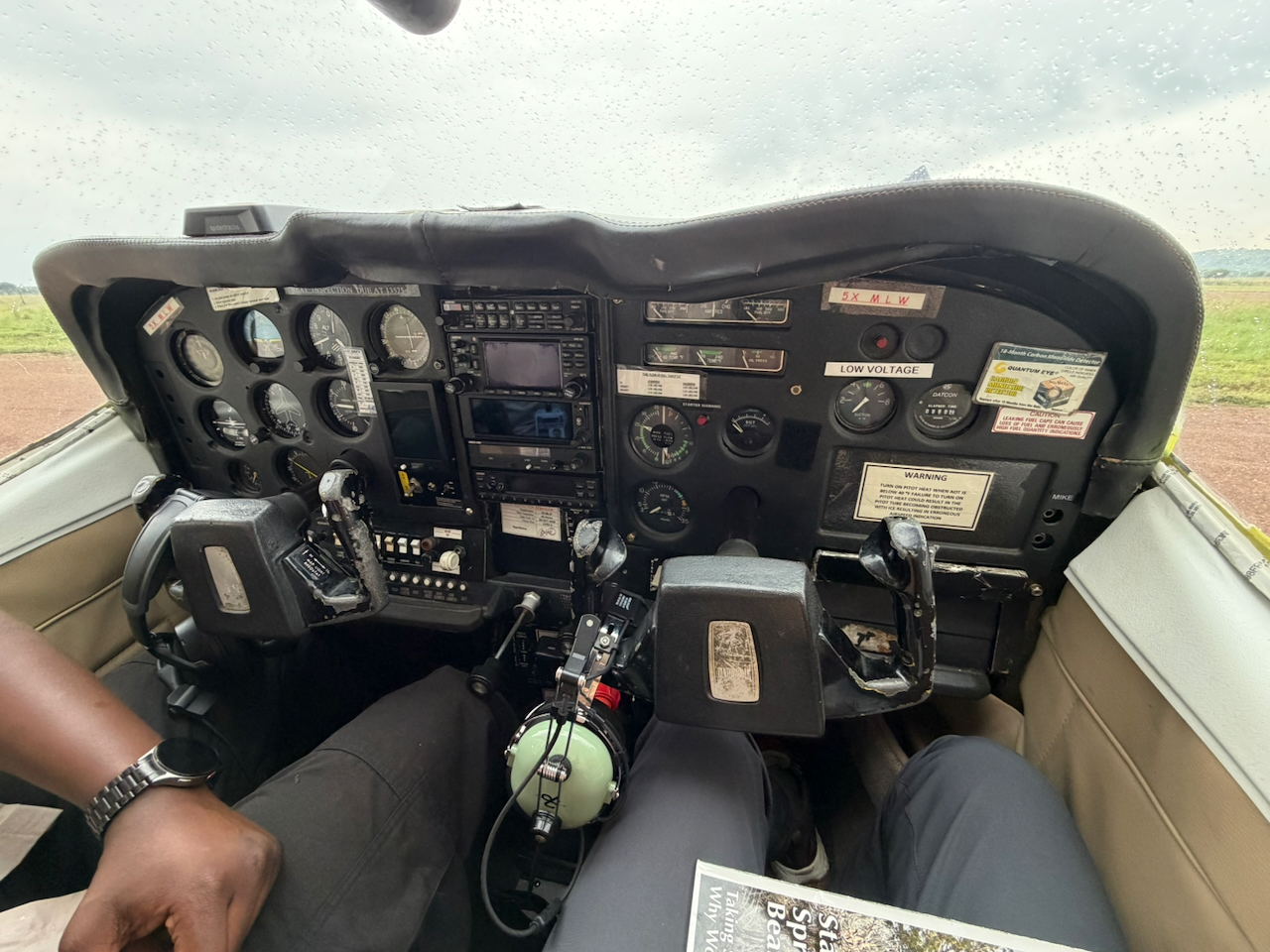
My legs, my steering wheel and gauges which you should apparently ignore
As expected, a nice policeman was waiting for us on the tarmac, and he took possession of my gun. Outside of its hard case, it looks pretty much like what it is, which earned us some strange glances as we walked through the Entebbe airport (not a small place) to our ride, waiting outside. Then the formal handover and we were off for a 6–7-hour drive to our next camp.
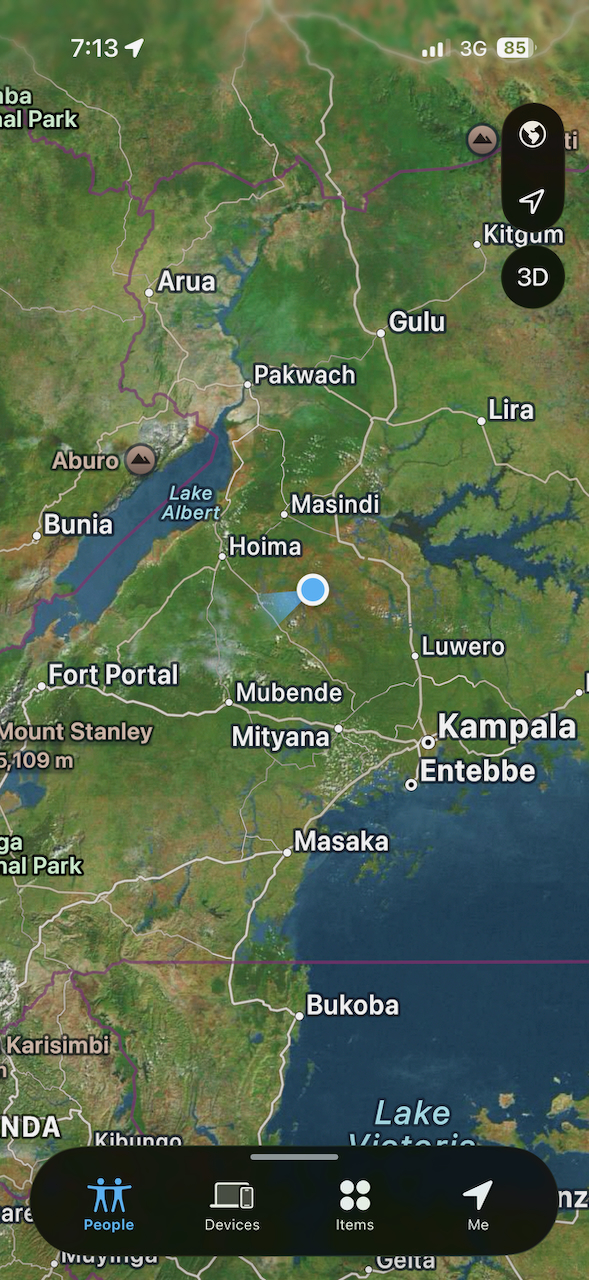
Our new camp location - that this is a 7 hour drive from Entebbe tells you something about the roads!
When we at last arrived at our new camp, we had earned the welcome fruit drink waiting for us. This camp - Mayanja - was also very nice - very large tents, with thatched roofs covering them. Good internet, lots of hot water, a hard mattress, but otherwise very comfortable. Couldn’t ask for more.
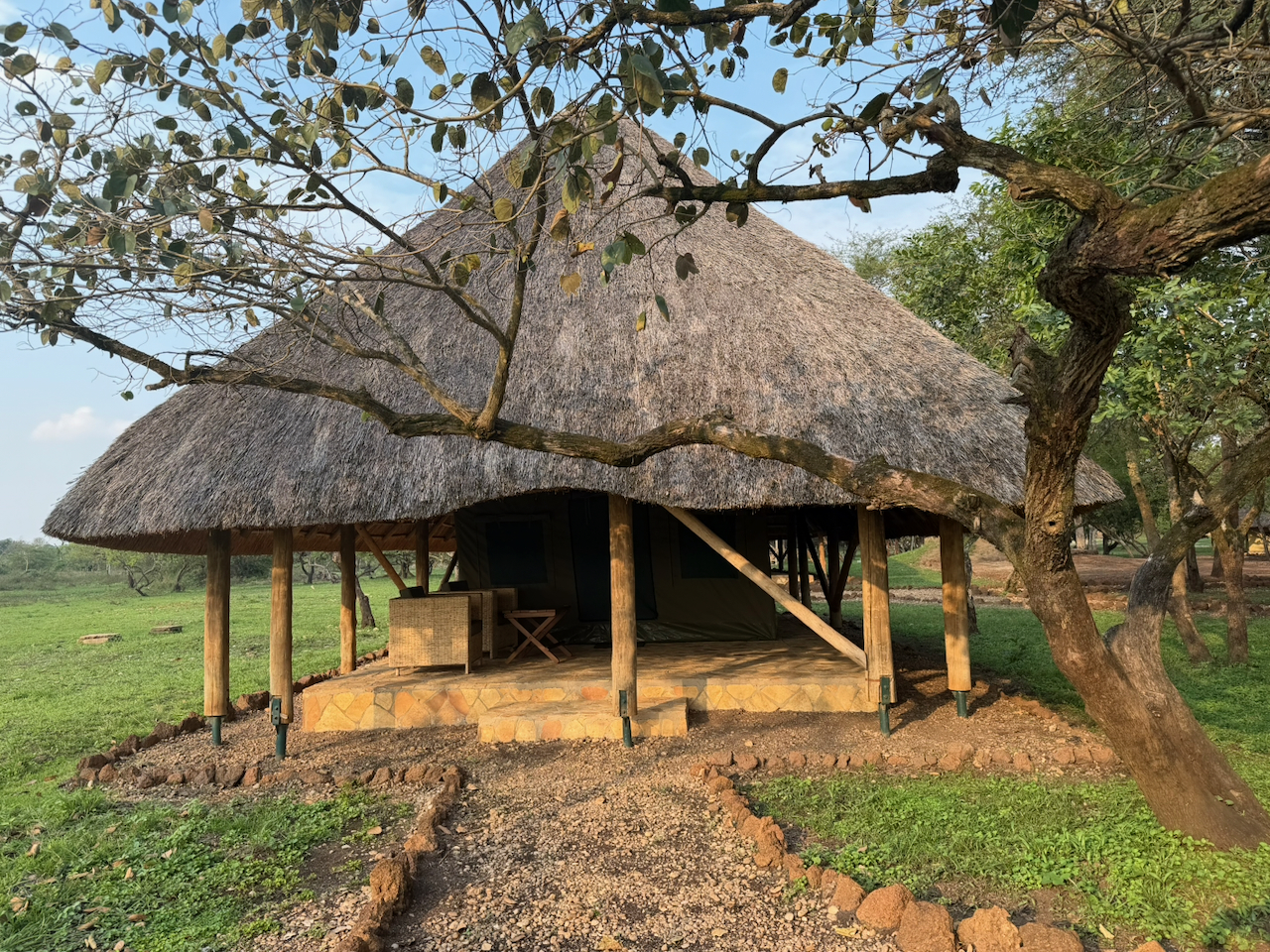
My new home - there is actually a tent under this!
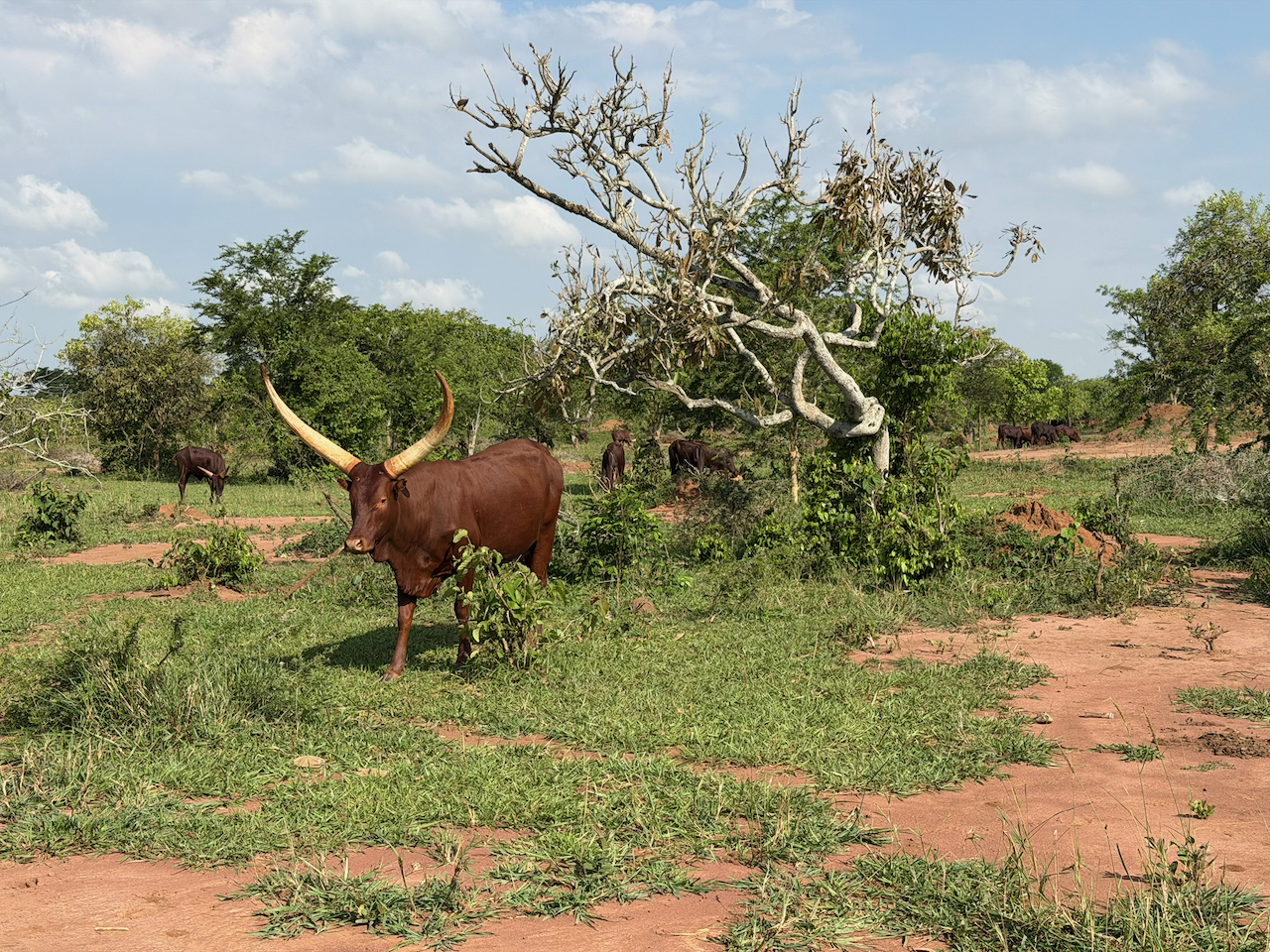
We drove through some of the concession on the way to camp, and there were not only cattle - with massive horns - almost everywhere, but also woodcutters and the fires they were using to make charcoal. First, the cattle. It turns out they are Ankole-Watusi (though cross-bred with some brahma I would have thought), which are said to have the largest horns of any cattle breed in the world. Coming as I do from cattle country, I’d agree.
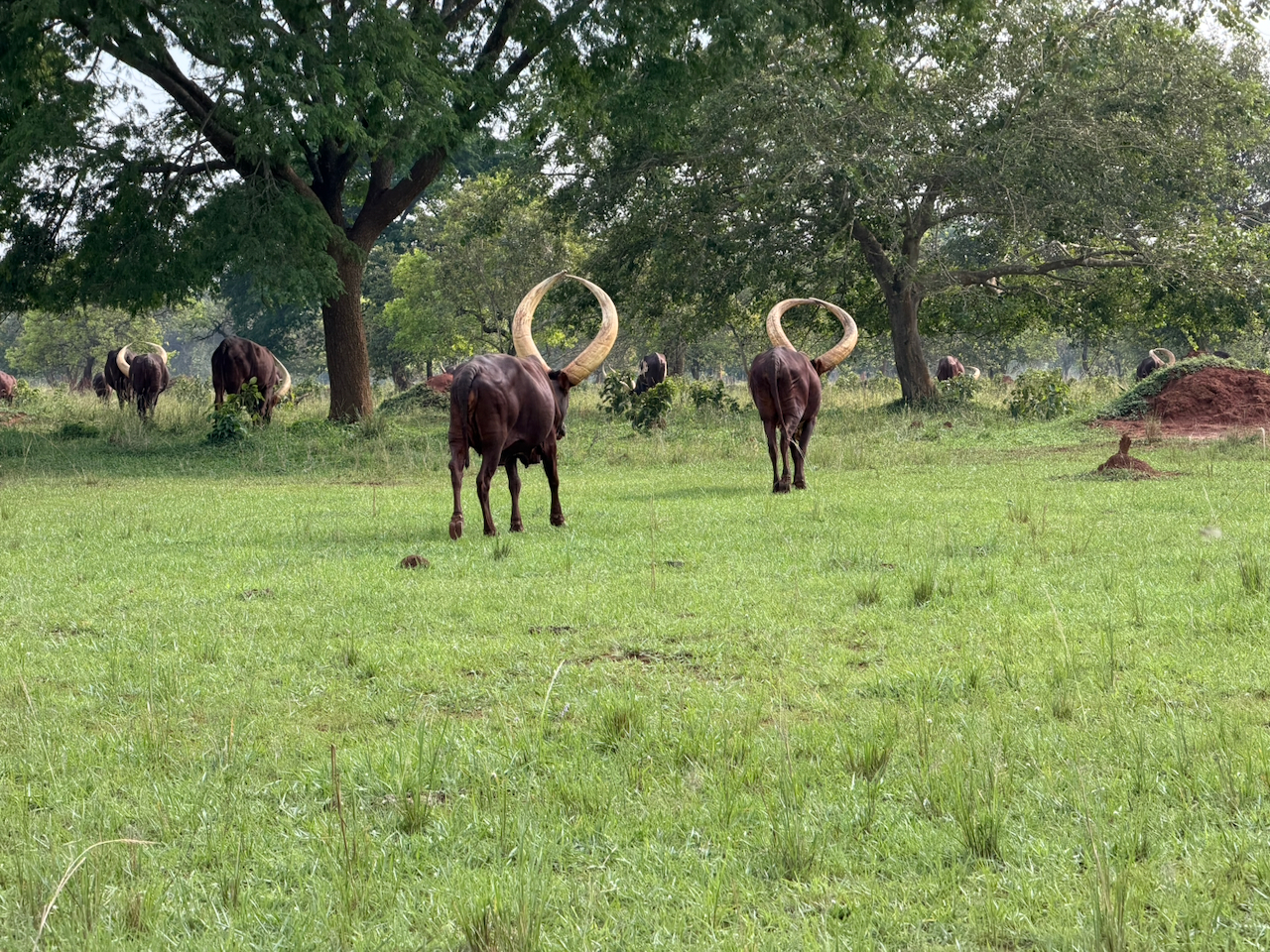
The local cows
Now, the woodcutters. These men (almost always men) set up shelters here and there throughout the area, building the shelters from brush and blue plastic. The hunting area is in fact a series of community owned areas along a river (like tribal trust lands or Campfire areas), interspersed with some privately held land, some with extensive (and expensive looking) buildings. The communities have banded together and have granted to the concession holder the right to hunt on the property, for which they are compensated, while retaining the right to use the land themselves.
You’ll have to permit me a bit of a divergence from the actual hunting for a minute.
I was thinking to myself - this is a nightmare - how will we ever find bushbuck with all these cows and people around? But it turns out that the wildlife has become habituated to people and cattle, so that while they don’t stand around and wait to be shot at, they don’t seem to evacuate the area as I would have thought. And given the wildlife we saw, the plan seems to work.
As I said, I would have thought that the presence of cattle would inhibit wildlife. Not the case.
I would also have thought that the presence of people would have resulted in rampant poaching and the effective elimination of wildlife. Not the case, at least not here.
The only negative impact of the cattle and people that I could see was that you had to extremely careful - more than normally careful - with your shots. You had to know with absolute certainty (more than usual?) what was behind the animal you were shooting at, especially if you were shooting bullets like Barnes which tend to pass straight through a lot of game. Money would deal with an accidentally shot cow, but it wouldn’t help with an accidentally shot person.
There was more rain overnight and everything was getting muddy. We waited again for the rain to stop to get started and headed out about 9 am. I’d pretty much run out of things to shoot at, so Ade and I talked about perhaps advancing our move to the next camp, which was, after all, the main reason to come to Uganda. Ade said he would see if we could get there early and if so, whether we could change the charter flight.
We headed back to camp with Ade having some work to do on planning, and apparently even more cricket to sleep through. For some reason the prospect of watching a second day of cricket didn’t seem to upset my team. Hard to understand, but there you are.
Ade made a bunch of phone calls during the afternoon and by supper time, we had a new plan. We would leave on the Friday - Day 6 - rather than wait for Day 9, as we had originally planned. I was happy with this result - I would have hated to spend more days at PianUpe (as much as I liked it) and missed one or both of the bushbuck, so this maximized the odds of getting what I needed.
Day 5 - March 5 Thursday
The maneless zebra at PianUpe
We had rain again overnight (not even the jungle rains as much as this!), but it was light and intermittent. We decided to head out anyway, although we had to let Dean sit in the truck with us rather than on the back. Some people seem to be afraid of getting a little wet.
Before leaving, we sent some luggage ahead with Tom and Gareth, who would be driving to the new camp (more than a full day’s drive) and meeting us there. We would have the smaller plane (a Cessna 206) for this flight back to Entebbe, so space and weight were at a premium. My hard gun case (a Pelican) was mentioned as something which could go ahead, so ahead it went.
We headed out around 9 am again, and though it had stopped raining, the roads/tracks were wet and black mud stuck to everything like glue. After an hour or so we spotted what appeared to be a great warthog. Both Ade and Dean looked at me and I said, ‘sure’. So we stopped and jumped out.
The warthog had been slowly trotting away, so we had to cover some ground to try for a shot. At one point we lost him, but Ade had an idea of which direction he might go, so we continued, our feet getting larger and heavier by the step. Before long the mud started to move up past our ankles . . .
Ade was clearly thinking like a warthog, and we eventually saw it again. I got up on the sticks, which, with the mud, kept sinking on one side or another. I was getting a bit frustrated and the warthog wasn’t standing still, so of course, I took a quick shot. It was a hit, but it didn’t appear to be a great hit. Instead of running around in a circle as they do when well hit, this one just ran away in a straight line. As we began to run after it, I was going over the shot in my head, and it seemed that not only were the sticks unsteady, but I had had a hard time really seeing the warthog as well as I thought I should have. I looked at my scope and got my answer. I had dropped it to its lowest power (1.7x) when I approached the waterbuck, andwaterbuck two days ago and hadn’t put it back to the 8x or 10x I usually keep it at for shots past about 150 yards.
As many hunts as I’ve taken, and I still make rookie mistakes! That’s what keeps me young, I guess.
We tried to follow the warthog, but eventually had to return to where it had been standing when I took the shot. There was blood (and bone), and that provided us with a trail to follow, and follow we did. It would walk/run, lie down, we would bump it, and repeat. Eventually, it got far enough away that we spotted it before we bumped it, and I managed to end its misery. The first shot had been a bit too far forward, and would have only been a brisket shot, but the angle had saved me - it broke a leg and took out enough of the pig’s front that it was likely going to (eventually) bleed to death.
Having finally gotten a look at my warthog “up close” I was impressed not only with his teeth, which were both intact, but his sheer size. Warthog do well here.
March 6 - Day 6 - Friday
Today was a travel day. We we got up lateish (7 am), had a big breakfast, I paid some tips, and we headed to the air strip. For once, the sun was shining and visibility was good. Unlike the Caravan, the 206 is limited to flying in good weather (here at least - I’m no expert on airplanes). The we ran into an unforeseen problem.
The 'regular' plane
Apparently, aviation rules - in Uganda if not elsewhere - prohibit commercial flights with firearms ‘unsecured’ in the passenger compartment. On the 206, the entire plane is the passenger compartment, including the luggage area (which isn't separate from the seating area). And we had no hard case in which to secure my firearm. Our pilot was apparently concerned that if he showed up at Entebbe and we unloaded an unsecured firearm and handed it over to the police, who would be waiting, that there might be trouble. For him, if not for both of us. I suggested that I remove the bolt from the rifle and give it to the pilot to hang on to. He thought about that, and wasn’t sure it would pass muster.
Fortunately, Ade had mentioned this very fact in an email to the charter company the day before, and he had a confirmatory email saying it shouldn’t be a problem. The pilot wasn’t convinced, but he called his head office and explained the situation. We only heard half the conversation, but it went something like this: Pilot: “: “You’re saying it’s my discretion if I fly like this?” “Well, my discretion is I follow the rules.” (Which is the kind of response I like to hear from a pilot). “You have to tell me what you want me to do.” “They say I can have the bolt.” “The bolt is what makes the rifle work.”
That seemed to do the trick, and the pilot got his OK. We loaded everything up and there wasn’t a square inch to spare. I was put in the front seat, moved pretty far forward. There was a steering wheel in front of me and pedals at my feet. Me to Pilot: “I assume these pedals aren’t connected to anything.” Pilot: "They are, and they’re important. Please don’t touch them.” Me, to myself: I’ll do what I can but now I’m worried about where to put my feet. And my hands, since I assume this steering wheel works too.
Finally, takeoff, and a reasonably uneventful 1.2-hour flight to Entebbe. When we landed I mentioned to the pilot that it was interesting to watch him actually fly the plane, but that I was worried about the engine temperature gauge which had been in the red for at least the last half of the flight. He said he didn’t pay attention to those gauges; they were hardly every accurate. Great. This is Africa.
My legs, my steering wheel and gauges which you should apparently ignore
As expected, a nice policeman was waiting for us on the tarmac, and he took possession of my gun. Outside of its hard case, it looks pretty much like what it is, which earned us some strange glances as we walked through the Entebbe airport (not a small place) to our ride, waiting outside. Then the formal handover and we were off for a 6–7-hour drive to our next camp.
Our new camp location - that this is a 7 hour drive from Entebbe tells you something about the roads!
When we at last arrived at our new camp, we had earned the welcome fruit drink waiting for us. This camp - Mayanja - was also very nice - very large tents, with thatched roofs covering them. Good internet, lots of hot water, a hard mattress, but otherwise very comfortable. Couldn’t ask for more.
My new home - there is actually a tent under this!
We drove through some of the concession on the way to camp, and there were not only cattle - with massive horns - almost everywhere, but also woodcutters and the fires they were using to make charcoal. First, the cattle. It turns out they are Ankole-Watusi (though cross-bred with some brahma I would have thought), which are said to have the largest horns of any cattle breed in the world. Coming as I do from cattle country, I’d agree.
The local cows
Now, the woodcutters. These men (almost always men) set up shelters here and there throughout the area, building the shelters from brush and blue plastic. The hunting area is in fact a series of community owned areas along a river (like tribal trust lands or Campfire areas), interspersed with some privately held land, some with extensive (and expensive looking) buildings. The communities have banded together and have granted to the concession holder the right to hunt on the property, for which they are compensated, while retaining the right to use the land themselves.
You’ll have to permit me a bit of a divergence from the actual hunting for a minute.
I was thinking to myself - this is a nightmare - how will we ever find bushbuck with all these cows and people around? But it turns out that the wildlife has become habituated to people and cattle, so that while they don’t stand around and wait to be shot at, they don’t seem to evacuate the area as I would have thought. And given the wildlife we saw, the plan seems to work.
As I said, I would have thought that the presence of cattle would inhibit wildlife. Not the case.
I would also have thought that the presence of people would have resulted in rampant poaching and the effective elimination of wildlife. Not the case, at least not here.
The only negative impact of the cattle and people that I could see was that you had to extremely careful - more than normally careful - with your shots. You had to know with absolute certainty (more than usual?) what was behind the animal you were shooting at, especially if you were shooting bullets like Barnes which tend to pass straight through a lot of game. Money would deal with an accidentally shot cow, but it wouldn’t help with an accidentally shot person.
Last edited by a moderator:

Scott CWO
AH ambassador
Awesome, just awesome! Really enjoying your report.

meigsbucks
AH legend
- Joined
- Feb 5, 2011
- Messages
- 3,145
- Reaction score
- 7,238
- Location
- Central Ohio
- Media
- 28
- Member of
- SCI Life Member, NRA Life Member
- Hunted
- Zimbabwe and Namibia
Great trophies. That warthog and waterbuck definitely have that WOW factor.
Ade was my PH in Zim in 2013 and he was just starting KOS. He’s a great guy and hunter. You chose well.
Ade was my PH in Zim in 2013 and he was just starting KOS. He’s a great guy and hunter. You chose well.

LivingTheDream
AH legend
Hank if it makes feel any better the last time I was in a 206. The pilot said dont put too much fuel in, dont want to be too heavy and not able to take off. Apparently more than 1/4 tank was too much fuel. And to your point, space is at a premium.
I have often wondered why they are used more across Africa.
I have often wondered why they are used more across Africa.
Hank2211
AH legend
- Joined
- Jan 12, 2010
- Messages
- 3,449
- Reaction score
- 10,083
- Media
- 244
- Articles
- 4
- Member of
- SCI, DU, Pheasants Forever
- Hunted
- Canada, United States, Zimbabwe, South Africa (Eastern Cape; Northern Cape; North West Province, Natal, Mpumalanga, Limpopo), Namibia, Cameroon, Benin, Ethiopia, Liberia, Mozambique, Uganda, Argentina
Day 7 - March 7 - Saturday
We were up and out of camp at 6 am this morning, headed to a machan to sit and wait and hope. It was a 20-minute drive to our jumping off point, and we dropped a few spotters along the ayway at other machans. From that point we loaded our team into a canoe and began our 15-minute paddle to the island upon which sat this machan. Once we got to the island,we had only about 25 yards to walk to the machan, but this is over rotting papyrus, with each step sinking into muddy swamp water. In the dark.
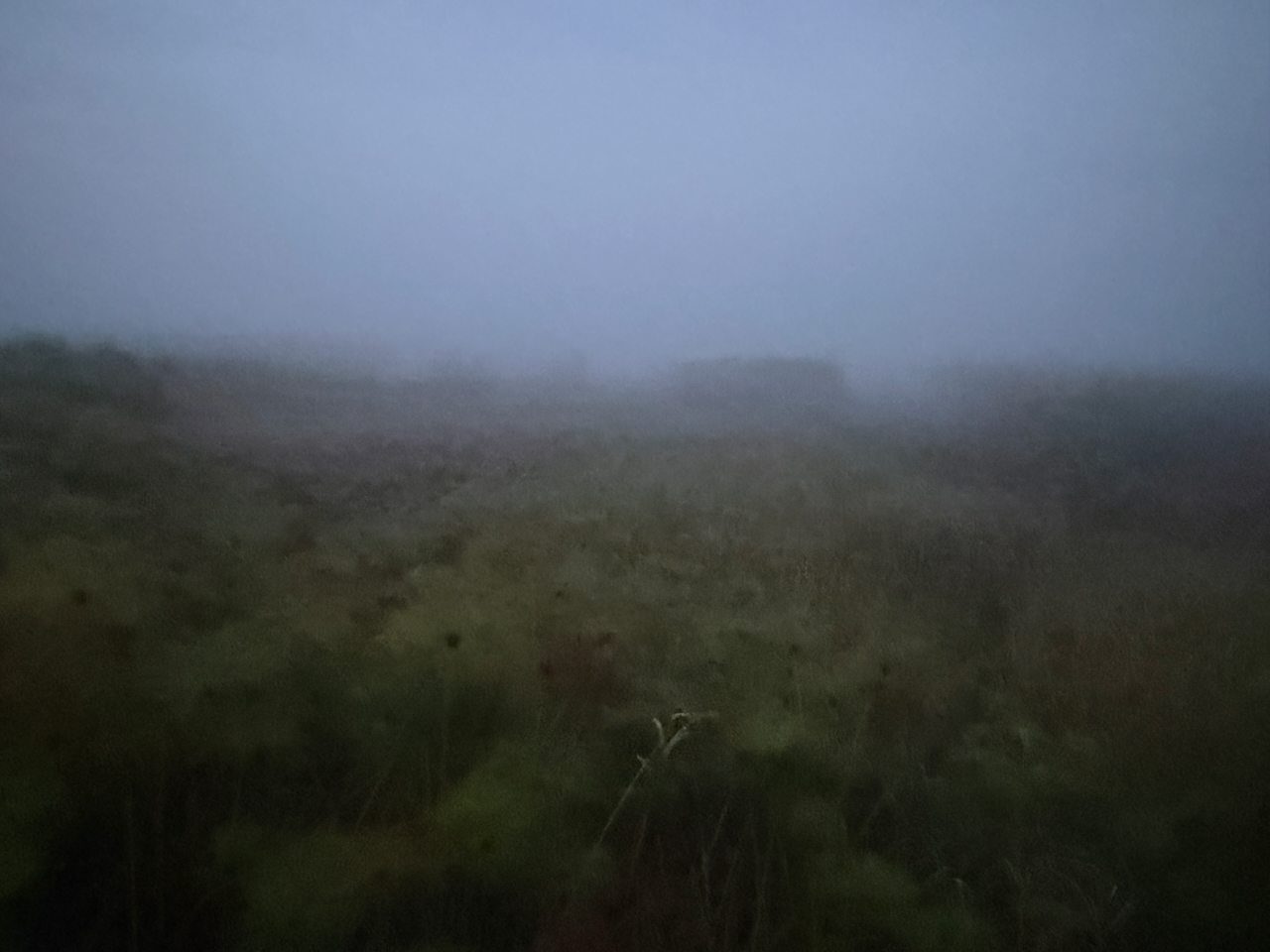
Looking out from our machan at very first light
Ade had done this before and had brought along something I hadn’t thought to even bring to Africa – a Thermacell. He turned it on and put it on the floor of the machan. These swamps are a miasma of rotting organic matter and insects, especially mosquitos. I sprayed myself with repellant before getting into the machan, but you always miss spots. The Thermacell worked well and we weren’t overly bothered by mosquitos.
A word about this area. The river is reasonably wide and from what I could see, a great deal of the side we were on was covered in papyrus reeds, creating the swamps in which the sitatunga live. The outfitter has over 30 kms of river, and has set up machans along this stretch, and on some islands in the midst of the swamp (note that even the ‘islands’ tend to be covered in papyrus and water when you walk on them). Lanes for the canoes are cut out of the papyrus although paddling is difficult due to the rapidly growing swamps. The outfitter has also ‘carved’ open lanes in front of the machans by cutting down the papyrus. This allows new growth, which, with a bit of luck, brings the sitatunga out to graze. Shooting distances can reach out to over 250 yards, but the actual distance depends on where the animal appears, so it may well be shorter than that. Scouts are sent to various machans every morning and evening to report on any movements they might see. So this is quite an operation. If you really want an East African sitatunga, this is the place.
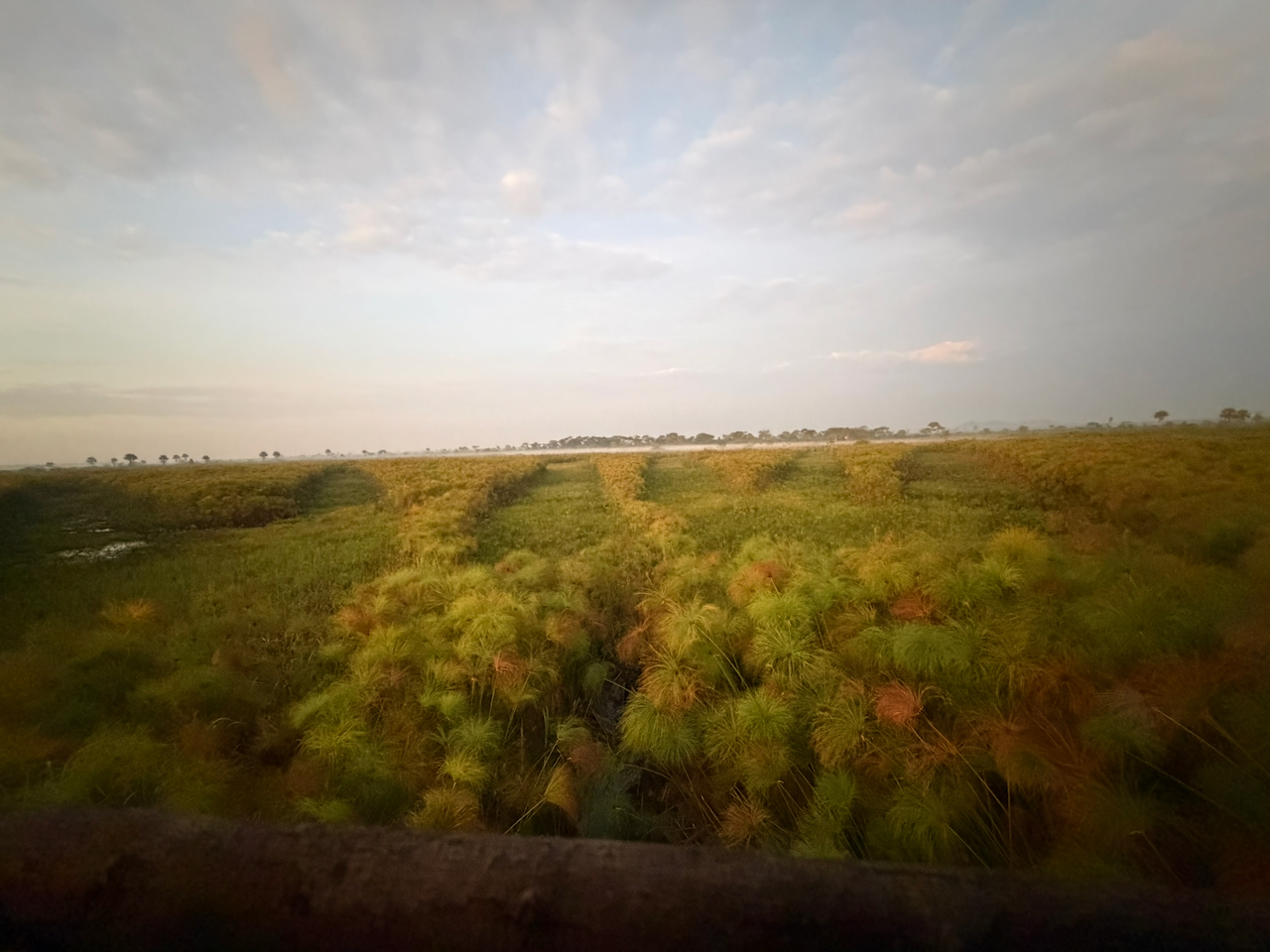
None of what you see is 'dry land' - walking on this is more than challenging
We saw nothing on our morning sit. So we returned to camp where we dropped off some scouts and I changed my shoes for footwear more appropriate to dry land, and we went out after bushbuck. We saw plenty of Nile bushbuck females and finally saw a male. After a brief miscommunication about which one we were looking at and age, we finally settled on one which we thought would be good. A few snorts and barks at us later, I got up on the sticks. As luck would have it, the moment I began to squeeze the trigger, the bushbuck decided to move. As a result, my shot was a little farther back than I wanted, but it still looked like a decent hit. We bumped him once but had a good blood trail to follow. At one point Ade and I were moving along that blood trail when our scout whistled. We looked back and he was pointing to our right. I moved back and tried to see what he was pointing at, looking ahead. The poor scout must have thought he was dealing with an idiot – the bushbuck was lying down not three feet in front of me in a thicket. Once I saw him, I motioned everyone back and finished him off. The final shot wasn’t exactly necessary, but he still had his head up and ending things quickly was the right thing to do.
A nice, old, old Nile bushbuck. I was thrilled to have him down, and not three hours from when we began to look for bushbuck seriously. As an aside, the shots had brought a couple of local people to see what we were up to . . . again, an example that the presence of people here didn’t seem to cause problems for the animals.
One down and one to go.

A nice Nile bushbuck - looks like a harnessed but darker
We were up and out of camp at 6 am this morning, headed to a machan to sit and wait and hope. It was a 20-minute drive to our jumping off point, and we dropped a few spotters along the ayway at other machans. From that point we loaded our team into a canoe and began our 15-minute paddle to the island upon which sat this machan. Once we got to the island,we had only about 25 yards to walk to the machan, but this is over rotting papyrus, with each step sinking into muddy swamp water. In the dark.
Looking out from our machan at very first light
Ade had done this before and had brought along something I hadn’t thought to even bring to Africa – a Thermacell. He turned it on and put it on the floor of the machan. These swamps are a miasma of rotting organic matter and insects, especially mosquitos. I sprayed myself with repellant before getting into the machan, but you always miss spots. The Thermacell worked well and we weren’t overly bothered by mosquitos.
A word about this area. The river is reasonably wide and from what I could see, a great deal of the side we were on was covered in papyrus reeds, creating the swamps in which the sitatunga live. The outfitter has over 30 kms of river, and has set up machans along this stretch, and on some islands in the midst of the swamp (note that even the ‘islands’ tend to be covered in papyrus and water when you walk on them). Lanes for the canoes are cut out of the papyrus although paddling is difficult due to the rapidly growing swamps. The outfitter has also ‘carved’ open lanes in front of the machans by cutting down the papyrus. This allows new growth, which, with a bit of luck, brings the sitatunga out to graze. Shooting distances can reach out to over 250 yards, but the actual distance depends on where the animal appears, so it may well be shorter than that. Scouts are sent to various machans every morning and evening to report on any movements they might see. So this is quite an operation. If you really want an East African sitatunga, this is the place.
None of what you see is 'dry land' - walking on this is more than challenging
We saw nothing on our morning sit. So we returned to camp where we dropped off some scouts and I changed my shoes for footwear more appropriate to dry land, and we went out after bushbuck. We saw plenty of Nile bushbuck females and finally saw a male. After a brief miscommunication about which one we were looking at and age, we finally settled on one which we thought would be good. A few snorts and barks at us later, I got up on the sticks. As luck would have it, the moment I began to squeeze the trigger, the bushbuck decided to move. As a result, my shot was a little farther back than I wanted, but it still looked like a decent hit. We bumped him once but had a good blood trail to follow. At one point Ade and I were moving along that blood trail when our scout whistled. We looked back and he was pointing to our right. I moved back and tried to see what he was pointing at, looking ahead. The poor scout must have thought he was dealing with an idiot – the bushbuck was lying down not three feet in front of me in a thicket. Once I saw him, I motioned everyone back and finished him off. The final shot wasn’t exactly necessary, but he still had his head up and ending things quickly was the right thing to do.
A nice, old, old Nile bushbuck. I was thrilled to have him down, and not three hours from when we began to look for bushbuck seriously. As an aside, the shots had brought a couple of local people to see what we were up to . . . again, an example that the presence of people here didn’t seem to cause problems for the animals.
One down and one to go.
A nice Nile bushbuck - looks like a harnessed but darker
Last edited by a moderator:

McKenzie Sims
AH enthusiast
- Joined
- Dec 11, 2019
- Messages
- 322
- Reaction score
- 809
- Media
- 7
- Articles
- 2
- Member of
- Safari Club International, GSCO
- Hunted
- South Africa, Namibia, Zambia, Tanzania, Cameroon, Ethiopia. Outside of Africa. Pakistan, Azerbaijan ,Tajkistan, Turkey, Spain, New Zealand, Australia , Argentina, Across the US, and numerouse provinces in Canada
This is great!! I'm really enjoying reading this and look forward to reading more! Congrats on the success so far in the report. Thanks for sharing.

buck wild
AH legend
- Joined
- Oct 14, 2015
- Messages
- 2,788
- Reaction score
- 6,604
- Location
- Texas
- Media
- 367
- Articles
- 5
- Member of
- SCI Life member, SCI Brush Country Chapter, DSC, Puro Pinche Low Fence
- Hunted
- Kalahari; Limpopo, South Africa; Omay, Zimbabwe; Bulawayo, Zim; Czech Republic; Tirol, Austria; Mexico; Texas; New Mexico; Colorado
Very Nice !
Hank2211
AH legend
- Joined
- Jan 12, 2010
- Messages
- 3,449
- Reaction score
- 10,083
- Media
- 244
- Articles
- 4
- Member of
- SCI, DU, Pheasants Forever
- Hunted
- Canada, United States, Zimbabwe, South Africa (Eastern Cape; Northern Cape; North West Province, Natal, Mpumalanga, Limpopo), Namibia, Cameroon, Benin, Ethiopia, Liberia, Mozambique, Uganda, Argentina
Easter dinner is cooked and eaten. Time to get back to work.
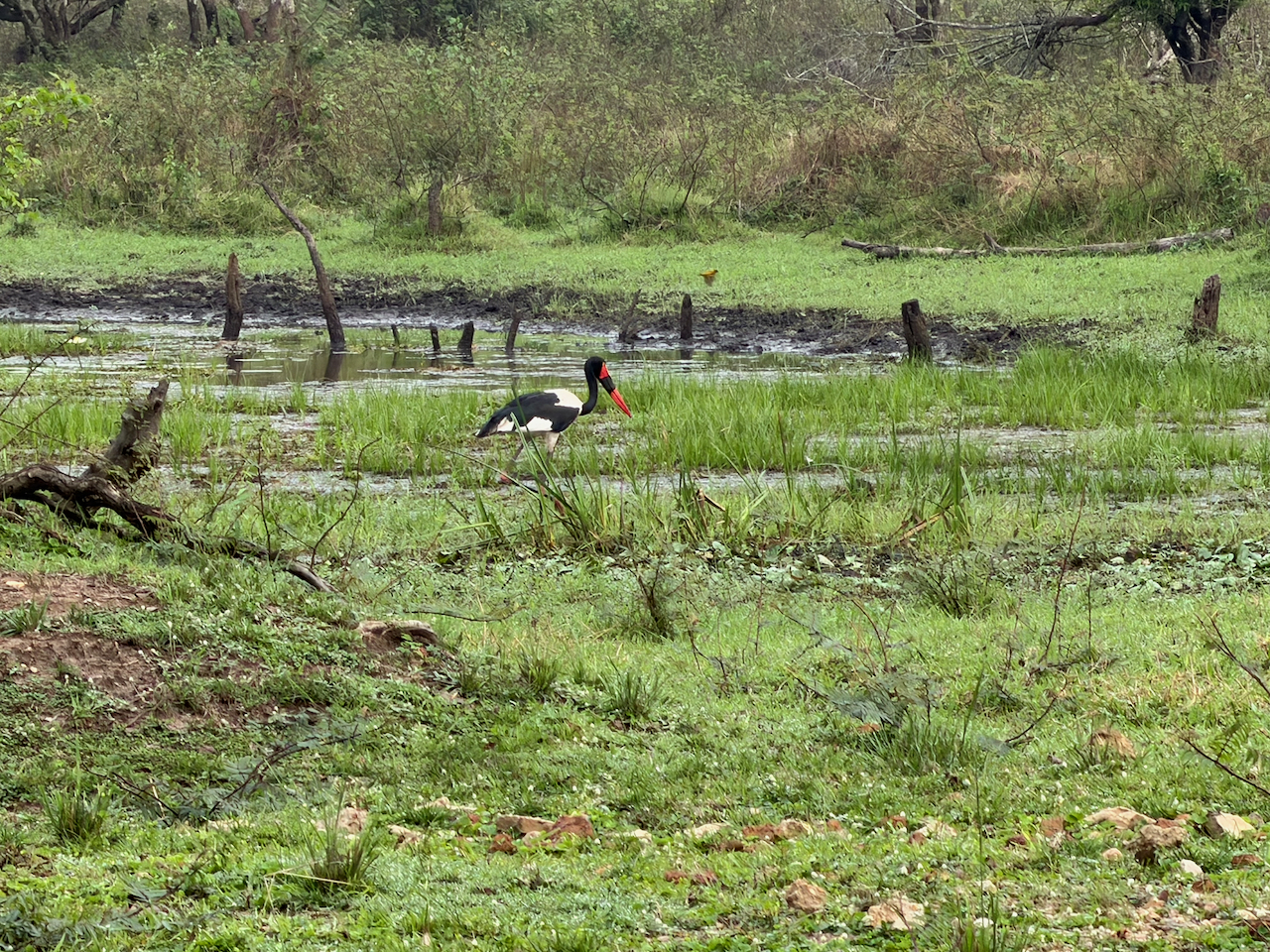
Saddle-billed stork outside my tent - It's wet here, and there are mosquitos (and malaria) everywhere . . .
March 8 - Sunday - Day 8
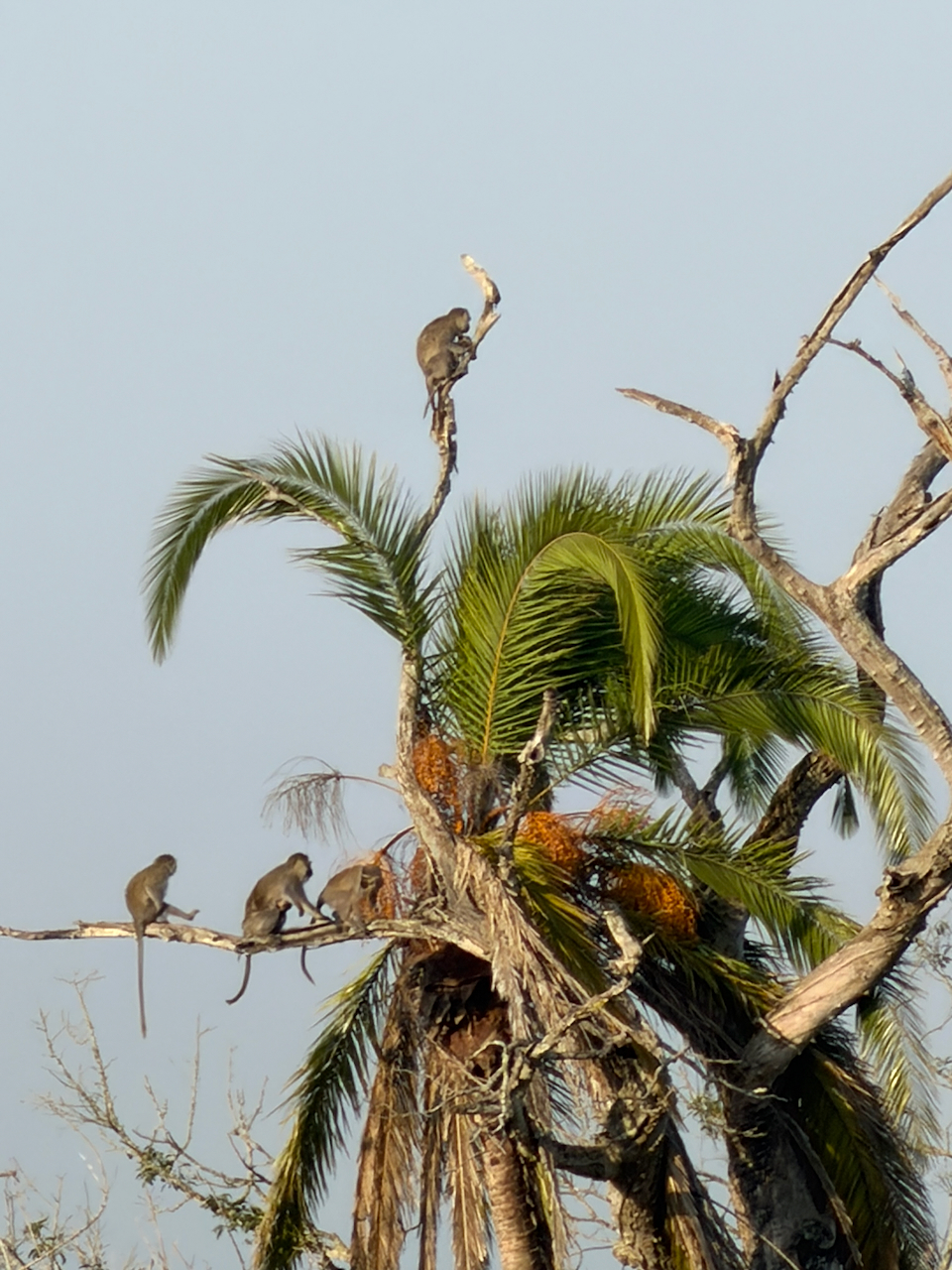
This morning we were up at 4.30. We were planning to drive 1.5 hours to a machan where a sitatunga had been seen the day before. This machan didn’t require a canoe ride, nor walking through a swamp, which was nice, but we saw no sitatunga. We did see a troop of monkeys eating in a palm tree, and being continually attacked by starlings, which must have had a nest in the area. The bird life in these swamps (and actually in Uganda) is truly phenomenal, and I could see bird watchers sitting in a machan for the day just watching the various birds.
Once we were out of the machan, we had a planning conversation. To go back to camp for lunch and then return to this machan, given the drive, wasn’t practical. But there were no bushbuck in this area, so we’d have to sit around doing not much of anything for most of the day until about 5 pm when we’d head back to the machan. So we decided that rather than chasing sightings – these being a trailing rather than a leading indicator – we would pick one machan and stick with it for a few days at least. And that would be one closer to camp so we could look for my one remaining bushbuck when we weren't hunting sitatunga.
So we began our drive back to camp. It was a beautiful Sunday morning and the roads were full of families in their Sunday best going to or coming from the various churches which dotted the roads, or talking with friends and neighbors. Nice to see.
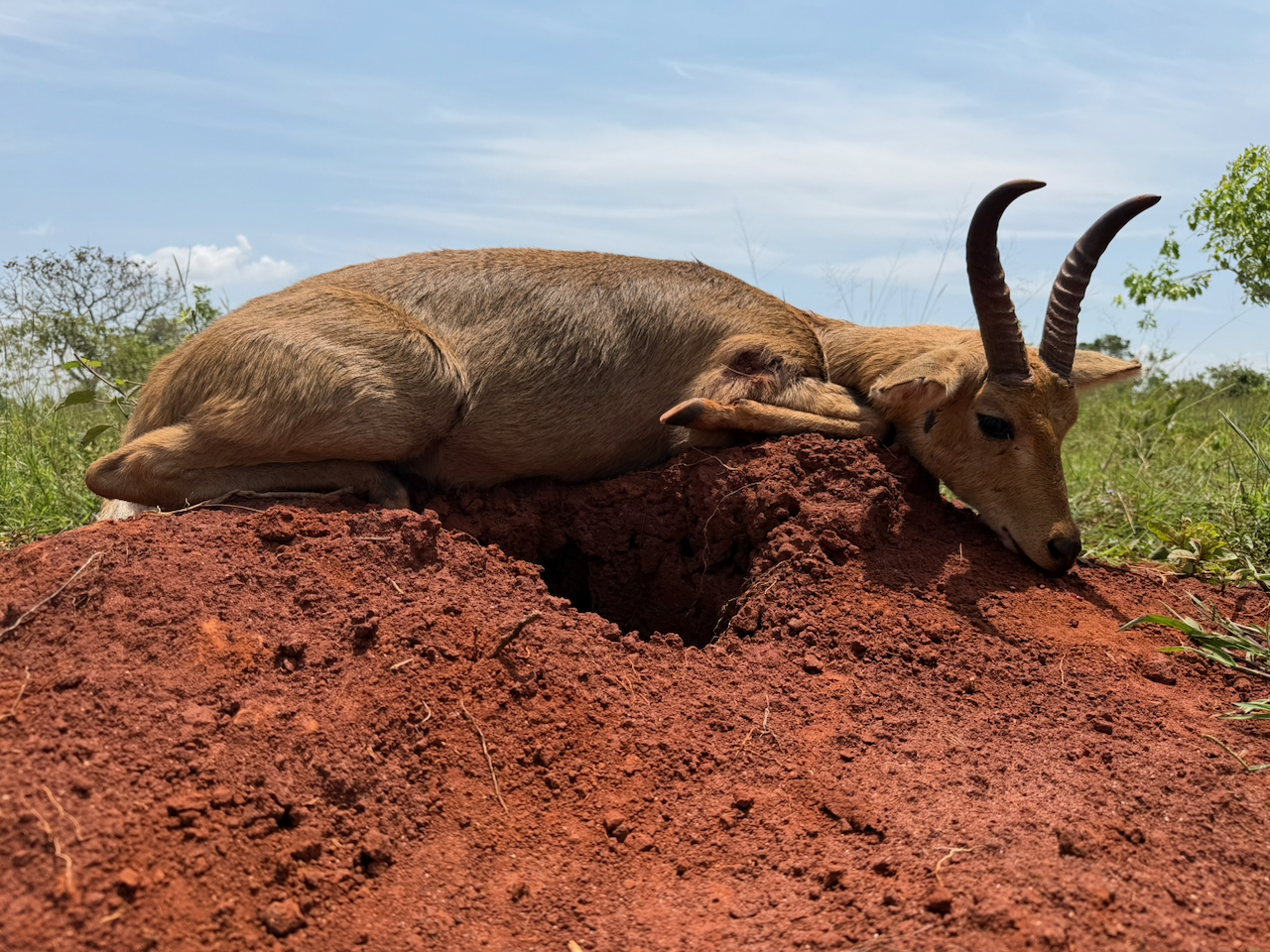
As we were nearing camp, someone spotted a reedbuck not forty yards from the road. Ade took a quick look and we jumped out. The reedbuck moved off, but not very far, and was watching us. One quick shot and he essentially dropped to the shot. A nice bohor reedbuck. I should say that it's useful to have conversations with your PH about what you're prepared to shoot in advance - - once you spot an animal, there usually isn't enough time fr that discussion. In my case, it was a pretty short conversation - if I have a license for it, it's on the list.
We spent the afternoon looking for East African bushbuck. We did see some, but none old enough for our purposes. And we saw lots of Nile bushbuck.
March 9 - Day 9 - Monday
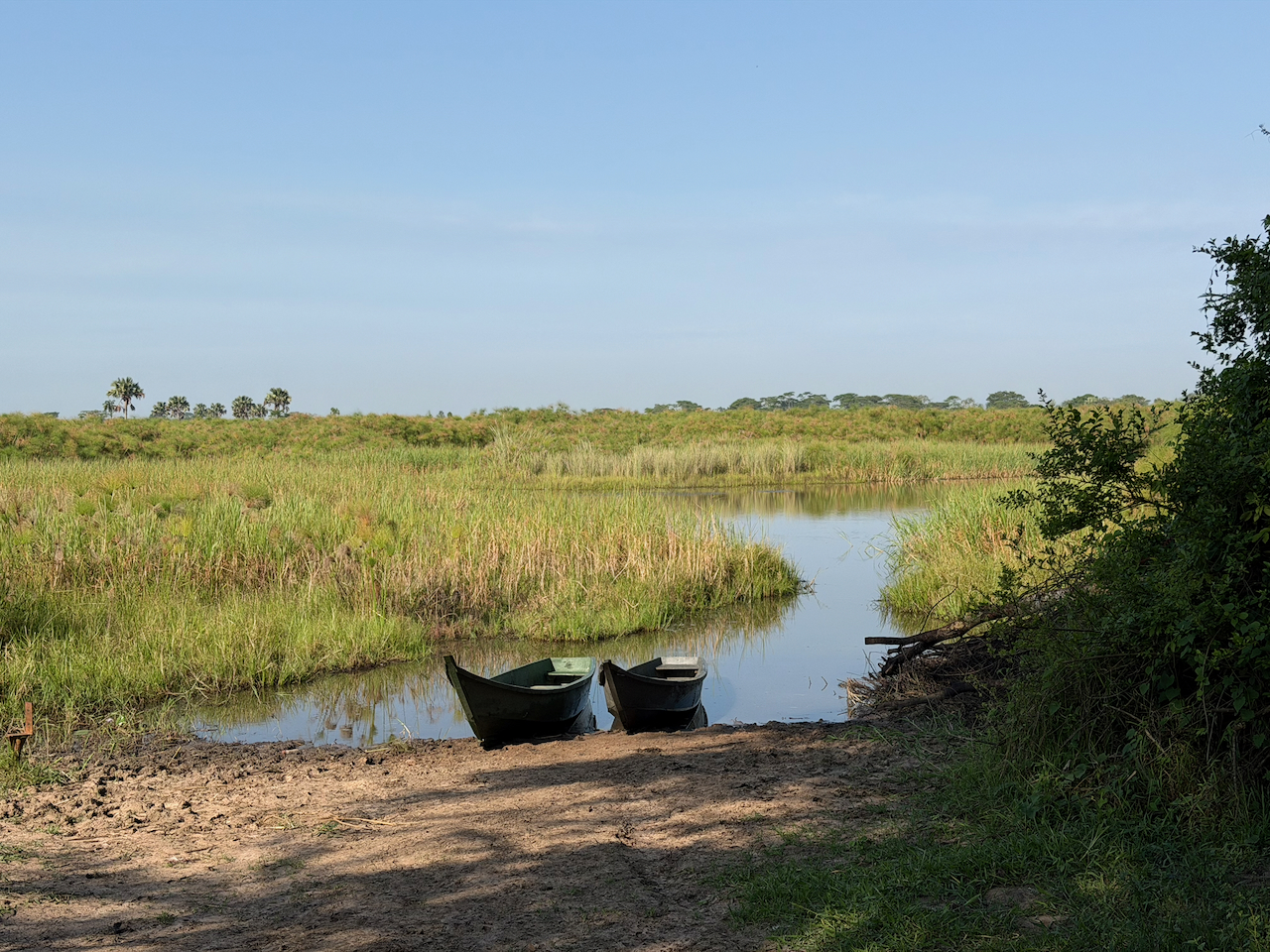
We went to new machan this morning, which also required a canoe ride through the swamp. A mature male had apparently been spotted here the day before, and we decided this is where we would focus for the next few days. The shooting lanes here were shorter than in the first machan – about 180 yards at the farthest rather than the 280 in the first machan. We sat here until 8:30 and again saw nothing.
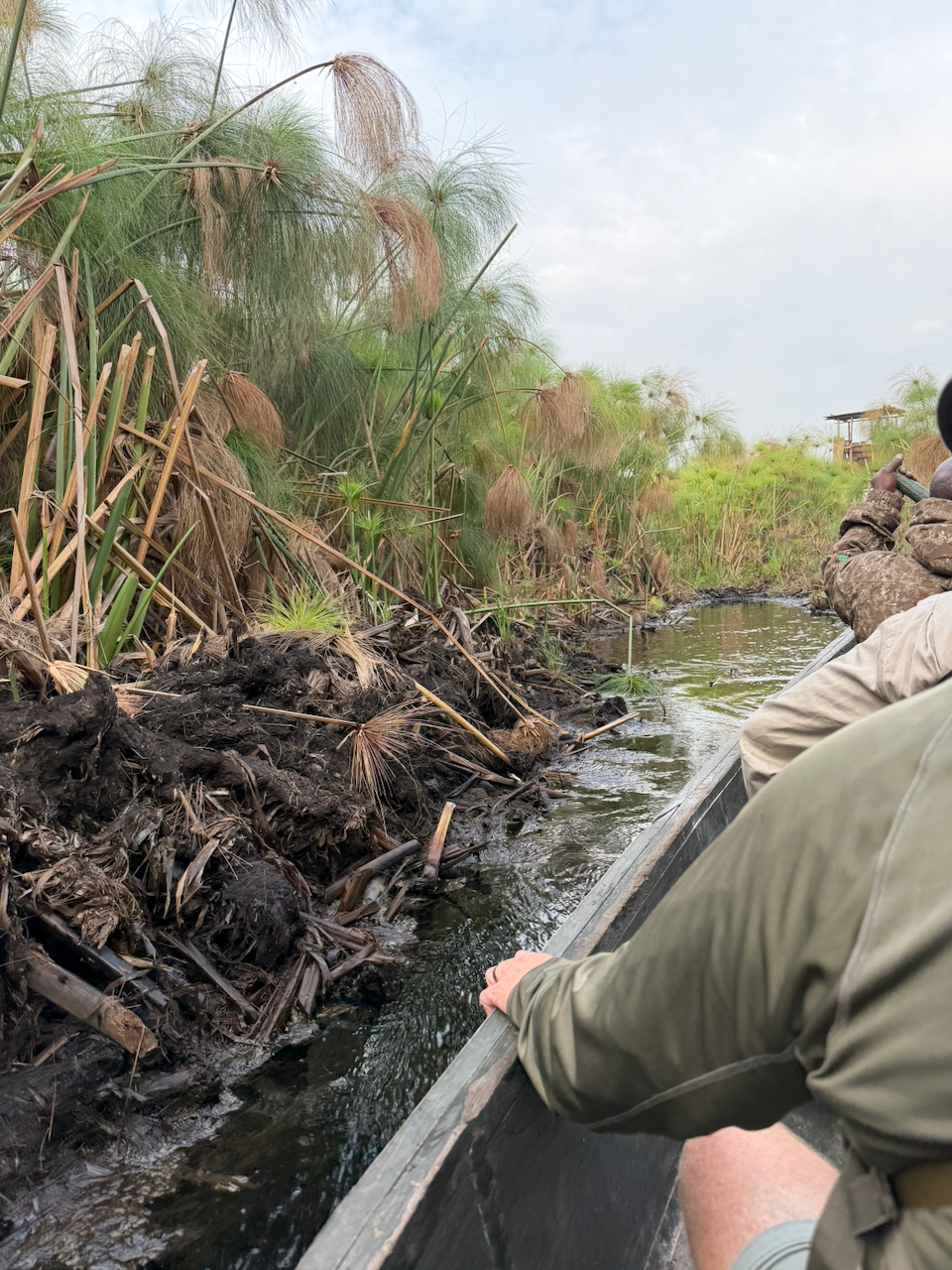
Paddling through the swamp. You can see the machan ahead on the right.
In the afternoon, we decided to forgo sitting on sitatunga again that evening and focus on the East African bushbuck. Within a half hour, someone spotted a bushbuck lying under a tree in the shade. We got out, and Dean could see him, but it took some time for the rest of us to make him out. He was maybe 50 yards away and seemed unperturbed by our presence. We could see his horns, and they seemed good (older and worn down), but we needed to see the body to decide if he was East African or Nile. Ade sent a ranger to walk down the road to try to get him up, but there was no reaction. I was on the sticks looking at him through the scope the entire time and starting to shake a bit. Finally, Ade said he would make some noise and clapped his hands and whistled. The bushbuck finally stood up, thankfully slowly, and Ade quickly said he was East African and to shoot.
I took the shot, which I thought was good, and he sped off at full speed towards a thicket. We moved forward slowly. We could see where he’d gone into the thicket, but it seemed virtually impenetrable, so rather than blunder in there looking for a potentially wounded animal (I think bushbuck are the most aggressive of the spiral horns), we walked around it to see if he’d come out. We eventually determined he must still be in there, so the trackers started throwing sticks and rocks to see if there was any reaction. Nothing.
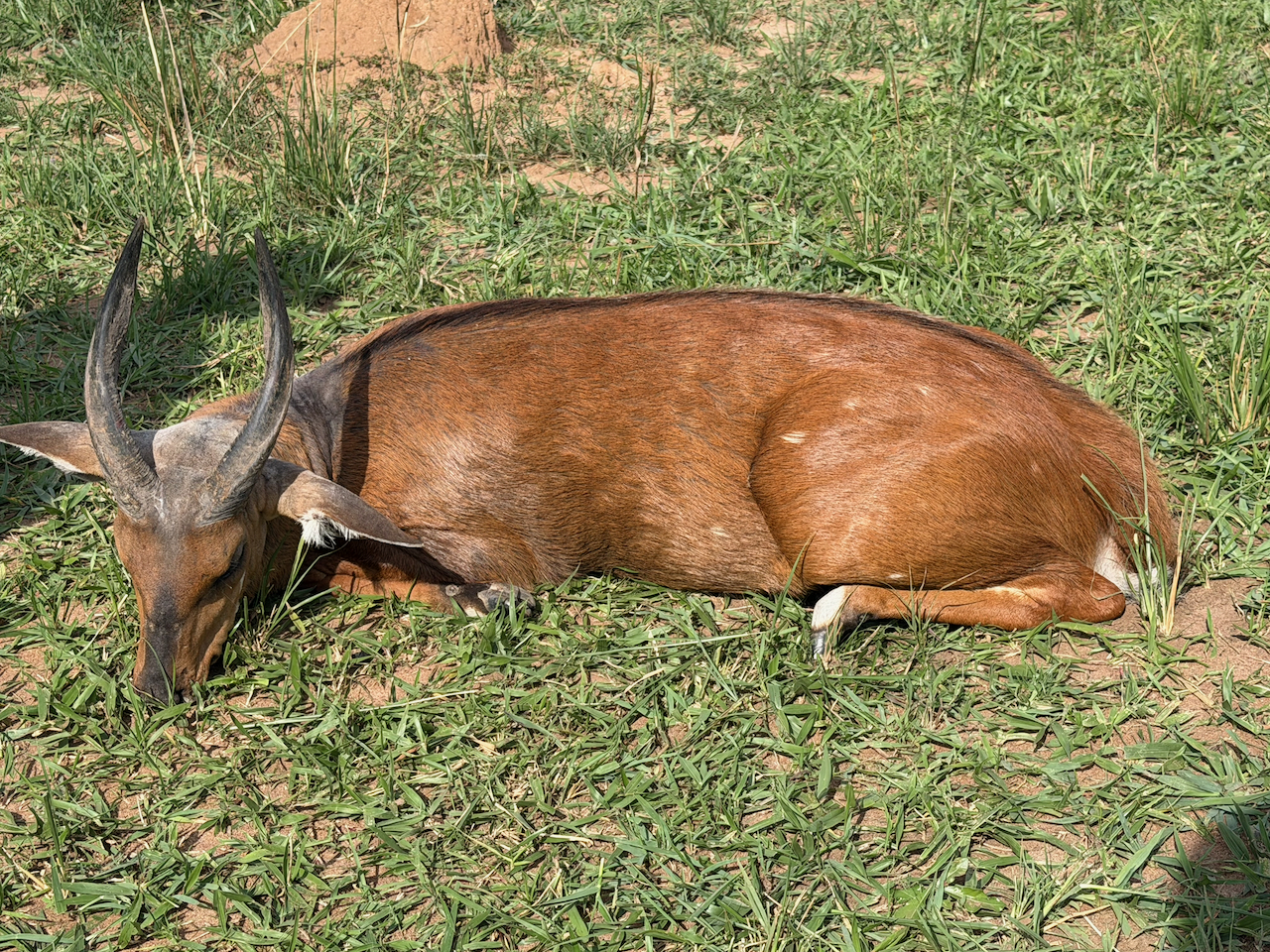
The quest for the eight bushbuck was finally over. It wasn’t exactly the level of difficulty of the nine spiral horns, but it wasn’t particularly easy either. I was happy that the immediate hunt had ended successfully but was even more satisfied that I’d put the last of the eight subspecies to bed. A really delightful animal and I was blessed to have had the opportunity to hunt it from southern Africa to East Africa to the horn of Africa to West Africa.
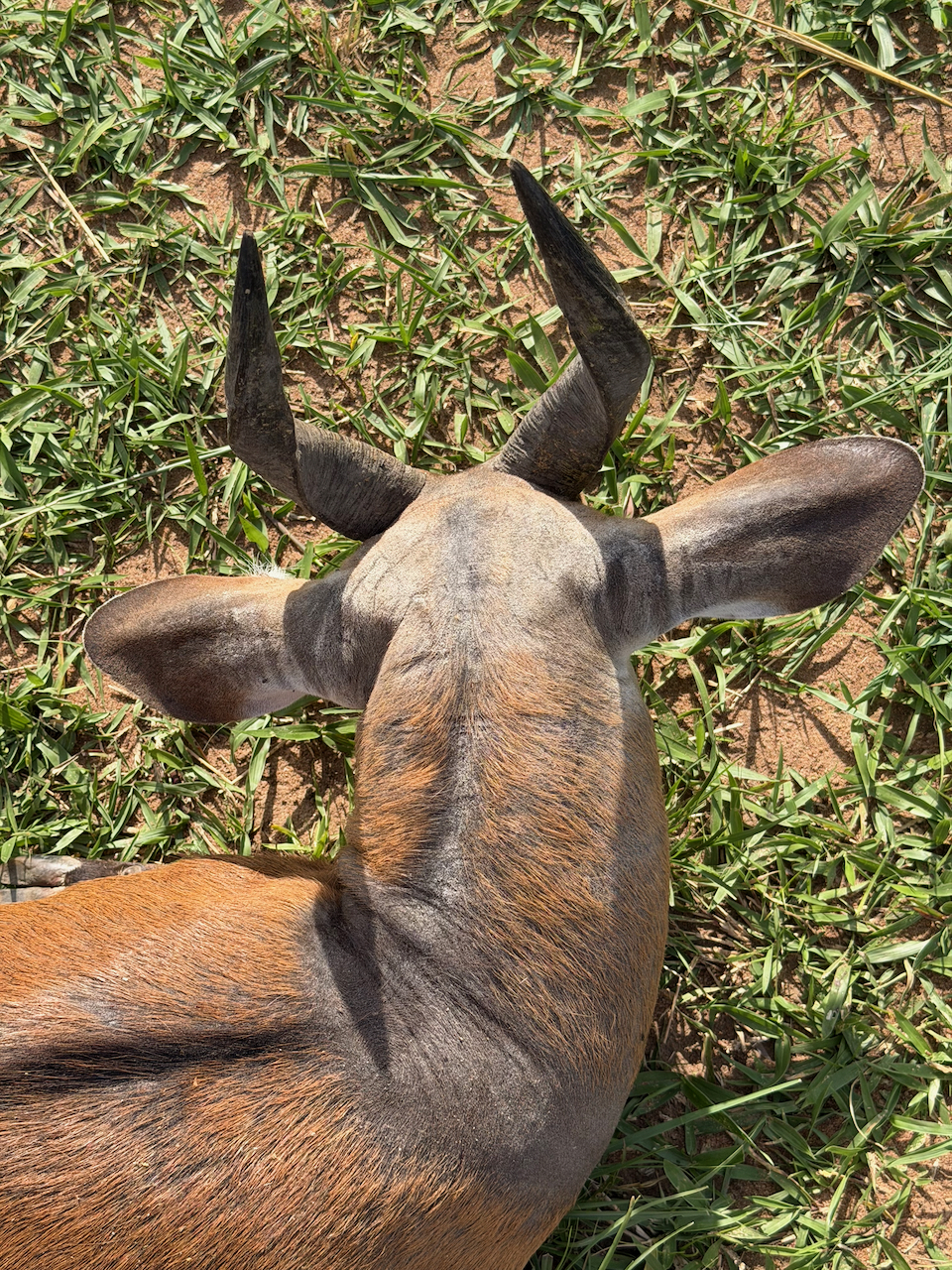
An old fellow. Even less hair than I have!
So it was a happy group that made its way back to camp. Given the time, Ade asked if I wanted to go to the machan, but I felt it would diminish the accomplishment somehow if I went right back to hunting. Better to have a leisurely dinner and a cold beer to celebrate.
In the evening, after dark, we could see light on the horizon. Apparently, the locals had set fire to the papyrus to increase rain. I’m not sure it will help with rain, but if it drives sitatunga towards our portion of the swamp, all good.
Saddle-billed stork outside my tent - It's wet here, and there are mosquitos (and malaria) everywhere . . .
March 8 - Sunday - Day 8
This morning we were up at 4.30. We were planning to drive 1.5 hours to a machan where a sitatunga had been seen the day before. This machan didn’t require a canoe ride, nor walking through a swamp, which was nice, but we saw no sitatunga. We did see a troop of monkeys eating in a palm tree, and being continually attacked by starlings, which must have had a nest in the area. The bird life in these swamps (and actually in Uganda) is truly phenomenal, and I could see bird watchers sitting in a machan for the day just watching the various birds.
Once we were out of the machan, we had a planning conversation. To go back to camp for lunch and then return to this machan, given the drive, wasn’t practical. But there were no bushbuck in this area, so we’d have to sit around doing not much of anything for most of the day until about 5 pm when we’d head back to the machan. So we decided that rather than chasing sightings – these being a trailing rather than a leading indicator – we would pick one machan and stick with it for a few days at least. And that would be one closer to camp so we could look for my one remaining bushbuck when we weren't hunting sitatunga.
So we began our drive back to camp. It was a beautiful Sunday morning and the roads were full of families in their Sunday best going to or coming from the various churches which dotted the roads, or talking with friends and neighbors. Nice to see.
As we were nearing camp, someone spotted a reedbuck not forty yards from the road. Ade took a quick look and we jumped out. The reedbuck moved off, but not very far, and was watching us. One quick shot and he essentially dropped to the shot. A nice bohor reedbuck. I should say that it's useful to have conversations with your PH about what you're prepared to shoot in advance - - once you spot an animal, there usually isn't enough time fr that discussion. In my case, it was a pretty short conversation - if I have a license for it, it's on the list.
We spent the afternoon looking for East African bushbuck. We did see some, but none old enough for our purposes. And we saw lots of Nile bushbuck.
March 9 - Day 9 - Monday
We went to new machan this morning, which also required a canoe ride through the swamp. A mature male had apparently been spotted here the day before, and we decided this is where we would focus for the next few days. The shooting lanes here were shorter than in the first machan – about 180 yards at the farthest rather than the 280 in the first machan. We sat here until 8:30 and again saw nothing.
Paddling through the swamp. You can see the machan ahead on the right.
In the afternoon, we decided to forgo sitting on sitatunga again that evening and focus on the East African bushbuck. Within a half hour, someone spotted a bushbuck lying under a tree in the shade. We got out, and Dean could see him, but it took some time for the rest of us to make him out. He was maybe 50 yards away and seemed unperturbed by our presence. We could see his horns, and they seemed good (older and worn down), but we needed to see the body to decide if he was East African or Nile. Ade sent a ranger to walk down the road to try to get him up, but there was no reaction. I was on the sticks looking at him through the scope the entire time and starting to shake a bit. Finally, Ade said he would make some noise and clapped his hands and whistled. The bushbuck finally stood up, thankfully slowly, and Ade quickly said he was East African and to shoot.
I took the shot, which I thought was good, and he sped off at full speed towards a thicket. We moved forward slowly. We could see where he’d gone into the thicket, but it seemed virtually impenetrable, so rather than blunder in there looking for a potentially wounded animal (I think bushbuck are the most aggressive of the spiral horns), we walked around it to see if he’d come out. We eventually determined he must still be in there, so the trackers started throwing sticks and rocks to see if there was any reaction. Nothing.
The quest for the eight bushbuck was finally over. It wasn’t exactly the level of difficulty of the nine spiral horns, but it wasn’t particularly easy either. I was happy that the immediate hunt had ended successfully but was even more satisfied that I’d put the last of the eight subspecies to bed. A really delightful animal and I was blessed to have had the opportunity to hunt it from southern Africa to East Africa to the horn of Africa to West Africa.
An old fellow. Even less hair than I have!
So it was a happy group that made its way back to camp. Given the time, Ade asked if I wanted to go to the machan, but I felt it would diminish the accomplishment somehow if I went right back to hunting. Better to have a leisurely dinner and a cold beer to celebrate.
In the evening, after dark, we could see light on the horizon. Apparently, the locals had set fire to the papyrus to increase rain. I’m not sure it will help with rain, but if it drives sitatunga towards our portion of the swamp, all good.
LivingTheDream
AH legend

gillettehunter
AH ambassador
Congrats on finishing the bushbuck slam. Lots of hunting to get it done.
Bruce
Bruce
Hank2211
AH legend
- Joined
- Jan 12, 2010
- Messages
- 3,449
- Reaction score
- 10,083
- Media
- 244
- Articles
- 4
- Member of
- SCI, DU, Pheasants Forever
- Hunted
- Canada, United States, Zimbabwe, South Africa (Eastern Cape; Northern Cape; North West Province, Natal, Mpumalanga, Limpopo), Namibia, Cameroon, Benin, Ethiopia, Liberia, Mozambique, Uganda, Argentina
All good things must come to an end . . .
March 10 - Day 10 - Tuesday
Breakfast at 5 a.m. today. I had my usual and we headed out at 5:20 a.m. for the same machan we had sat at the previous day. We got in place and all was dark and quiet around 6:30 a.m.
Before 8 a.m., we got a WhatsApp from Tom (who was spotting in a nearby machan) to say that he had seen two females from his machan. At 8 a.m. on the dot, he texted again to say that one of the females was back. At 8:19 a.m. Ade texted back saying “Zip these ends . . . (sic).”
At 8:20 a.m. Tom texted again, saying “Well done.”
A few seconds past 8:19 a.m., Dean had seen a dark shadow at the end of a lane in the swamp and pointed it out to Ade. Ade looked through his binoculars and said, “Get ready.” Not seconds later, he said, “Shoot it when you’re ready.”
I had spotted the sitatunga by that point. I was set up, with the rifle resting on the front of the machan and my right arm on the side to my right. I slowly squeezed off a shot. It seemed a good hit— the sitatunga— at 185 yards — kicked out and ran back into the papyrus. I said it felt good— I had a great rest. But then the sitatunga reappeared facing the other direction, but didn’t seem to be moving. I gave it a second shot and it dropped as if poleaxed. Amazing how quickly relief comes over you!
We all thought it was initially well hit – Ade said he must have been very sick from the first shot to have come back out of the papyrus. But much better to see it drop and not get up.
Our ranger seemed very pleased with the shots, and he and a tracker began to head to the spot where the sitatunga had apparently fallen. Walking through these papyrus swamps is not for the faint of heart, and I was decidedly faint of heart. We watched from the machan as they headed to the spot where we expected— or hoped— they would find the trophy. After what seemed like an eternity, we saw the tracker slap the water with his machete. Dean said it must be there - he slapped the water to see if it would move. We then heard a shout of joy and a very loud “kabubi kabubi”. Sitatunga down!
Our ranger and tracker were soon joined by another five who would help drag the sitatunga through the swamp to our machan and canoe. We were watching these men walking on the papyrus beds when one of them suddenly disappeared. Sucked into the bog. He quickly pulled himself up and continued. Just another day walking in a swamp.
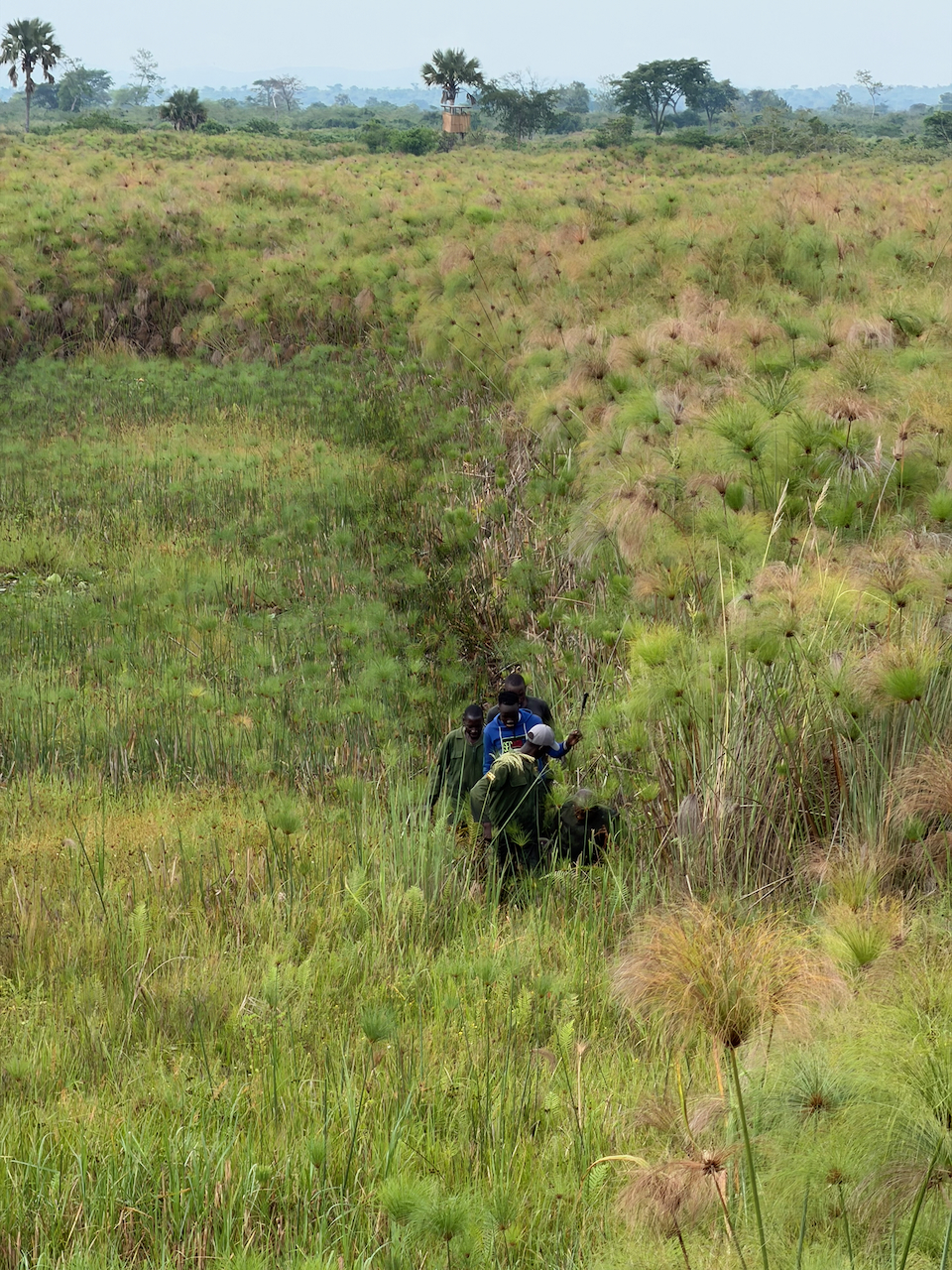
The team dragging the sitatunga
It took some time, but the team finally dragged the sitatunga to the machan and the canoe. By this point another canoe had shown up with Tom and more help, so we could all paddle back to dry land. We got back, set up our trophy and took the pictures. It turns out that the tracker who had been sucked into the swamp was the same tracker who had seen the male at this machan a few days before. He was new to the team and while no one doubted he knew what a sitatunga looked like, there was some doubt that he knew what a mature bull looked like. It turns out he did in fact know what a mature bull looked like.
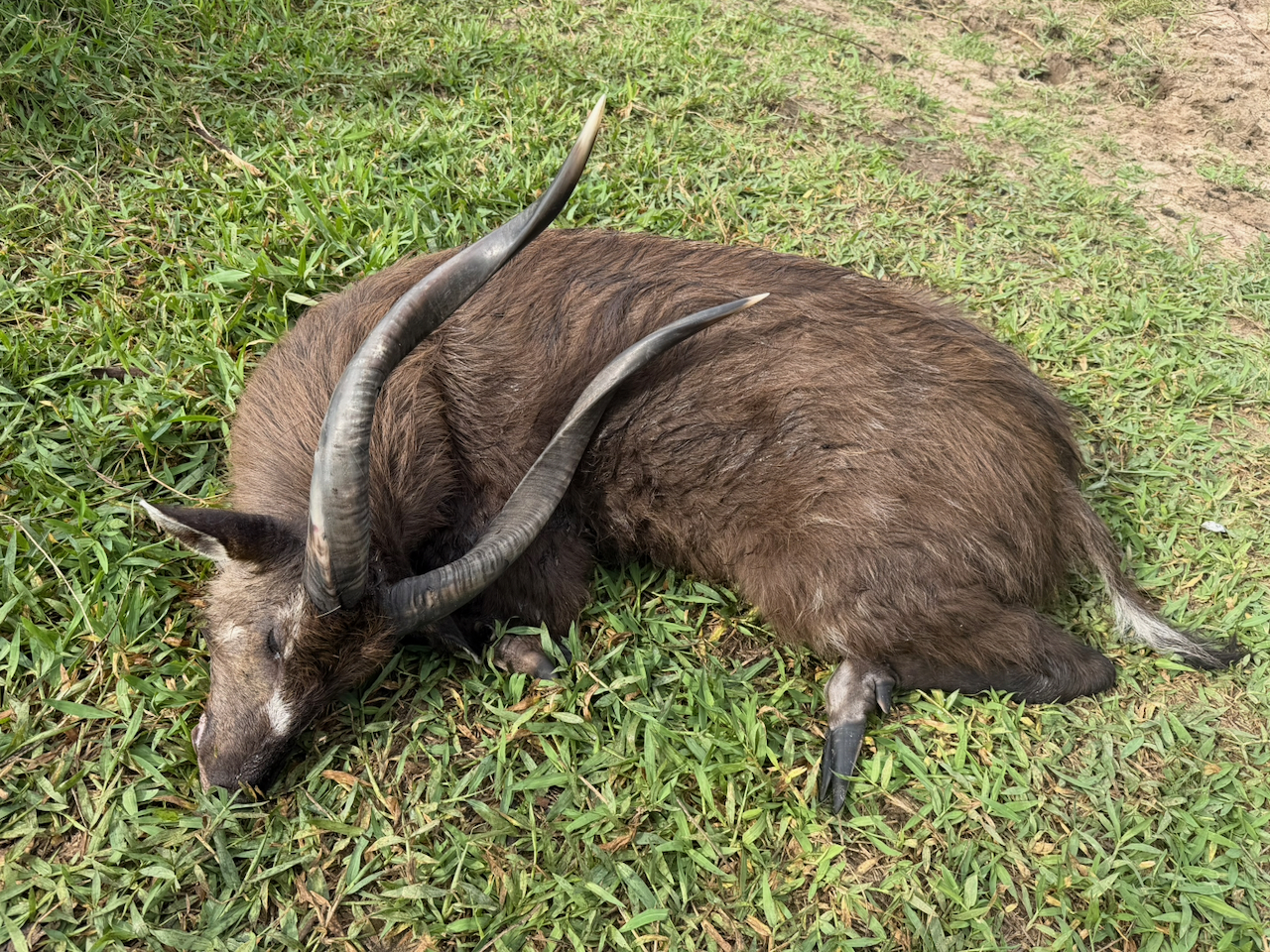

On our return to camp, I was told I had to fire a shot just outside the camp gates, following which we would make our ceremonial entrance into camp. I fired the shot into an unsuspecting (and entirely innocent) termite mound, and the truck, festooned with branches and leaves, the entire crew on the back singing “kabubi kabubi,” began its procession into camp. We were soon joined by what appeared to be almost every person in camp dancing, singing, and banging whatever was at hand. I had to join in the ceremony, as did Ade (with a vigourvigor which belied our advanced ages!). Even though they take a number of sitatunga every year, it’s still apparently a big deal.
I will say this: East African sitatunga hunting requires a lot of sitting. Sitting in the vehicle to get to canoes, sitting in the canoes to get to the machans, sitting in the machans waiting for something to appear, and so on every day. I quickly began to pine for a walk through thorn-infested brush. Having said that, there is one big advantage to sitting for sitatunga versus, say, leopard. You tend to sit from about 6:30 a.m. to close to 9 a.m., and again from about 5 p.m. to 7 p.m., so the sits are much shorter than they can be for leopard. And now, you can bring an iPhone with a book and games on it - which I didn’t have when I was first sitting in blinds.
Sitatunga hunting also takes a lot of luck, but this camp goes to great lengths to increase the odds with the number of machans and the number of spotters. If you really want a sitatunga, then this is the place to go. I’m not sure the odds are better than, say, the “practised” hunts on Ssese Island, but these are a lot cheaper than those hunts (and a lot more like hunting). (And, for what it's worth, it's not even clear that the sitatunga on Ssese Island is not the East African sitatunga)
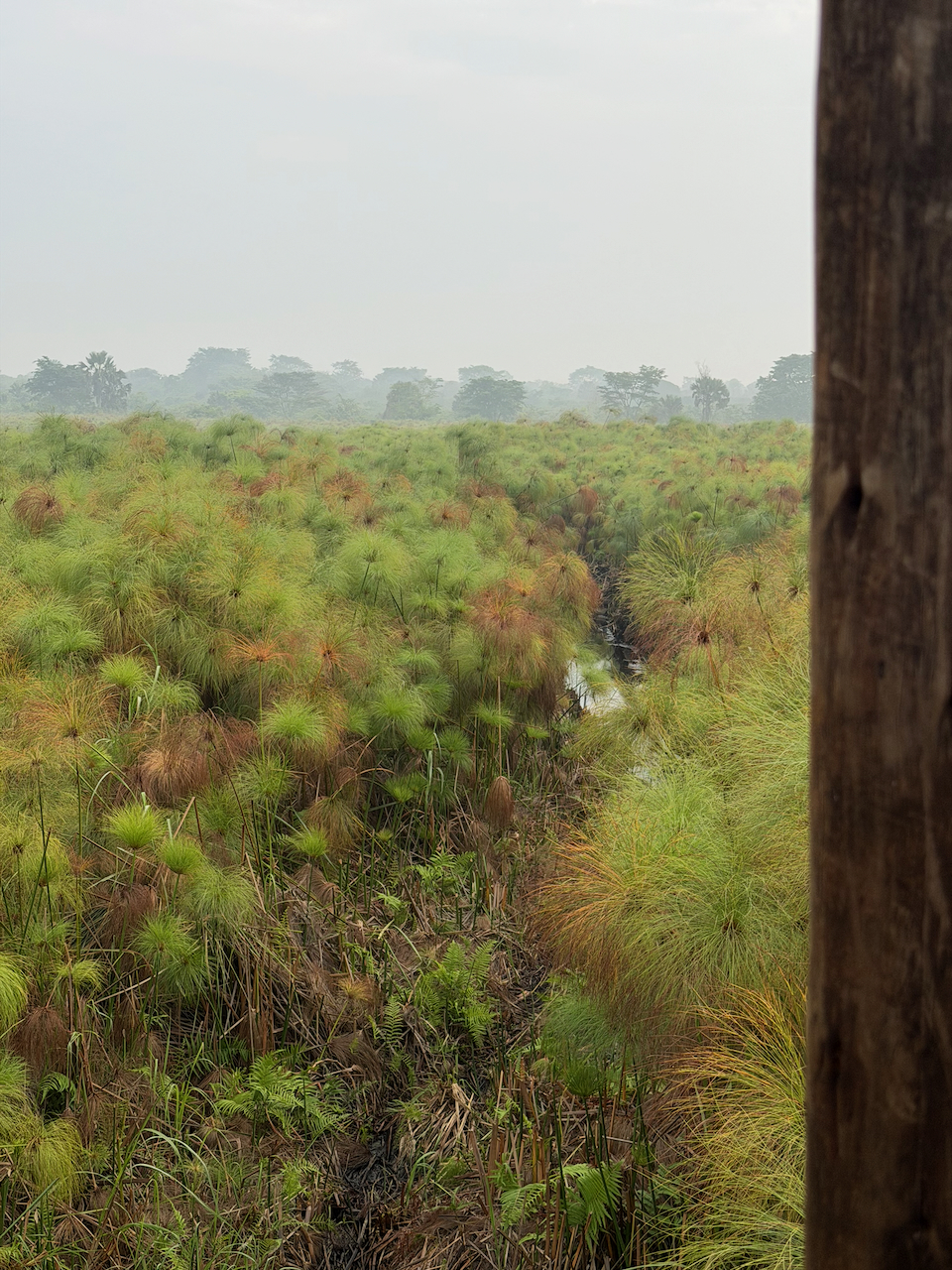
The path out of the swamp from our machan
So the trip to Uganda was well worth it. Not only did I get the last two bushbuck I needed to finish the subspecies, but I was lucky enough to get some really wonderful trophies, including, of course, the relatively difficult-to-get sitatunga. And I met some new PHs, each of whom I would be pleased to hunt with again. KOS has a great property in PianUpe and access to other great properties in Uganda. And if those parts of Uganda which I saw are representative of the country, it is a beautiful place.
Thanks go out to KOS and their team, as well as, particularly, Ade for his guiding every day and Tom, for his help with the bushbuck and the sitatunga. As usual, Dean Stobbs deserves thanks as well. I was impressed with what I was able to accomplish in only 10 days, and, of course, finishing the bushbuck species was huge (for me).
I look forward to returning . . . Nile buffalo and maneless zebra seem to be calling my name . . .
March 10 - Day 10 - Tuesday
Breakfast at 5 a.m. today. I had my usual and we headed out at 5:20 a.m. for the same machan we had sat at the previous day. We got in place and all was dark and quiet around 6:30 a.m.
Before 8 a.m., we got a WhatsApp from Tom (who was spotting in a nearby machan) to say that he had seen two females from his machan. At 8 a.m. on the dot, he texted again to say that one of the females was back. At 8:19 a.m. Ade texted back saying “Zip these ends . . . (sic).”
At 8:20 a.m. Tom texted again, saying “Well done.”
A few seconds past 8:19 a.m., Dean had seen a dark shadow at the end of a lane in the swamp and pointed it out to Ade. Ade looked through his binoculars and said, “Get ready.” Not seconds later, he said, “Shoot it when you’re ready.”
I had spotted the sitatunga by that point. I was set up, with the rifle resting on the front of the machan and my right arm on the side to my right. I slowly squeezed off a shot. It seemed a good hit— the sitatunga— at 185 yards — kicked out and ran back into the papyrus. I said it felt good— I had a great rest. But then the sitatunga reappeared facing the other direction, but didn’t seem to be moving. I gave it a second shot and it dropped as if poleaxed. Amazing how quickly relief comes over you!
We all thought it was initially well hit – Ade said he must have been very sick from the first shot to have come back out of the papyrus. But much better to see it drop and not get up.
Our ranger seemed very pleased with the shots, and he and a tracker began to head to the spot where the sitatunga had apparently fallen. Walking through these papyrus swamps is not for the faint of heart, and I was decidedly faint of heart. We watched from the machan as they headed to the spot where we expected— or hoped— they would find the trophy. After what seemed like an eternity, we saw the tracker slap the water with his machete. Dean said it must be there - he slapped the water to see if it would move. We then heard a shout of joy and a very loud “kabubi kabubi”. Sitatunga down!
Our ranger and tracker were soon joined by another five who would help drag the sitatunga through the swamp to our machan and canoe. We were watching these men walking on the papyrus beds when one of them suddenly disappeared. Sucked into the bog. He quickly pulled himself up and continued. Just another day walking in a swamp.
The team dragging the sitatunga
It took some time, but the team finally dragged the sitatunga to the machan and the canoe. By this point another canoe had shown up with Tom and more help, so we could all paddle back to dry land. We got back, set up our trophy and took the pictures. It turns out that the tracker who had been sucked into the swamp was the same tracker who had seen the male at this machan a few days before. He was new to the team and while no one doubted he knew what a sitatunga looked like, there was some doubt that he knew what a mature bull looked like. It turns out he did in fact know what a mature bull looked like.
On our return to camp, I was told I had to fire a shot just outside the camp gates, following which we would make our ceremonial entrance into camp. I fired the shot into an unsuspecting (and entirely innocent) termite mound, and the truck, festooned with branches and leaves, the entire crew on the back singing “kabubi kabubi,” began its procession into camp. We were soon joined by what appeared to be almost every person in camp dancing, singing, and banging whatever was at hand. I had to join in the ceremony, as did Ade (with a vigourvigor which belied our advanced ages!). Even though they take a number of sitatunga every year, it’s still apparently a big deal.
I will say this: East African sitatunga hunting requires a lot of sitting. Sitting in the vehicle to get to canoes, sitting in the canoes to get to the machans, sitting in the machans waiting for something to appear, and so on every day. I quickly began to pine for a walk through thorn-infested brush. Having said that, there is one big advantage to sitting for sitatunga versus, say, leopard. You tend to sit from about 6:30 a.m. to close to 9 a.m., and again from about 5 p.m. to 7 p.m., so the sits are much shorter than they can be for leopard. And now, you can bring an iPhone with a book and games on it - which I didn’t have when I was first sitting in blinds.
Sitatunga hunting also takes a lot of luck, but this camp goes to great lengths to increase the odds with the number of machans and the number of spotters. If you really want a sitatunga, then this is the place to go. I’m not sure the odds are better than, say, the “practised” hunts on Ssese Island, but these are a lot cheaper than those hunts (and a lot more like hunting). (And, for what it's worth, it's not even clear that the sitatunga on Ssese Island is not the East African sitatunga)
The path out of the swamp from our machan
So the trip to Uganda was well worth it. Not only did I get the last two bushbuck I needed to finish the subspecies, but I was lucky enough to get some really wonderful trophies, including, of course, the relatively difficult-to-get sitatunga. And I met some new PHs, each of whom I would be pleased to hunt with again. KOS has a great property in PianUpe and access to other great properties in Uganda. And if those parts of Uganda which I saw are representative of the country, it is a beautiful place.
Thanks go out to KOS and their team, as well as, particularly, Ade for his guiding every day and Tom, for his help with the bushbuck and the sitatunga. As usual, Dean Stobbs deserves thanks as well. I was impressed with what I was able to accomplish in only 10 days, and, of course, finishing the bushbuck species was huge (for me).
I look forward to returning . . . Nile buffalo and maneless zebra seem to be calling my name . . .

Mauser3000
AH enthusiast
Wonderful hunt report, for some amazing animals in such a beautiful place!
Hunt anything
AH ambassador
Wow, what a safari! A heartfelt congratulations on your bushbuck slam, they are my absolute favorite animals to hunt.
Your other trophies were top shelf as well!
Your other trophies were top shelf as well!
putter97127
AH veteran
Amazing hunt! Congratulations!!
Hank2211
AH legend
- Joined
- Jan 12, 2010
- Messages
- 3,449
- Reaction score
- 10,083
- Media
- 244
- Articles
- 4
- Member of
- SCI, DU, Pheasants Forever
- Hunted
- Canada, United States, Zimbabwe, South Africa (Eastern Cape; Northern Cape; North West Province, Natal, Mpumalanga, Limpopo), Namibia, Cameroon, Benin, Ethiopia, Liberia, Mozambique, Uganda, Argentina
Thanks very much. Very kind. It was a beautiful and wonderful country to hunt.Wow, what a safari! A heartfelt congratulations on your bushbuck slam, they are my absolute favorite animals to hunt.
Your other trophies were top shelf as well!

JES Adventures
AH elite
- Joined
- Mar 7, 2015
- Messages
- 1,580
- Reaction score
- 7,540
- Location
- Texas
- Website
- ranchinvestments.com
- Deals & offers
- 1
- Media
- 332
- Articles
- 2
- Member of
- Life Member of SCI, DSC, GSCO, HSC, NRA and FNAWS
- Hunted
- Botswana, Cameroon, CAR, Chad, Ethiopia, Mozambique, Namibia, RSA, Tanzania, Uganda, Zambia and Zimbabwe. US, Canada, Arctic, Mexico, Argentina, Austria, France, Spain, Portugal, U.K., Romania, Tadjikistan, Turkey, Nepal, China, Australia and New Zealand
Congrats on finishing the Bushbuck Slam and topping off with a great Sitatunga!
Thanks for the great report, you took me back to my days at Pian Upe, one of the best Safaris of my life.
John Ed
Thanks for the great report, you took me back to my days at Pian Upe, one of the best Safaris of my life.
John Ed

Members online
- mitch4570
- Rick R
- Hooked Now
- Longwalker
- wesheltonj
- hornhunter!
- cash_tx
- LWood
- Mekaniks
- Racer00
- HardTimes
- quaidwolfe8
- CarsonG
- Tex .416
- Uncontrolled_round_feed
- Pole Pole
- bwanamrm
- TTundra
- Surgeon7
- Gerty
- TX_GreatPlains
- jruby
- Zinz
- Ridge Runner
- SLG
- Vintageguy
- farmer_john
- TheWhitetailNut
- thinchliff
- DAK
- GeorgeGibbs505
- hunt30
- Buckums
- JHT
- bakerb
- Wishfulthinker580
- Rafiki
- lawrence_court
- Moe324
- krish
- migrabill
- ew75
- Pheroze
- NTX
- Mauser3000
- Jeff505
- etsonaut
- Str8meat
- ARHinAK
- Frontier3006
Total: 191,813 (members: 1,103, guests: 190,710)
Forum statistics


Latest profile posts


I will be looking for a set of these when my .505 is done... sadly not cashed up right now for these. 
Need anything in trade?
Cheers,
Jeff P
Need anything in trade?
Cheers,
Jeff P

what kind of velocity does the 140 grains list, curious how they would fit in with my current 130 gr, supply of 270s. maybe a pic of the box data listing vel. and drop. Oh and complements on that ammo belt, nice.