steve white
AH ambassador
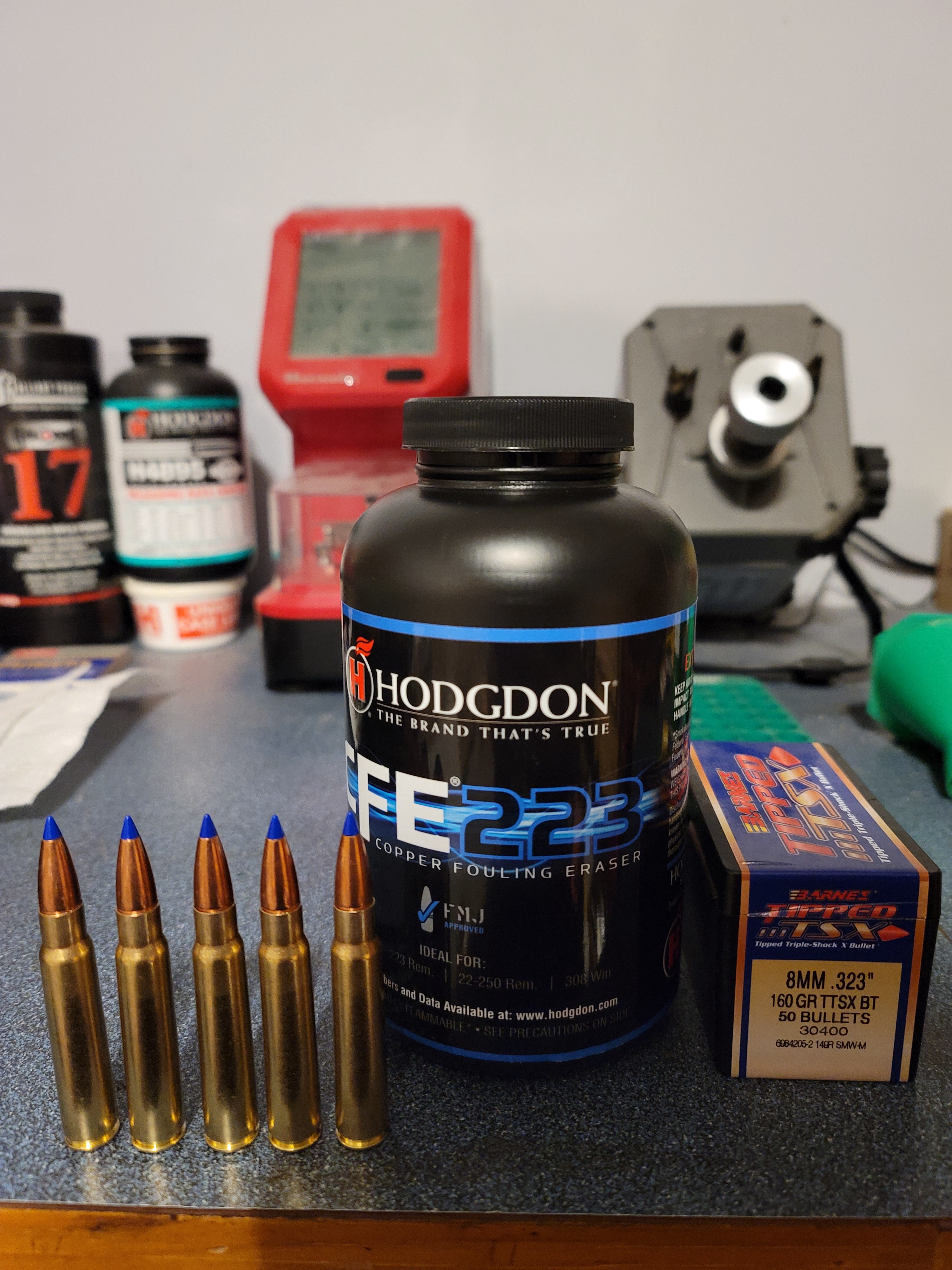
That's a lot of fps with the blue thunder! Please tell us more about it. I did not know one could achieve that with a 160 gr out of 8X57
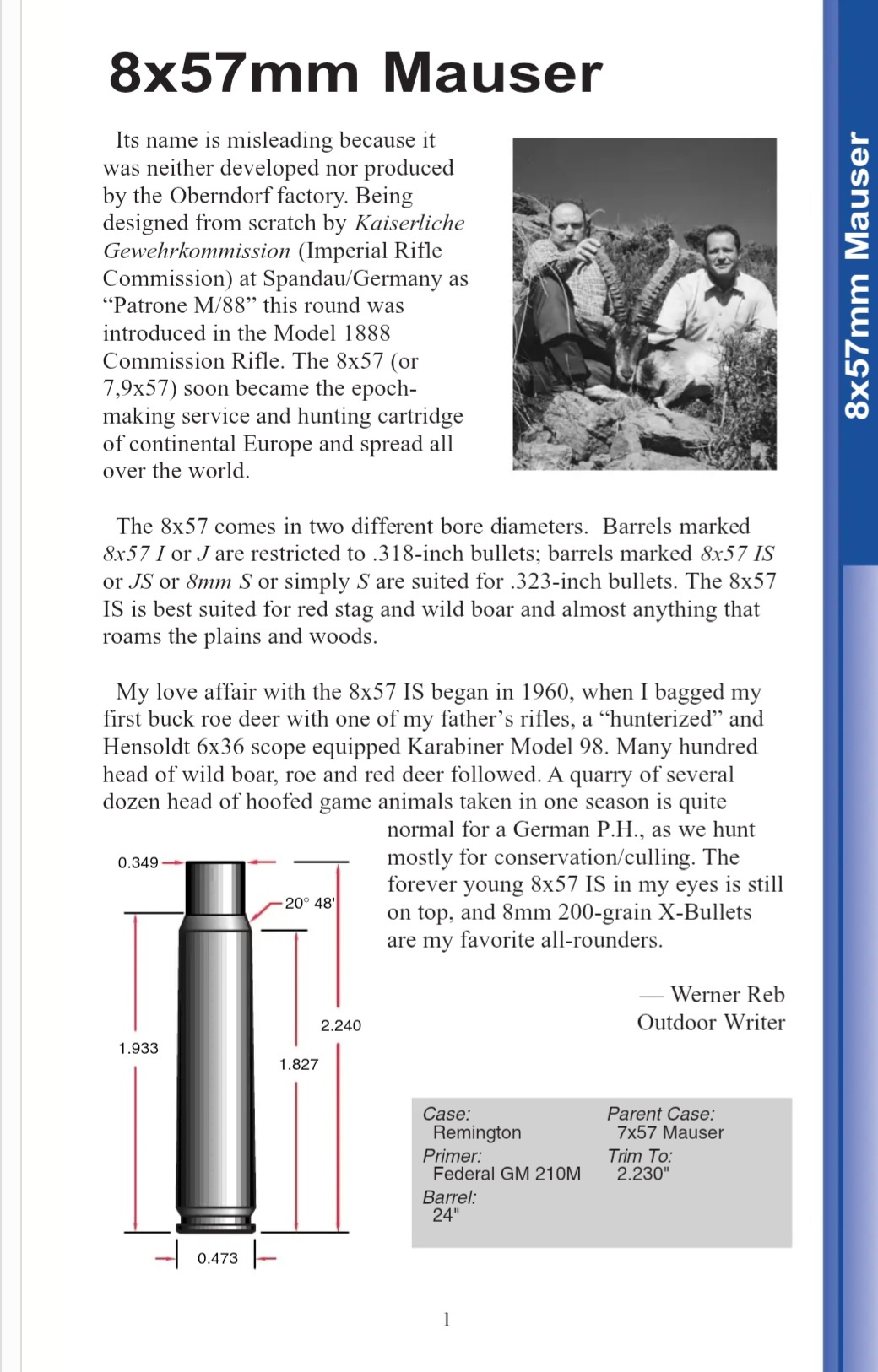
looks like it is not IRS ( 323 bore) but IR/318, so you should be good. Hard to get ammo outside Germany!Sorry can i shoot this ammo in my 318 double Cheers Dr Juan Pablo Pozzi
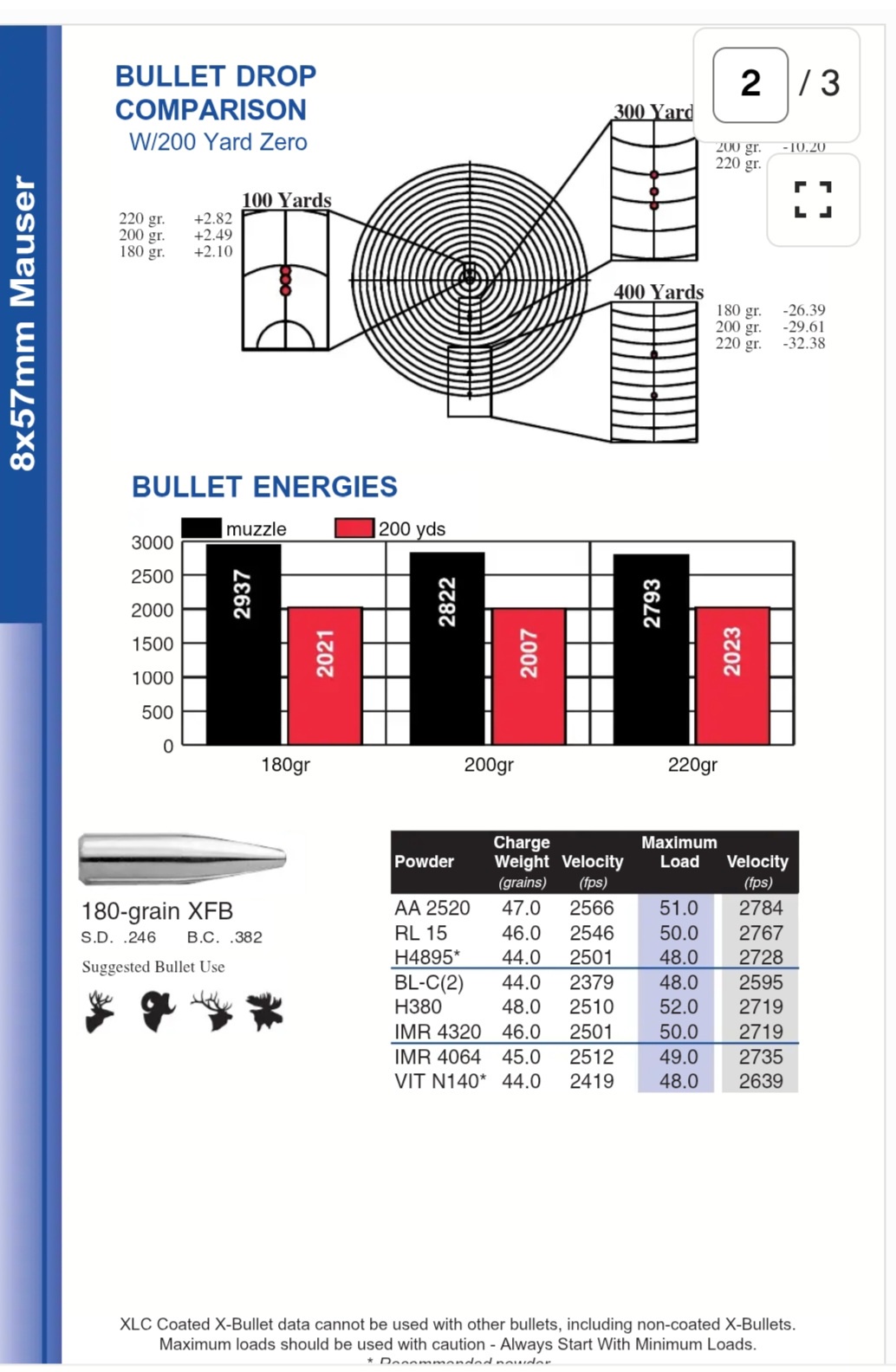
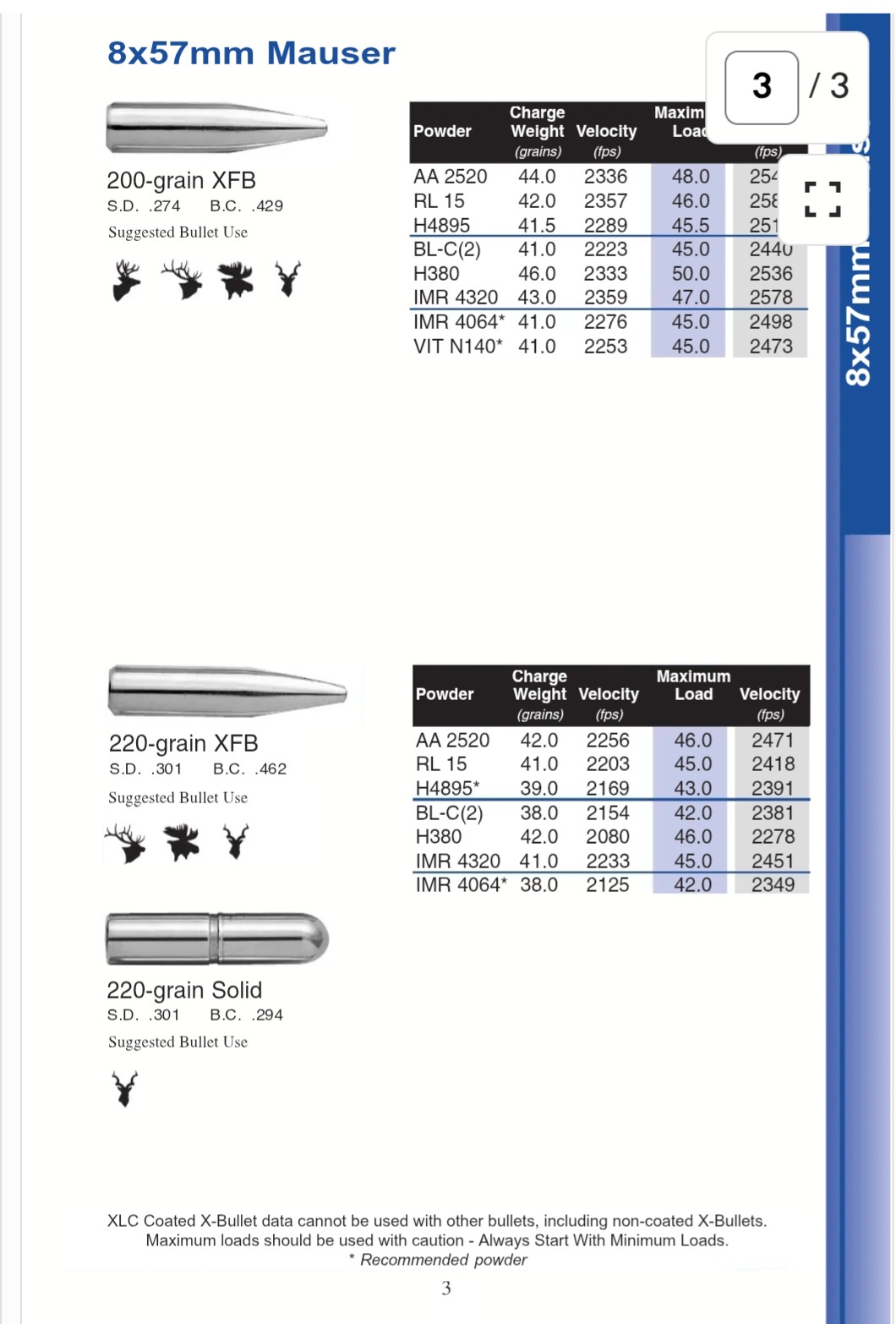
Hodgon loads with CFE223 get you 2920 fps with 48kCUP, so this could be around 55kCUP, which is not bad for a modern rifle. But it is beyond CIP/SAAMI.That's a lot of fps with the blue thunder! Please tell us more about it. I did not know one could achieve that with a 160 gr out of 8X57
That's right, I started with that load and worked up in my rifle. Loads were developed in 30+ deg weather and no pressure signs, no flat primers, no heavy bolt lift. Barrel length is 24".Hodgon loads with CFE223 get you 2920 fps with 48kCUP, so this could be around 55kCUP, which is not bad for a modern rifle. But it is beyond CIP/SAAMI.
@moozeHodgon loads with CFE223 get you 2920 fps with 48kCUP, so this could be around 55kCUP, which is not bad for a modern rifle. But it is beyond CIP/SAAMI.
I believe the .318 is for the older/original clambering JR , the .323 was the later JRS chambering ......318 I believe.
I replied to the same comments, my understanding is the JS (due to German stamping is confused w/ I ) is the earlier chamber size and the later .323 is the JRS chamber if my memory is correct.Actually, there were/are 2 different 8x57 calibres. Initially, it was .318 and it came in both rimless (I) and rimmed (IR) versions. Around the turn of the century the military decided to go from heavy-for-calibre round nosed bullets to the more modern spitzer form. For reasons unknown to me, the bore was at the same time increased to .323, and these cartridges are now known as 8x57 IS and IRS, respectively. (S = spitzer).
If you find an old rifle, it might just have "8mm" or "8x57" stamped on it, so you should measure the rifle before attempting to fire modern cartridges in it.
Interestingly - neither .318 or .323 corresponds to exactly 8 mm. And the .318 WR actually shoots .330 bullets... confusing were the days.
Well, it seems my memory was wrong as well as my replies .... appreciate the info. I was told that information at one time, but its been a long time ago.As a bit of trivia for the fans here, Do you know what the 8x57J, 8x57JR, the 8x57S, and the 8x57JRS all mean?
Pretty interesting, actually. The J is actually an I, as reference to "Infantry". The black gothic script popular in the WW1-WW2 era looked a lot like a J to the Anglos so the "J" stuck. It means infantry.
The R means rimmed. Pretty Straightforward on that one.
The S indicates the larger .323" bullet that has been discussed above. Absence of the S means a .318" bullet. I don't know what the German word is that is represented by the S, but that's the indicator of bullet size. (and often additional powder/pressure/velocity for modern guns too)
I was told that the WW1 mausers that were retained by the Germans were often so badly worn, they sorted those that could be repaired, yet had eroded bores into the .323" pile. I'm unsure if they just shot worn out .318" rifles, or if they remanufactured the bores to .323", but the impetus was reuse of old guns in the build up to the WW2 era.
So in conclusion, an 8x57JRS would mean a .323", rimmed, modern pressure load. You'd find this on say a 1970s era or later drilling. An 8x57J would be a .318" rimless from a WW1 era vintage military mauser. Obviously every gun needs to be slugged or pin gauge checked to ensure the correct rounds are used, but that's the folklore of these variants.
In even greater obscurity, there is literally a "R" version of almost every single German metric caliber. 7x64 brenneke rimless = 7x65R as a rimmed variant. Same with 7, 8, 9, 9.3, and 9.5 x 57 mausers. There are even some weird x64 brennekes in rimmed and rimless across a myriad of bullet diameters too.

Mneewell, the "J" is indeed a misinterpretation of an "I" in the Germanic typeface, where the capital "I" looks very much like a "J". The "R" (or lack thereof) indicates whether it is the rimmed version or not. And the "S" for "Spizter" designates the .323 bore. Without the "S", it should be .318.I replied to the same comments, my understanding is the JS (due to German stamping is confused w/ I ) is the earlier chamber size and the later .323 is the JRS chamber if my memory is correct.
I've been on the lookout for a 16 or 12 / 8x57 Cape Double Gun , exceedingly rare ,but that combo did exist.
Keep us updated and posted on your load development and hunt. Looking forward in hearing back.So I have to agree with mauser99
He gave me a bunch of data and I am about to snag a Sauer 100 in 8x57 and will be using it for an elk hunt this year in Montana. With bullet tech and powder you can push the 8mm just as good as the 30-06 no prob. I will post a bunch of data on here once I get my rifle up and running! I am excited to use or calibers to do modern hunting. I currently use a 257 roberts as my main deer rifle now and I can tell you again with modern bullets and powder that thing is lethal on whitetails! Got the biggest buck
Of my life with one this year!
incorrect, anything S is the later bore size of .323, no S= .318I replied to the same comments, my understanding is the JS (due to German stamping is confused w/ I ) is the earlier chamber size and the later .323 is the JRS chamber if my memory is correct.
I've been on the lookout for a 16 or 12 / 8x57 Cape Double Gun , exceedingly rare ,but that combo did exist.