

Foxi
AH legend
Zimmermann Ltd. was the largest dermoplasty workshop on the African continent. Not much has been reported about him, nor is there much information available. I have done some research, and I do not want this man to be forgotten.
Here is his story:

Paul Zimmermann
The story of the German taxidermist in Nairobi is fascinating, as it is inextricably linked with Kenya’s colonial history, the era of big-game hunting, and the emergence of a modern-day Nairobi district. The subject in question is Karl Fritz Paul Zimmermann (often spelled Zimmerman) and his world-renowned firm, Zimmermann Ltd. Here are the key details regarding his life, his craft, and his enduring legacy:
Who was Karl Fritz Paul Zimmermann?
Karl Fritz Paul Zimmermann was born in Germany on January 29, 1888. He was a highly trained naturalist and dermoplastic artist (the technical term for a taxidermist). Prior to his emigration, he studied and worked at highly esteemed institutions in Germany, including:
The Phylogenetic(no idea what it is ) Museum at the University of Jena
The Natural History Museum in Wiesbaden
The Zoological Museum at the University of Hamburg
He arrived in Kenya in 1929. Initially, he and his partner established the taxidermy department for the renowned Nairobi firm Chas A. Heyer & Co. The famous Kenya hunting outfitter at that time. A German businessman,Heyer came to Kenya 1903.
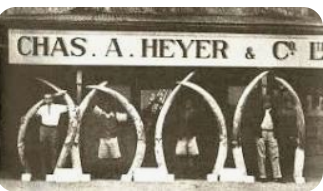 In 1934, he took over this department entirely and struck out on his own.
The Global Taxidermy Empire (Zimmermann Ltd.) Zimmermann established a facility in northern Nairobi (in the Ruaraka/Kasarani area) that grew to become the second-largest taxidermy workshop in the world.
The "Bwana Simama" Era:
His African employees respectfully referred to Zimmermann as "Bwana Simama" (Swahili for "The Man Who Stands" or "Mr. Stand-Up"—a nickname inspired by his strict and upright posture). He trained hundreds of local artisans and laborers in the art of dermoplastic taxidermy.
International Clientele: From the 1930s through the 1970s, Kenya served as the global epicenter for big-game safaris. Millionaires, Hollywood stars, and even foreign heads of state—such as former U.S. President Theodore Roosevelt (who had visited the region prior to this) and subsequent generations—entrusted Zimmermann with the taxidermy of their hunting trophies.
Famous Works:
Almost all of the historic taxidermy specimens still visible today in Kenya’s old luxury hotels, private clubs, or at the State House (the presidential palace) originated in his workshop. One of the firm’s final—and most celebrated—masterpieces was the preservation of "Ahmed," the legendary elephant from Marsabit,


who had enjoyed the personal protection of President Jomo Kenyatta. To this day, the mounted specimen of Ahmed remains on display at the National Museums of Kenya in Nairobi. This work was executed by the firm’s chief taxidermist, Wolfgang Schenk, and marked the beginning of his own unparalleled career in Germany following his departure from Kenya. At the time, Wolfgang Schenck was *the* preeminent taxidermist in Germany—particularly renowned for his work on African trophies.
The End of the Factory and the Legacy:
"Zimmerman Estate"Karl Fritz Paul Zimmermann passed away on April 12, 1971, at Nairobi Hospital due to complications from diabetes. He did not live to witness the direct end of his life's work; however, the demise of big-game hunting ultimately sealed the factory's fate:

The 1977 Hunting Ban:
When the Kenyan government completely banned commercial big-game hunting in 1977, Zimmermann Ltd. lost its primary source of materials—and its clientele—overnight. The factory was forced to close. From Factory Grounds to Residential Area: Following the closure, the vast site—where workshops, tanneries, and animal enclosures once stood—was subdivided and opened up for residential development.Today, the factory site no longer evokes images of lions and elephants; instead, it has evolved into a densely populated, bustling suburb in northeastern Nairobi. To this day, the residents of Nairobi naturally refer to this district as "Zimmerman" (or "Zimmerman Estate")—often without realizing that it was named after a German taxidermist.

Nairobi grew ceaselessly; when Zimmermann died 1971, Kenya had round 7 million inhabitants—today, it has 70 million. So quick times and hunting grounds can change.
Carpe diem.
Foxi
(always interested on African history)
Here is his story:
Paul Zimmermann
The story of the German taxidermist in Nairobi is fascinating, as it is inextricably linked with Kenya’s colonial history, the era of big-game hunting, and the emergence of a modern-day Nairobi district. The subject in question is Karl Fritz Paul Zimmermann (often spelled Zimmerman) and his world-renowned firm, Zimmermann Ltd. Here are the key details regarding his life, his craft, and his enduring legacy:
Who was Karl Fritz Paul Zimmermann?
Karl Fritz Paul Zimmermann was born in Germany on January 29, 1888. He was a highly trained naturalist and dermoplastic artist (the technical term for a taxidermist). Prior to his emigration, he studied and worked at highly esteemed institutions in Germany, including:
The Phylogenetic(no idea what it is
) Museum at the University of JenaThe Natural History Museum in Wiesbaden
The Zoological Museum at the University of Hamburg
He arrived in Kenya in 1929. Initially, he and his partner established the taxidermy department for the renowned Nairobi firm Chas A. Heyer & Co. The famous Kenya hunting outfitter at that time. A German businessman,Heyer came to Kenya 1903.
The Global Taxidermy Empire (Zimmermann Ltd.) Zimmermann established a facility in northern Nairobi (in the Ruaraka/Kasarani area) that grew to become the second-largest taxidermy workshop in the world.
The "Bwana Simama" Era:
His African employees respectfully referred to Zimmermann as "Bwana Simama" (Swahili for "The Man Who Stands" or "Mr. Stand-Up"—a nickname inspired by his strict and upright posture). He trained hundreds of local artisans and laborers in the art of dermoplastic taxidermy.
International Clientele: From the 1930s through the 1970s, Kenya served as the global epicenter for big-game safaris. Millionaires, Hollywood stars, and even foreign heads of state—such as former U.S. President Theodore Roosevelt (who had visited the region prior to this) and subsequent generations—entrusted Zimmermann with the taxidermy of their hunting trophies.
Famous Works:
Almost all of the historic taxidermy specimens still visible today in Kenya’s old luxury hotels, private clubs, or at the State House (the presidential palace) originated in his workshop. One of the firm’s final—and most celebrated—masterpieces was the preservation of "Ahmed," the legendary elephant from Marsabit,
who had enjoyed the personal protection of President Jomo Kenyatta. To this day, the mounted specimen of Ahmed remains on display at the National Museums of Kenya in Nairobi. This work was executed by the firm’s chief taxidermist, Wolfgang Schenk, and marked the beginning of his own unparalleled career in Germany following his departure from Kenya. At the time, Wolfgang Schenck was *the* preeminent taxidermist in Germany—particularly renowned for his work on African trophies.
The End of the Factory and the Legacy:
"Zimmerman Estate"Karl Fritz Paul Zimmermann passed away on April 12, 1971, at Nairobi Hospital due to complications from diabetes. He did not live to witness the direct end of his life's work; however, the demise of big-game hunting ultimately sealed the factory's fate:
The 1977 Hunting Ban:
When the Kenyan government completely banned commercial big-game hunting in 1977, Zimmermann Ltd. lost its primary source of materials—and its clientele—overnight. The factory was forced to close. From Factory Grounds to Residential Area: Following the closure, the vast site—where workshops, tanneries, and animal enclosures once stood—was subdivided and opened up for residential development.Today, the factory site no longer evokes images of lions and elephants; instead, it has evolved into a densely populated, bustling suburb in northeastern Nairobi. To this day, the residents of Nairobi naturally refer to this district as "Zimmerman" (or "Zimmerman Estate")—often without realizing that it was named after a German taxidermist.
Nairobi grew ceaselessly; when Zimmermann died 1971, Kenya had round 7 million inhabitants—today, it has 70 million. So quick times and hunting grounds can change.
Carpe diem.
Foxi
(always interested on African history)
Last edited:


