
My .318 WR / Nitro Express

fiocchi

AH veteran
Joined
Dec 30, 2016
Messages
229
Reaction score
139
Media
15
Thanks for input to all that helped on my .318 kynoch issue with tight bolt closure..to update: polishing the old tarnished cases with 0000 steel wool and having fired it (crud blown out of chamber), it now closes nicely on rounds. thank god! :)

So here's some pictures for you to salivate over. ps. with the 'moon sight' (preferred for short range hunting as the gold bead is tiny tiny tiny), the rifle with kynoch 250g soft points, zero's and groups perfectly at 55yds with a 'hold on' target. I prefer a figure of eight hold, but that lands rounds 7-8" low, so 'on/cover target' will have to do.

This is a very fast rifle and bead combination, anything sub 75yds will be in trouble ;-)

Hoping to take my first deer with it in the next week or so. I have always loved hunting open sights only, but this baby is the jewel in the crown for me.

I would like to thank the gentleman who sold it to me for around $250 despite knowing it's true value, because he knew how much I loved it and would actually procure ammunition and most importantly, take it hunting! (and NEVER drill and tap it).

ps. I'd love to hear the members views on whether my old kynoch ammunition is likely to be nitro cellulose based, or cordite. some is ICI made, some seemingly made later by the Eley-Kynoch factories.
It was proofed for cordite, but I'm not sure any of the old ammo I have access to from Kynoch dates back far enough to Cordite days..the oldest is Kynoch with a Westley Richards of Conduit St. oversticker.
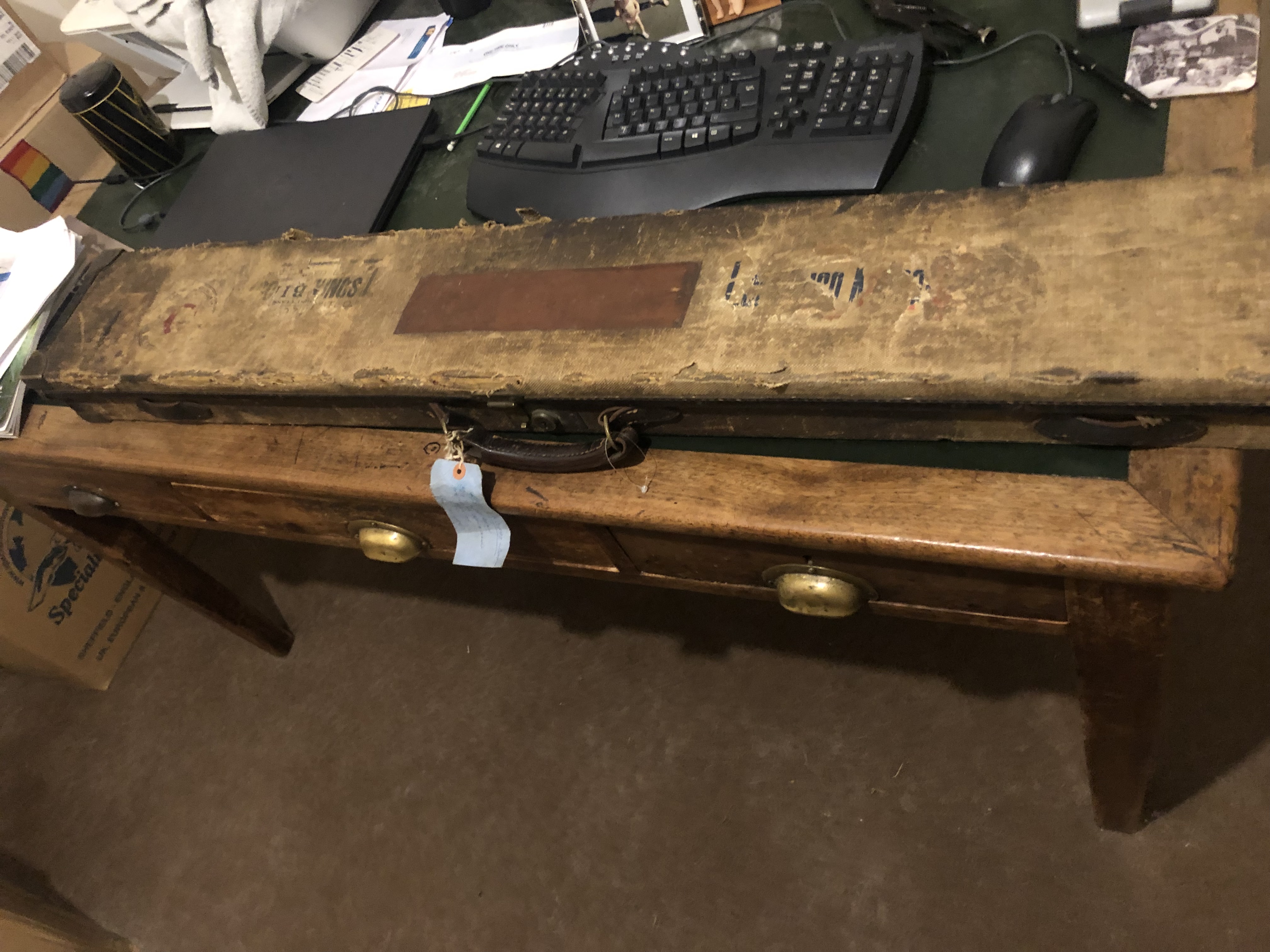
wr.jpg
wr8.jpg
wr7.jpg
wr6.jpg
wr5.jpg
wr4.jpg
wr3.jpg
wr2.jpg
wr1.jpg
 
Last edited by a moderator:
All of the original ICI Kynoch/ Eley Kynoch ammunition (made before the company completely ceased manufacture of center fire ammunition in 1971) was loaded with cordite. An exception to this, was the ammunition for the 8x57mm Mauser, 9.3x62mm Mauser and 10.75x68mm Mauser. These were always loaded with imported German flake propellant.

They only started using flake propellant after David Lyttle purchased the company ( renaming it “Kynamco”) and restarted ammunition manufacture in the 1990s.
 
All of the original ICI Kynoch/ Eley Kynoch ammunition (made before the company completely ceased manufacture of center fire ammunition in 1971) was loaded with cordite. An exception to this, was the ammunition for the 8x57mm Mauser, 9.3x62mm Mauser and 10.75x68mm Mauser. These were always loaded with imported German flake propellant.

They only started using flake propellant after David Lyttle purchased the company ( renaming it “Kynamco”) and restarted ammunition manufacture in the 1990s.
that's amazing information, thank you once again Sir! I did have that suspicion..so I better pour some boiling water down the barrel right? never cleaned cordite out before
 
All of the original ICI Kynoch/ Eley Kynoch ammunition (made before the company completely ceased manufacture of center fire ammunition in 1971) was loaded with cordite. An exception to this, was the ammunition for the 8x57mm Mauser, 9.3x62mm Mauser and 10.75x68mm Mauser. These were always loaded with imported German flake propellant.

They only started using flake propellant after David Lyttle purchased the company ( renaming it “Kynamco”) and restarted ammunition manufacture in the 1990s.
thing is..I always thought cordite came in little long brown sticks in the case..when I shake my cases, it sounds very much like a case with a powder type of fill, unless it can sound the same of course.

Some of the ammo is definitely corrosive primers, the Westley Richards over stickered boxes. Clear to see on the brass coloured primer/Berdan. The others are newer and boxes are marked as non-corrosive primers, but from what I understand, newer kynoch ammo even with non-corrosive primers will still be running cordite.

I have a chance to purchase another 300 rounds of it..I assume if it was stored appropriately, it will have a good chance of non-erratic and non-dangerous performance, despite being aged cordite..or just wait and see perhaps!
 
Last edited:
Bullet speeds of calibres of yore.
404 Jeffery were in the order of 2,200 fps.
318 WR with 250 grain bullet. By and largely under 2.400 fps.303 British with 215 grain bullet. 1,850 fps originally. Now reported to be in the range of 2,250 sensible.
7mm Mauser at about 2,300 fps.
And more older ones.
With the 458 WM at a max of 2,000 - 2,100 fps. Thank goodness for limited case capacity.

All with sensible projectile speed in common.
With superior accuracy.
All with phenomenal bullet penetration.
Cost-effective reloading. Especially regarding cases these days. which don't come cheap. And last much longer.
Less barrel wear. Where important.
Less excessive report back on the shoulder for calibres larger than 375, for recoil-shy individuals e.g. myself.
And I'm not one for excessive bullet speed in any event. But the heaviest bullet for a calibre is my kettle of fish.

For each one his own.
Happy shooting. And hunting!
 
Any non-corrosive primed Kyoch ammunition will not be using cordite. Its use ended pretty quickly between the wars.
 
Any non-corrosive primed Kyoch ammunition will not be using cordite. Its use ended pretty quickly between the wars.
I have to say, when I shake the cartridges, it sounds like a powder flushing about. However, I don’t have any experience with cordite and how that may sound similar. Also Hunter-Habib poster above is rather adamant about the continued use of cordite in Kynoch ammunition up to 1973 or so, so I’m curious.

why do you believe kynoch would have used a NC or flaked propellant with non corrosive primers instead of cordite?

just asking, that’s all!
 
I broke out my vintage Kynoch catalogs to take a look. Berdan primers are corrosive, while Boxer primers are non corrosive.

This American Rifleman article is from January, 1972 ( a few months before Kynoch would completely stop manufacturing center fire ammunition). Observe how (in 1971) Kynoch started using Boxer primers for the calibers which they were still loading ammunition for.
E1E73CBF-CC23-40EC-B62A-42DC6BAB02CA.jpeg


This is my ICI Kynoch catalog from 1968. As you can see (from the writing on the bottom), this was the final year in which the orignal ICI Kynoch manufactured ammunition for the .318 Westley Richards.

C5B648D1-6F15-4D0A-925A-2AEA7987EAC8.jpeg

In other words, the original ICI Kynoch ceased manufacture of .318 Westley Richards ammunition at least two years before they switched to non corrosive boxer primers.
 
Amazing you have that documentation and thank you for not only sharing, but taking the time!

There’s no doubt my vintage WR kynoch ammo is Berdan primed and corrosive, and the newer is non corrosive as is as such stipulated on the boxes; however, the cordite element still remains uncertain. Had it not been for the sheer cost of ammo, I’d love to pull bullets to see what ‘lies beneath’..but to be honest, each bullet pulled would be like burning a $10 bill..
 
Amazing you have that documentation and thank you for not only sharing, but taking the time!

There’s no doubt my vintage WR kynoch ammo is Berdan primed and corrosive, and the newer is non corrosive as is as such stipulated on the boxes; however, the cordite element still remains uncertain. Had it not been for the sheer cost of ammo, I’d love to pull bullets to see what ‘lies beneath’..but to be honest, each bullet pulled would be like burning a $10 bill..
Cordite was extremely unreliable under extreme heat conditions in rifle calibers - a lot of places the British empire extended. As soon as modern, reliable smokeless flake powders were developed, they were utilized in military and civilian firearms. Cordite continued to be used in some artillery and naval guns through WWII. If you have post WWII Kynoch ammunition, I am confident it will not reveal a load of spaghetti if you pull the bullet.

I would save the Berdan primed rounds as collector items. There is no need to risk corrosive damage to a fine firearm - either from the primer or the necessary cleaning. You are also likely to get a hang fire which can be very dangerous on a firing range.
 
that's amazing information, thank you once again Sir! I did have that suspicion..so I better pour some boiling water down the barrel right? never cleaned cordite out before
@fiocchi
Dear sir the boiling water was poured down the barrel to neutralise the mercury salts that formed after firing the old 303 we ith cordite and mercury fulminate primers. These salts are very corrosive to both barrels and cases. You may get ONE reload out of a case if you clean them straight after firing but the salts start attacking the case immediately on firing.
Fear not tho Bertram brass in Australia makes cases for your rifle.
Bob
 
thing is..I always thought cordite came in little long brown sticks in the case..when I shake my cases, it sounds very much like a case with a powder type of fill, unless it can sound the same of course.

Some of the ammo is definitely corrosive primers, the Westley Richards over stickered boxes. Clear to see on the brass coloured primer/Berdan. The others are newer and boxes are marked as non-corrosive primers, but from what I understand, newer kynoch ammo even with non-corrosive primers will still be running cordite.

I have a chance to purchase another 300 rounds of it..I assume if it was stored appropriately, it will have a good chance of non-erratic and non-dangerous performance, despite being aged cordite..or just wait and see perhaps!
@fiocchi
Personally I would pull the projectile and get rid of the cordite. I have fired old cordite 303 made in 1916 and it still went bang but cordite burns very hot and is hard on barrels of yore. 3031 is the closest powder to cordite
 
I broke out my vintage Kynoch catalogs to take a look. Berdan primers are corrosive, while Boxer primers are non corrosive.

This American Rifleman article is from January, 1972 ( a few months before Kynoch would completely stop manufacturing center fire ammunition). Observe how (in 1971) Kynoch started using Boxer primers for the calibers which they were still loading ammunition for.
View attachment 451035

This is my ICI Kynoch catalog from 1968. As you can see (from the writing on the bottom), this was the final year in which the orignal ICI Kynoch manufactured ammunition for the .318 Westley Richards.

View attachment 451036
In other words, the original ICI Kynoch ceased manufacture of .318 Westley Richards ammunition at least two years before they switched to non corrosive boxer primers.
Thanks Hunter-Habib.
 
@fiocchi
Dear sir the boiling water was poured down the barrel to neutralise the mercury salts that formed after firing the old 303 we ith cordite and mercury fulminate primers. These salts are very corrosive to both barrels and cases. You may get ONE reload out of a case if you clean them straight after firing but the salts start attacking the case immediately on firing.
Fear not tho Bertram brass in Australia makes cases for your rifle.
Bob

When I was very much younger, do I recall reading "corrosive primer" on ammo packaging.
But was never aware of such destructive chemicals.
Thank you very much for sharing Bob.
 
Thanks for input to all that helped on my .318 kynoch issue with tight bolt closure..to update: polishing the old tarnished cases with 0000 steel wool and having fired it (crud blown out of chamber), it now closes nicely on rounds. thank god! :)

So here's some pictures for you to salivate over. ps. with the 'moon sight' (preferred for short range hunting as the gold bead is tiny tiny tiny), the rifle with kynoch 250g soft points, zero's and groups perfectly at 55yds with a 'hold on' target. I prefer a figure of eight hold, but that lands rounds 7-8" low, so 'on/cover target' will have to do.

This is a very fast rifle and bead combination, anything sub 75yds will be in trouble ;-)

Hoping to take my first deer with it in the next week or so. I have always loved hunting open sights only, but this baby is the jewel in the crown for me.

I would like to thank the gentleman who sold it to me for around $250 despite knowing it's true value, because he knew how much I loved it and would actually procure ammunition and most importantly, take it hunting! (and NEVER drill and tap it).

ps. I'd love to hear the members views on whether my old kynoch ammunition is likely to be nitro cellulose based, or cordite. some is ICI made, some seemingly made later by the Eley-Kynoch factories.
It was proofed for cordite, but I'm not sure any of the old ammo I have access to from Kynoch dates back far enough to Cordite days..the oldest is Kynoch with a Westley Richards of Conduit St. oversticker.

View attachment 450921View attachment 450922View attachment 450923View attachment 450924View attachment 450925View attachment 450926View attachment 450927View attachment 450928View attachment 450929

In simple guy terms....that's just fuckin cool!!!
 
Very nice !
you can get more info about your rifle by contacting William Evans. Limited as they were shelled during WW2 and some records destroyed.
I have a William Evans .318 WR , and they are a fine rifles. Mine doesn't have the case. Im loading the 250 gr woodleighs and have had good success on game with them.Cheers Mick

zCkcSS.jpg
fs0PTP.jpg
 
Last edited by a moderator:

Forum statistics

Threads
68,978
Messages
1,536,665
Members
158,980
Latest member
LeighBrier


Latest posts

 
Top