

McKenzie Sims
AH enthusiast
- Joined
- Dec 11, 2019
- Messages
- 331
- Reaction score
- 837
- Media
- 13
- Articles
- 4
- Member of
- Safari Club International, GSCO
- Hunted
- South Africa, Namibia, Zambia, Tanzania, Cameroon, Ethiopia. Outside of Africa. Pakistan, Azerbaijan ,Tajkistan, Turkey, Spain, New Zealand, Australia , Argentina, Across the US, and numerouse provinces in Canada
Just had a story published in African Hunting Gazette and wanted to share it here.
Would love any feedback on the writing — just trying to get better at it, so fire away.
The African sun was just cresting the horizon, painting the Zululand hills in hues of gold and crimson, as we packed up our gear after a week of hunting with Matt Marteen’s Safaris. My journey through South Africa’s Mpumalanga province and KwaZulu-Natal’s Zululand had already delivered unforgettable moments—stalking Nyala through dense bushveld and many nights in search of the nighttime rarities. But now, we were headed southwest to East Griqualand in KZN, a region Matt called the “mecca of common reedbuck.” I’d taken reedbuck before—my first on a 2007 safari in the Eastern Cape, and another in 2012 while chasing a phantom elephant for my father in Zululand, a story I’ll save for another day. Matt promised this hunt would be different, a pursuit unlike any I’d experienced. Skeptical but intrigued, I climbed into the truck, ready for the adventure.
The seven-hour drive from Zululand to East Griqualand was a journey through South Africa’s diverse Scenery. We passed rolling grasslands, drove within eye sight of the Indian Ocean, passed through the big city of Durban and many small rural villages where children waved from dusty roadsides. Stopping for lunch at a Spur burger and stocking up on groceries for the days ahead in Kokstad. Matt, a seasoned PH kept telling me about the area and his extensive knowledge within it. “East Griqualand’s different,” he said. “The Reedbuck there are plentiful, and the big rams are something special.”
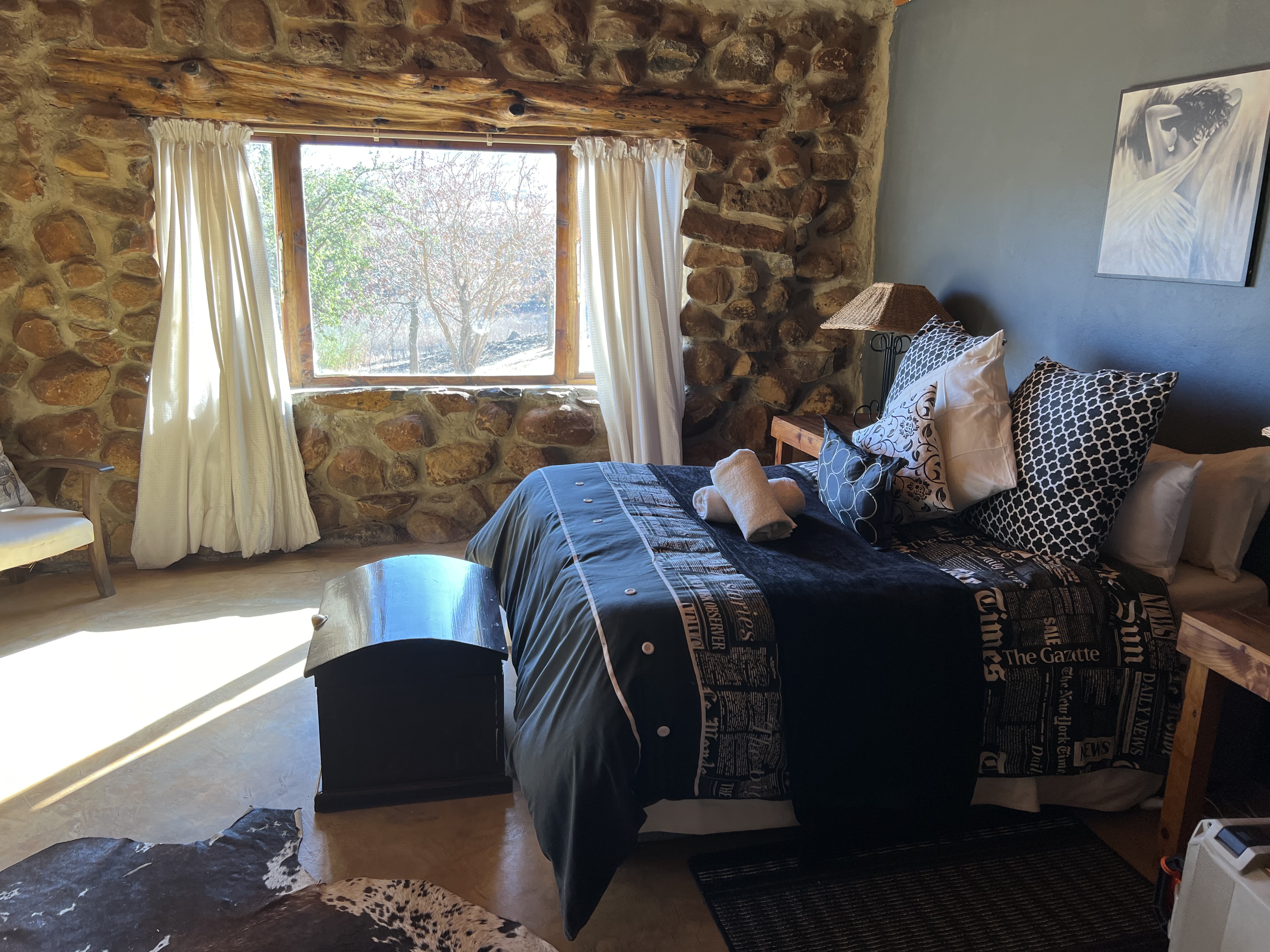
We arrived at a modest guesthouse in the mid-afternoon; its stone walls nestled against a backdrop of maize fields and distant mountains. After unloading our gear—rifles, optics, and enough supplies for a few days—we hopped back into the truck for an evening scouting drive. East Griqualand is low-fenced agricultural country, a patchwork of cornfields and pastures were cattle and sheep graze alongside wildlife. The maize fields, some freshly cut, others still standing tall, provided perfect cover and forage for Reedbuck. As we drove the rutted farm tracks, Matt explained that the region’s fertile soils and mild climate made it a haven for Common Reedbuck, known for their elusive nature and impressive, curving horns.

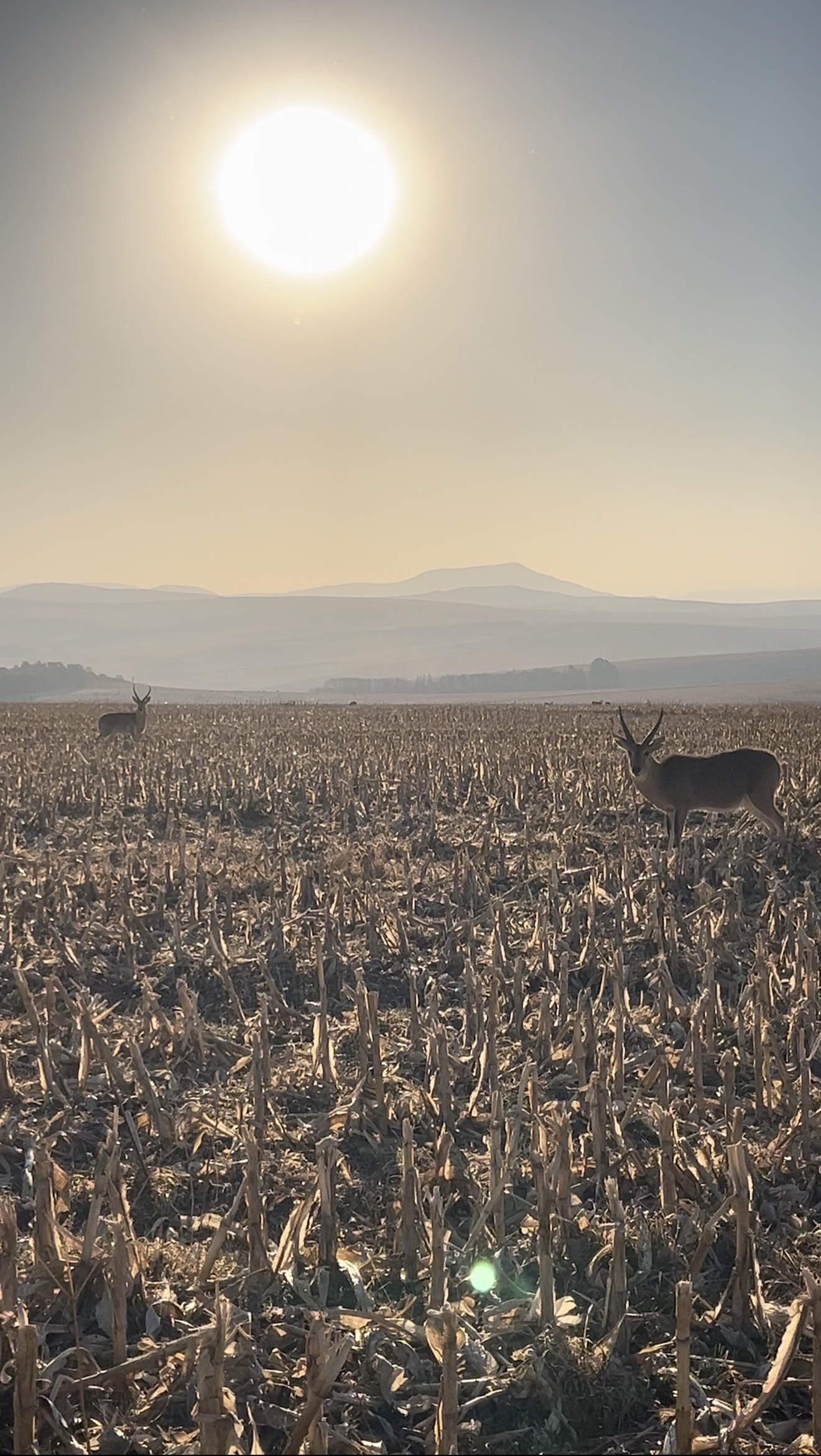
The afternoon heat lingered, and the first fields we glassed revealed little. A few Reedbuck lay bedded in the tall grass, their yellowish grey-brown coats blending seamlessly with the cut dry maize stalks and grass fields. Spotting them was a challenge, even with great quality optics. We’d occasionally bump a small group from cover, their white tails flashing as they bounded away. But as the sun sank, casting long shadows across the fields, the landscape transformed. The cooling air stirred the Reedbuck into action, and East Griqualand’s reputation as a mecca came alive. Everywhere we looked, groups of Reedbuck—five to twenty in size—grazed or moved through the fields. From a ridge overlooking a sprawling valley, we glassed over fifty Reedbuck in a single sweep. Among them were several fine rams, their horns glinting in the fading light. One, an old warrior missing an eye and with a broken horn, caught my attention—a testament to the harsh life of the wild.
With daylight slipping away, Matt urged us to check one last area where he’d previously spotted a massive ram. We raced across the farm tracks, the truck kicking up dust as we chased the last rays of sunlight. Reedbuck are fiercely territorial, and a big ram will hold his ground if food, water, and ewes are plentiful. We stopped at a vantage point overlooking two fields divided by a narrow road. Reedbuck dotted the landscape, their silhouettes sharp against the twilight. Then, in the dim light, he appeared—a ram with long, thick horns flaring wide, their unique shape setting him apart. Unlike the classic hooked horns of some rams, his spread gave him a regal, almost otherworldly look. Poor light made judging his size tricky, but one glance told me he was a shooter. We took note of his location He was with several ewes feeding just above a small pond.
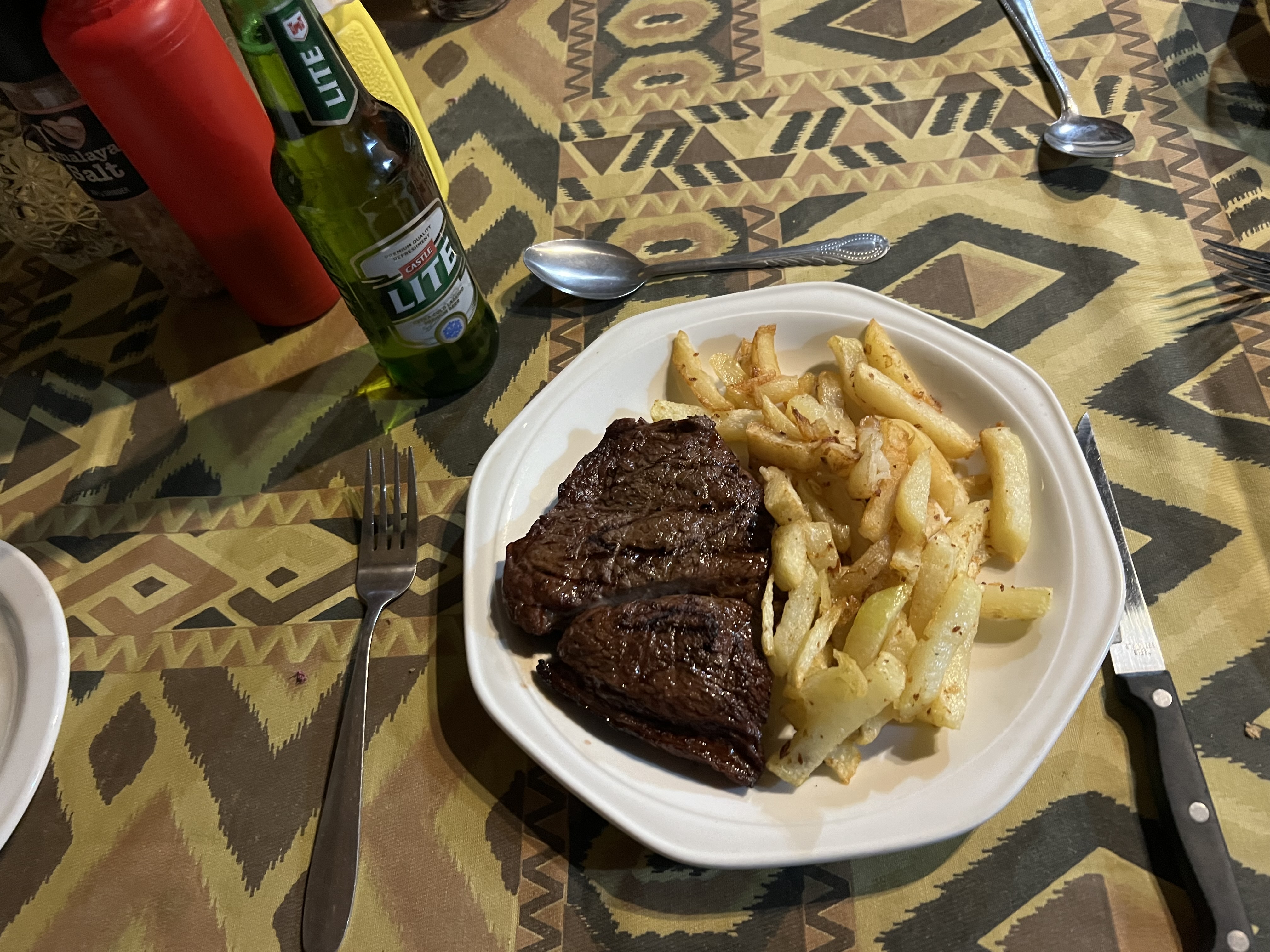
Over a great dinner of pepper steak and chips, we mapped out our strategy. The ram’s territory was near a pond bordered by reeds, with open fields and a few rolling rises for cover. We’d need to move early, before the day warmed and the Reedbuck bedded down. As we talked, I felt the familiar thrill of the hunt building—a mix of anticipation and respect for the hunt. East Griqualand’s rugged beauty, its wide skies and fertile plains, had already cast a spell on me.
At 5 a.m., the alarms woke us. The August morning was crisp, with frost blanketing the creek beds and low valleys, a stark contrast to the high 70s we’d face later. After downing Rooibos tea and toast, we loaded into the truck and headed for where we had left the ram the night before. The fields, so alive the previous evening, were eerily still in the pre-dawn chill. Good optics revealed bedded Reedbuck curled tightly, their breath visible as they soaked up the first sunlight. The area also held Southern Oribi, delicate antelope with slender horns, and we soon spotted two females, and a fine ram bedded in a cut hayfield, their coats glowing faintly in the dawn.
As we neared the pond where we’d last seen the ram, I caught a flash of movement—a Reedbuck bolting from the reeds. One glance confirmed it was him, his wide-flaring horns unmistakable. He crested a small rise and vanished. Matt quickly devised a plan: a fence line with uncut grass offered cover, and the rising sun at our backs would mask our approach. We eased over the rise, glassing carefully, but the ram was gone. The three Oribi and a trio of Reedbuck ewes feeding nearby remained unspoked, suggesting he hadn’t gone far. Then Matt dropped low, motioning us down. The ram was bedded in the same grass we were using for cover, just 150 yards away, oblivious to our presence.
I set up on shooting sticks, the ram’s head and horns barely visible above the brush. For an hour, we watched, waiting for him to stand. The tension was palpable—every rustle in the grass set my heart racing. Finally, Matt stepped out to provoke a reaction. The ram exploded from cover, bounding over a low fence and across the hillside, disappearing over a rise near an irrigation pivot. Undeterred, we drove around for a new approach. The field was wide open, cut short, leaving only the rise and an irrigation pivot for cover. We moved cautiously, mindful of the Oribi and ewes, and soon spotted the ram bedded in the open, 150 yards out.
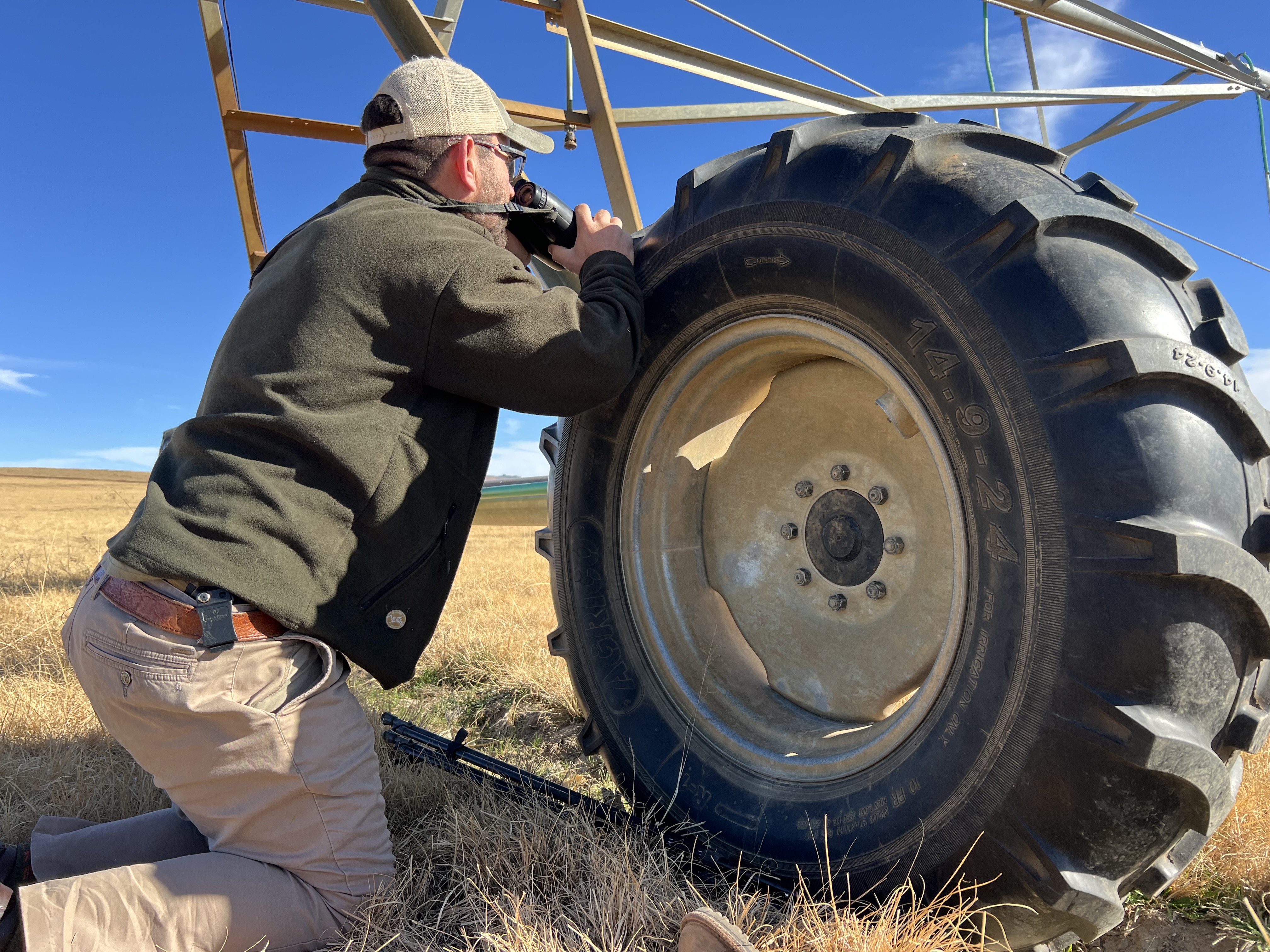
Using the pivot for cover, we closed the distance—until it began moving, its irrigation cycle kicking in. Fortunately, it wasn’t spraying water, sparing us a soggy stalk. Plan C was a leopard crawl to gain elevation for a prone shot. With seven pairs of eyes—three Oribi and four Reedbuck—watching the field, the stakes were high. To complicate matters, the ram was bedded directly behind a fenced pivot control post, its solar panel and brace wires obstructing a clear shot. Moving out risked spooking him again.
Matt and I whispered a new plan: I’d shoot off his back for added height and stability. We crawled further, the sun starting to bring the days warmth. Matt slid in front of me, and I rested my rifle across his back, adjusting for the ram’s angle and the brace wire in my sight. The ram, sensing something, began to get restless. I squeezed the trigger. The shot hit hard, knocking him down, but he staggered to his feet, offering a broadside shot. A second shot from the sticks dropped him for good.
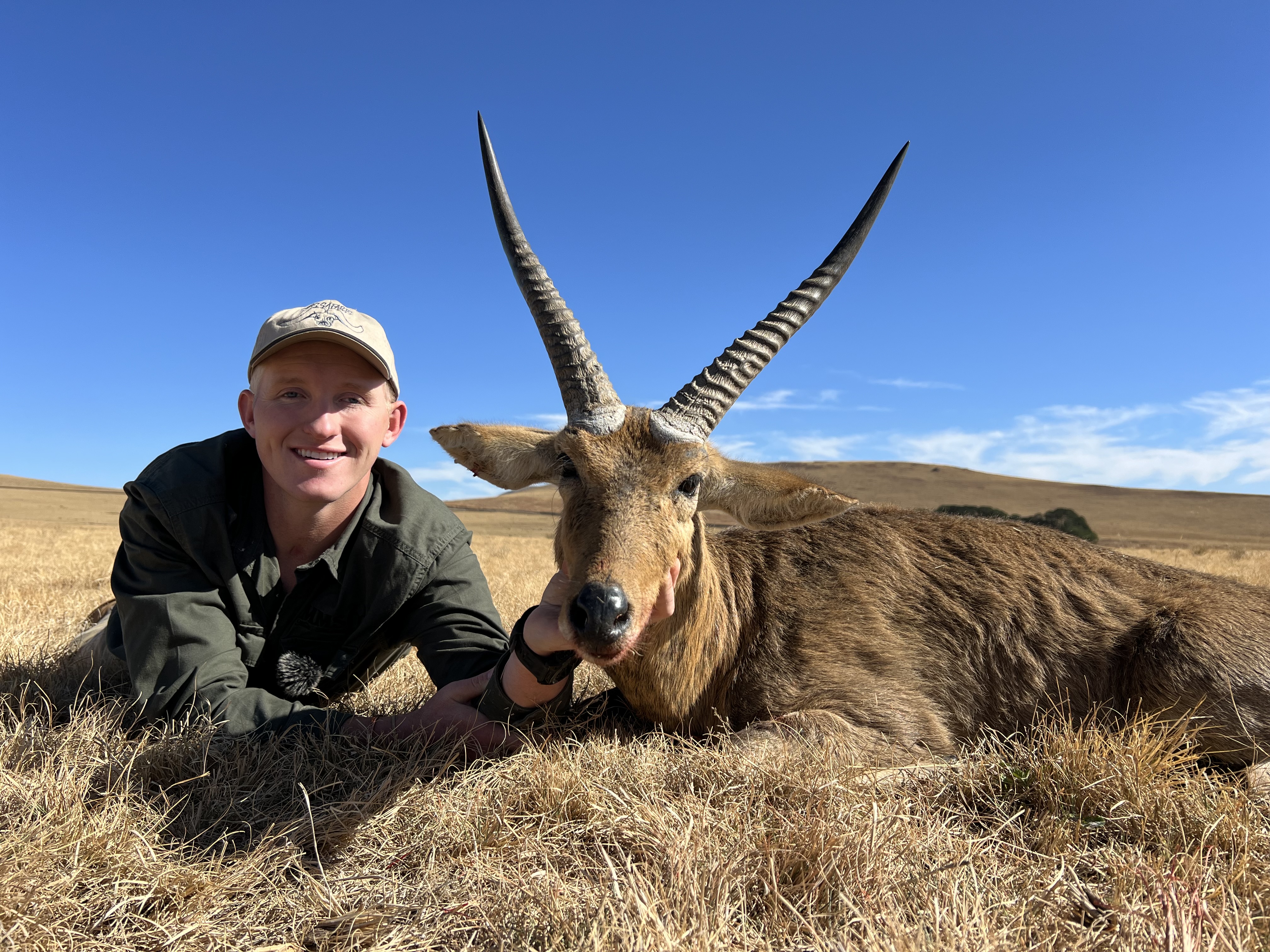
We approached the fallen ram, his wide-flaring horns even more impressive up close. He was my largest common Reedbuck to date, a magnificent trophy from East Griqualand’s fabled mecca. As we stood over him, the sun climbing higher, I felt a deep connection to this land—its wild beauty, its challenges, and the respect it demands from those who hunt its plains. East Griqualand had lived up to its name, delivering a hunt I’d recount for years to come.

Here is a video of this hunt as well that i just uploaded to my youtube account.
Thanks for any feedback on the article and youtube video.
Would love any feedback on the writing — just trying to get better at it, so fire away.
The African sun was just cresting the horizon, painting the Zululand hills in hues of gold and crimson, as we packed up our gear after a week of hunting with Matt Marteen’s Safaris. My journey through South Africa’s Mpumalanga province and KwaZulu-Natal’s Zululand had already delivered unforgettable moments—stalking Nyala through dense bushveld and many nights in search of the nighttime rarities. But now, we were headed southwest to East Griqualand in KZN, a region Matt called the “mecca of common reedbuck.” I’d taken reedbuck before—my first on a 2007 safari in the Eastern Cape, and another in 2012 while chasing a phantom elephant for my father in Zululand, a story I’ll save for another day. Matt promised this hunt would be different, a pursuit unlike any I’d experienced. Skeptical but intrigued, I climbed into the truck, ready for the adventure.
The seven-hour drive from Zululand to East Griqualand was a journey through South Africa’s diverse Scenery. We passed rolling grasslands, drove within eye sight of the Indian Ocean, passed through the big city of Durban and many small rural villages where children waved from dusty roadsides. Stopping for lunch at a Spur burger and stocking up on groceries for the days ahead in Kokstad. Matt, a seasoned PH kept telling me about the area and his extensive knowledge within it. “East Griqualand’s different,” he said. “The Reedbuck there are plentiful, and the big rams are something special.”
We arrived at a modest guesthouse in the mid-afternoon; its stone walls nestled against a backdrop of maize fields and distant mountains. After unloading our gear—rifles, optics, and enough supplies for a few days—we hopped back into the truck for an evening scouting drive. East Griqualand is low-fenced agricultural country, a patchwork of cornfields and pastures were cattle and sheep graze alongside wildlife. The maize fields, some freshly cut, others still standing tall, provided perfect cover and forage for Reedbuck. As we drove the rutted farm tracks, Matt explained that the region’s fertile soils and mild climate made it a haven for Common Reedbuck, known for their elusive nature and impressive, curving horns.
The afternoon heat lingered, and the first fields we glassed revealed little. A few Reedbuck lay bedded in the tall grass, their yellowish grey-brown coats blending seamlessly with the cut dry maize stalks and grass fields. Spotting them was a challenge, even with great quality optics. We’d occasionally bump a small group from cover, their white tails flashing as they bounded away. But as the sun sank, casting long shadows across the fields, the landscape transformed. The cooling air stirred the Reedbuck into action, and East Griqualand’s reputation as a mecca came alive. Everywhere we looked, groups of Reedbuck—five to twenty in size—grazed or moved through the fields. From a ridge overlooking a sprawling valley, we glassed over fifty Reedbuck in a single sweep. Among them were several fine rams, their horns glinting in the fading light. One, an old warrior missing an eye and with a broken horn, caught my attention—a testament to the harsh life of the wild.
With daylight slipping away, Matt urged us to check one last area where he’d previously spotted a massive ram. We raced across the farm tracks, the truck kicking up dust as we chased the last rays of sunlight. Reedbuck are fiercely territorial, and a big ram will hold his ground if food, water, and ewes are plentiful. We stopped at a vantage point overlooking two fields divided by a narrow road. Reedbuck dotted the landscape, their silhouettes sharp against the twilight. Then, in the dim light, he appeared—a ram with long, thick horns flaring wide, their unique shape setting him apart. Unlike the classic hooked horns of some rams, his spread gave him a regal, almost otherworldly look. Poor light made judging his size tricky, but one glance told me he was a shooter. We took note of his location He was with several ewes feeding just above a small pond.
Over a great dinner of pepper steak and chips, we mapped out our strategy. The ram’s territory was near a pond bordered by reeds, with open fields and a few rolling rises for cover. We’d need to move early, before the day warmed and the Reedbuck bedded down. As we talked, I felt the familiar thrill of the hunt building—a mix of anticipation and respect for the hunt. East Griqualand’s rugged beauty, its wide skies and fertile plains, had already cast a spell on me.
At 5 a.m., the alarms woke us. The August morning was crisp, with frost blanketing the creek beds and low valleys, a stark contrast to the high 70s we’d face later. After downing Rooibos tea and toast, we loaded into the truck and headed for where we had left the ram the night before. The fields, so alive the previous evening, were eerily still in the pre-dawn chill. Good optics revealed bedded Reedbuck curled tightly, their breath visible as they soaked up the first sunlight. The area also held Southern Oribi, delicate antelope with slender horns, and we soon spotted two females, and a fine ram bedded in a cut hayfield, their coats glowing faintly in the dawn.
As we neared the pond where we’d last seen the ram, I caught a flash of movement—a Reedbuck bolting from the reeds. One glance confirmed it was him, his wide-flaring horns unmistakable. He crested a small rise and vanished. Matt quickly devised a plan: a fence line with uncut grass offered cover, and the rising sun at our backs would mask our approach. We eased over the rise, glassing carefully, but the ram was gone. The three Oribi and a trio of Reedbuck ewes feeding nearby remained unspoked, suggesting he hadn’t gone far. Then Matt dropped low, motioning us down. The ram was bedded in the same grass we were using for cover, just 150 yards away, oblivious to our presence.
I set up on shooting sticks, the ram’s head and horns barely visible above the brush. For an hour, we watched, waiting for him to stand. The tension was palpable—every rustle in the grass set my heart racing. Finally, Matt stepped out to provoke a reaction. The ram exploded from cover, bounding over a low fence and across the hillside, disappearing over a rise near an irrigation pivot. Undeterred, we drove around for a new approach. The field was wide open, cut short, leaving only the rise and an irrigation pivot for cover. We moved cautiously, mindful of the Oribi and ewes, and soon spotted the ram bedded in the open, 150 yards out.
Using the pivot for cover, we closed the distance—until it began moving, its irrigation cycle kicking in. Fortunately, it wasn’t spraying water, sparing us a soggy stalk. Plan C was a leopard crawl to gain elevation for a prone shot. With seven pairs of eyes—three Oribi and four Reedbuck—watching the field, the stakes were high. To complicate matters, the ram was bedded directly behind a fenced pivot control post, its solar panel and brace wires obstructing a clear shot. Moving out risked spooking him again.
Matt and I whispered a new plan: I’d shoot off his back for added height and stability. We crawled further, the sun starting to bring the days warmth. Matt slid in front of me, and I rested my rifle across his back, adjusting for the ram’s angle and the brace wire in my sight. The ram, sensing something, began to get restless. I squeezed the trigger. The shot hit hard, knocking him down, but he staggered to his feet, offering a broadside shot. A second shot from the sticks dropped him for good.
We approached the fallen ram, his wide-flaring horns even more impressive up close. He was my largest common Reedbuck to date, a magnificent trophy from East Griqualand’s fabled mecca. As we stood over him, the sun climbing higher, I felt a deep connection to this land—its wild beauty, its challenges, and the respect it demands from those who hunt its plains. East Griqualand had lived up to its name, delivering a hunt I’d recount for years to come.
Here is a video of this hunt as well that i just uploaded to my youtube account.
Thanks for any feedback on the article and youtube video.
Last edited by a moderator:


